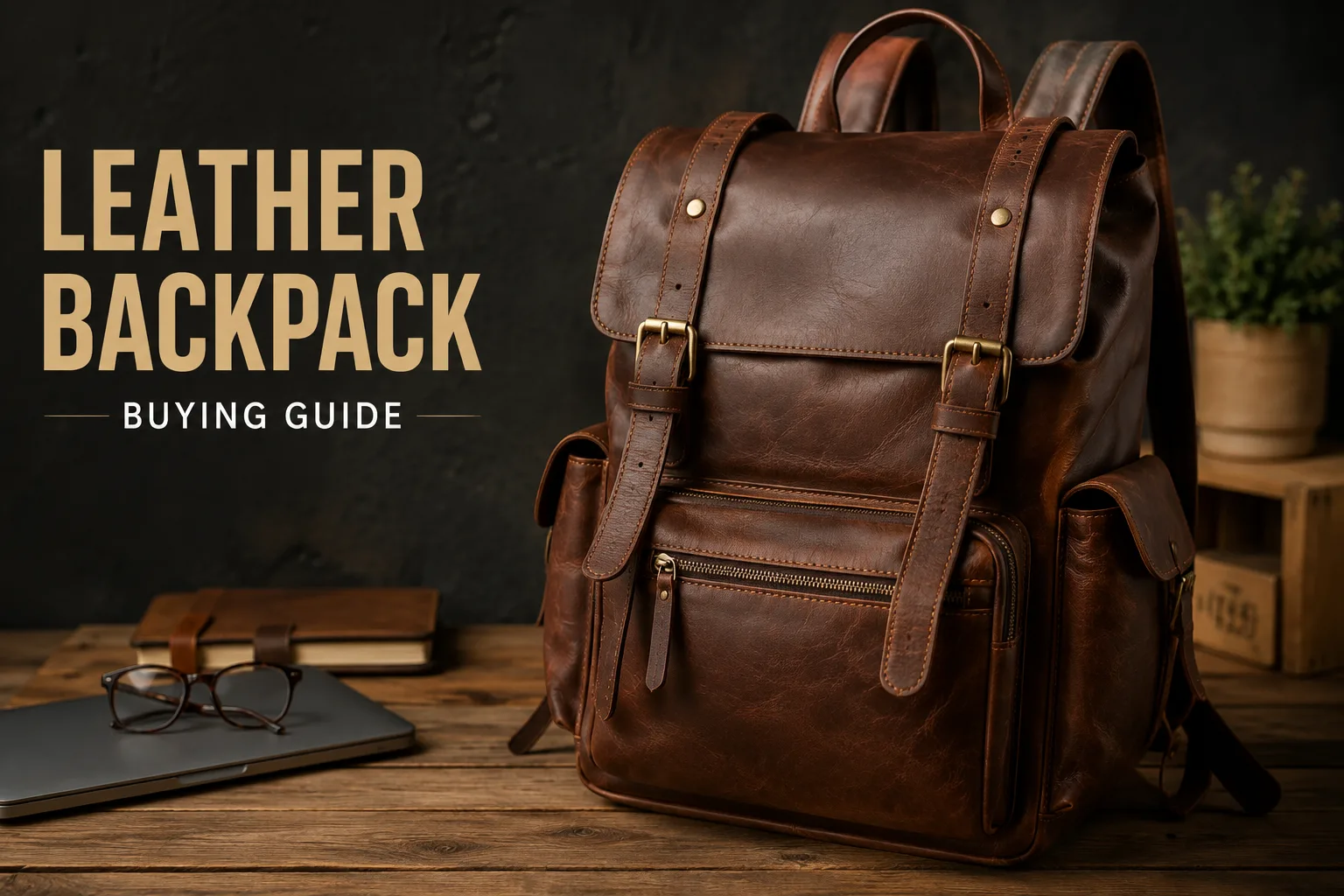
Buying a leather backpack sounds simple until you actually start looking. Scroll through any store and you'll see a dozen bags that all look "premium," a handful of prices that don't seem to match the quality, and terms like full grain, top grain, and genuine leather thrown around like they mean the same thing. They don't.
If you've ever bought a leather bag that cracked within a year, or one that looked great in photos but felt stiff and awkward on your back, you already know why this stuff matters. This guide walks through everything worth knowing before you buy, so the backpack you choose actually earns its price tag.
Why Leather Is Still the Smartest Choice for a Daily Bag
Nylon and canvas bags are lighter and cheaper, no argument there. But they wear differently. A canvas bag looks tired after a year of daily use. Leather does the opposite. It softens, darkens slightly, and picks up a texture that only comes from actually being used. People call this patina, and it's one of the few things in life that gets better simply by not being babied.
A good full grain leather backpack is also just more durable. The fibers haven't been sanded down or corrected, so the material keeps its natural strength. That means fewer split seams, fewer torn corners, and a bag that can genuinely last a decade or more with basic care.
There's also the practical side. Leather holds its shape. It doesn't sag the way soft canvas does once you load it with a laptop, a water bottle, and whatever else ends up in your bag by Wednesday morning.
Full Grain vs Top Grain vs Genuine Leather: The Difference That Actually Matters
This is the part most buyers skip, and it's the part that decides whether your bag lasts five years or fifteen.
Full grain leather is the top layer of the hide, left mostly untouched. It keeps the natural grain, including small marks and texture variations that make each bag slightly different. It's the strongest and most durable option, and it develops that rich patina over time.
Top grain leather has had the top layer sanded down and refinished. It looks more uniform and is often a bit softer right out of the box, but it loses some of the natural strength and won't age the same way.
Genuine leather is a marketing term more than a quality indicator. It's real leather, technically, but it's usually made from the lower, weaker layers of the hide and treated heavily to look presentable. It tends to crack and peel faster than either of the options above.
If you're paying premium prices, make sure you're actually getting full grain material. It's the difference between a bag that becomes a decades-long companion and one that starts falling apart right when you've finally broken it in.
Choosing Between a Backpack for Him or a Backpack for Her
Leather backpacks aren't one-size-fits-all, and the better brands design accordingly instead of just shrinking a men's bag and calling it done.
A leather backpack for men typically leans into a structured build with a boxier profile, wider straps, and enough internal room for a laptop, a change of clothes, or a full day's worth of gear. These bags are built to handle weight without losing shape, which matters if you're commuting or traveling often.
A handmade leather backpack for women usually takes a different approach. Slimmer straps, a more tailored silhouette, and proportions that sit comfortably on a smaller frame without feeling bulky. The strength of full grain leather doesn't disappear here, it's just built into a shape that actually fits.
The best move is to think about your daily routine first. Are you commuting with a laptop five days a week? Traveling every other weekend? Mostly using it for errands and casual outings? The right silhouette depends more on your life than on trends.
The Laptop Backpack: What to Check Before You Buy
If your bag needs to carry a laptop, don't treat that as an afterthought. A proper leather laptop backpack should have a few specific features:
- A padded, dedicated laptop sleeve, ideally with a fabric lining to prevent scratches
- A compartment positioned close to your back, which protects the device better if the bag gets dropped or bumped
- Enough structure in the base and sides that the bag doesn't cave in on itself when it's half empty
- Zippers and hardware sturdy enough for daily opening and closing without loosening over time
A lot of bags marketed as "laptop friendly" just have a slightly bigger main compartment with no actual padding. That's not protection, that's just extra space. Check the product details or ask before assuming your laptop is safe in there.
Planning a Trip? Here's What a Travel Backpack Needs
Traveling with a bag is a different test than commuting with one. A solid leather travel backpack needs to handle more volume, more movement, and more wear over a shorter period of time.
Look for:
- A wider opening or roll-top design so packing and repacking doesn't turn into a wrestling match
- External or side pockets for things you need fast, like a passport, phone, or boarding pass
- Reinforced straps and stitching at stress points, since travel bags get thrown around more than daily carry bags
- A size that fits airline carry-on rules if you're planning on skipping checked luggage
Leather has a real advantage here too. It resists minor scuffs from being tossed under a seat or into an overhead bin far better than canvas, and it doesn't show wear the same obvious way.
Making It Yours: The Case for Personalization
There's something different about owning a bag that's actually yours, not just a bag you bought. A personalized leather backpack with initials, a monogram, or a small engraved detail turns a well-made object into something a little more permanent. It's also a genuinely good gift option, since it signals more thought than picking something off a shelf.
Personalization doesn't need to be loud. A small stamped initial near the strap or a nameplate on the inside pocket is usually enough to make the bag feel individual without changing how it looks day to day.
How to Care for a Leather Backpack So It Actually Lasts
Full grain leather doesn't need constant attention, but it does need some. A few basics:
- Wipe down dirt and dust with a slightly damp cloth rather than letting it sit.
- Condition the leather every few months with a proper leather conditioner, especially in drier climates.
- Keep it away from direct heat sources like radiators or car dashboards, which can dry out and crack the material.
- If it gets wet, let it air dry naturally. Skip the hairdryer.
- Store it upright or stuffed lightly with paper when not in use, so it holds its shape.
None of this is complicated. It's closer to caring for a good pair of leather boots than anything high maintenance.
Common Questions About Leather Backpacks
Does full grain leather scratch easily? It can pick up minor surface marks, but that's part of how the patina forms. Most light scratches soften or blend in over time rather than staying as visible damage.
Is a leather backpack too heavy for daily use? A well-made one shouldn't be. Quality full grain leather is dense but not bulky, and a properly designed bag distributes weight so it doesn't feel heavier than a comparable canvas or nylon option once it's loaded.
Can a leather backpack really fit a 15 or 16 inch laptop? Most well-designed options can, as long as the padded sleeve is sized correctly. Always check the actual internal dimensions rather than assuming based on the bag's overall size.
Is genuine leather a bad option? It's not fake leather, but it's usually the weakest grade of real leather in terms of durability. If longevity matters to you, full grain is worth the extra cost.
Final Thoughts
A leather backpack isn't a fast fashion purchase. It's something you're supposed to keep using long after the newness wears off, and the material should get better, not worse, the longer you own it. Pay attention to the grain, match the shape to how you actually live, and don't be afraid to make it personal.
If you're ready to see what that actually looks like in person, take a look at the full range of options built with these same standards in mind.