
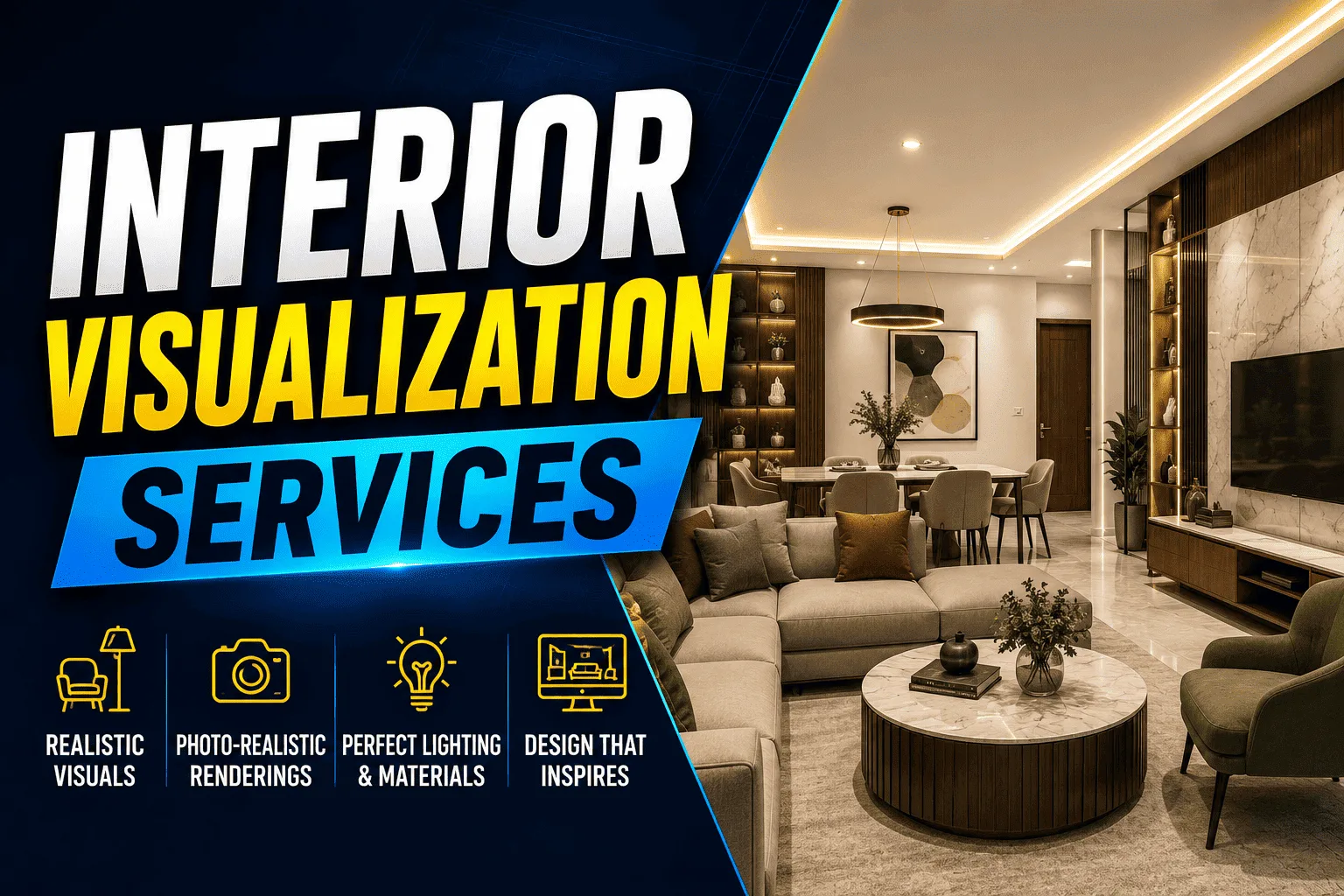
Presenting a design concept using flat blueprints and material swatches often leaves clients struggling to see the final vision. They have to mentally stitch together floor plans and fabric samples, which can lead to misunderstandings and delayed approvals. Interior visualization bridges that gap. By transforming technical drawings into vivid, lifelike digital environments, designers and real estate professionals can show exactly what a space will look like before a single hammer swings.
Interior visualization services have fundamentally changed how properties are marketed, designed, and sold. These digital solutions allow stakeholders to explore a room's lighting, texture, and spatial flow in stunning detail. This approach saves time, reduces costly physical revisions, and builds immediate buyer confidence.
If you are looking to elevate your property marketing or streamline your design approval process, understanding the tools available is essential. This guide breaks down the different types of interior visualization, the distinct benefits they offer, and how to choose the right partner to bring your concepts to life.
Types of Interior Visualization Services
The digital visualization industry offers several distinct formats. Choosing the right one depends heavily on your project goals, budget, and target audience.
3D Interior Rendering
A 3D interior render is a highly detailed, photorealistic still image. It captures a specific angle of a room, highlighting the furniture layout, natural lighting, and material finishes. These images are the foundation of modern real estate brochures, website galleries, and design portfolios.
360° Panorama and Virtual Tours
When a single image is not enough, 360-degree panoramas allow users to look around a room from a fixed central point. By linking multiple panoramas together, you create a virtual tour. This interactive experience gives potential buyers the freedom to navigate from the kitchen to the living room at their own pace, offering a clear sense of the property's layout.
Animated Walkthroughs
Animated walkthroughs are cinematic video tours of a digital property. They guide the viewer along a predefined path, often accompanied by music and graphics. This format is incredibly effective for social media marketing, investor presentations, and television advertisements, as it dictates the narrative and highlights the best features of the space.
Virtual Reality (VR) and Augmented Reality (AR) Experiences
VR completely immerses the user in a digital environment using a headset. Clients can walk through a digital home and get a true sense of scale and proportion. AR, on the other hand, overlays digital elements onto the physical world. A common use case is pointing a smartphone at an empty room to see how a specific digital couch looks in that physical space.
Benefits of Using Interior Visualization Services
Investing in high-quality visual content yields measurable returns across various sectors of the property and design industries.
For Architects and Interior Designers
Designers use visualization to test ideas rapidly. You can swap a hardwood floor for polished concrete in seconds to see how it affects the room's mood. Furthermore, photorealistic renders make it significantly easier to secure client approvals. When a client can see the exact end result, they are much less likely to request expensive changes during the construction phase.
For Real Estate Developers and Marketers
Selling off-plan properties relies entirely on the buyer's imagination. High-quality interior visualization services remove the guesswork. Marketers can launch full pre-sale campaigns with beautiful images, video walkthroughs, and virtual tours long before the foundation is poured. This accelerates the sales cycle and helps secure project funding earlier.
For Furniture Manufacturers and Retailers
Building physical sets, hiring photographers, and shipping heavy furniture for a catalog shoot is incredibly expensive. Visualization allows retailers to digitally place their products into perfectly lit, aspirational room settings. You can showcase a single sofa in dozens of different fabric options without ever manufacturing a physical prototype.
Key Elements of a High-Quality Interior Visualization
Not all renders are created equal. A successful interior visualization must balance technical accuracy with artistic composition to create a believable image.
Photorealism and Accuracy
The primary goal of most renders is to look indistinguishable from a photograph. This requires strict adherence to scale, correct camera angles, and an accurate representation of the architectural plans. If a ceiling feels too low or a doorframe looks disproportionate, the illusion breaks.
Lighting and Composition
Lighting dictates the mood of a space. Experienced 3D artists know how to simulate natural sunlight streaming through a window, the soft glow of a bedside lamp, or the stark brightness of commercial LED fixtures. Proper camera composition then guides the viewer’s eye toward the room's most important architectural features.
Material and Texture Representation
A leather chair should look supple. Hardwood floors need to reflect light accurately. High-quality visualization relies on advanced texturing techniques to give surfaces realistic bumps, reflections, and imperfections. This attention to detail makes the digital room feel tactile and lived-in.
Storytelling and Emotional Connection
The best renders tell a story. An open book on a coffee table, a steaming cup of tea, or sunlight hitting a comfortable reading nook all evoke an emotional response. Creating an atmosphere that viewers can picture themselves living in is the ultimate mark of a successful visualization.
How to Choose the Right Interior Visualization Provider
Finding a reliable partner is crucial for keeping your projects on time and under budget. Keep these factors in mind when selecting an agency.
Portfolio and Experience
Always review a provider's past work. Look for projects similar to yours in scale and style. A studio that excels at minimalist residential interiors might not be the best fit for a complex commercial hospitality project.
Technology and Software Used
Top-tier agencies utilize industry-standard software like 3ds Max, V-Ray, Corona Renderer, and Unreal Engine. The tools a studio uses will dictate their ability to provide advanced services like VR or real-time rendering.
Communication and Collaboration Process
Clear communication prevents costly revisions. Ask about their feedback loop. Do they provide preliminary low-resolution drafts for approval before finalizing the high-resolution images? When looking for a dependable partner, working with established teams like Archdraw Outsourcing ensures a structured workflow, transparent communication, and a clear understanding of your project milestones.
Pricing and Turnaround Time
Cheap renders often look cheap. Balance your budget with your quality requirements. Ensure you have a clear agreement on turnaround times, the number of revisions included in the price, and the final deliverable formats.
The Future of Interior Visualization
The technology driving interior visualization is advancing rapidly, promising even more efficient and impressive workflows in the coming years.
Emerging Trends and Technologies
Real-time rendering, powered by video game engines like Unreal Engine, is becoming the new standard. This allows designers to make instant changes to a 3D scene while the client watches. Additionally, artificial intelligence is beginning to automate tedious texturing and lighting tasks, drastically speeding up production times.
Impact on the Industry
As VR headsets become more accessible, virtual property tours will eventually become as standard as 2D floor plans. The gap between physical and digital spaces will continue to narrow, giving consumers complete confidence in their purchasing and design decisions.
Elevate Your Next Design Project
Adopting interior visualization services is no longer a futuristic luxury; it is an industry standard. Whether you are aiming to sell luxury apartments before construction begins, or you simply need a better way to communicate ideas to your design clients, digital rendering offers a compelling, cost-effective solution.
Take the time to audit your current presentation methods. If you are still relying heavily on flat drawings and fabric swatches, consider partnering with a professional visualization team for your next project. The clarity, speed, and buyer confidence you gain will easily justify the investment.