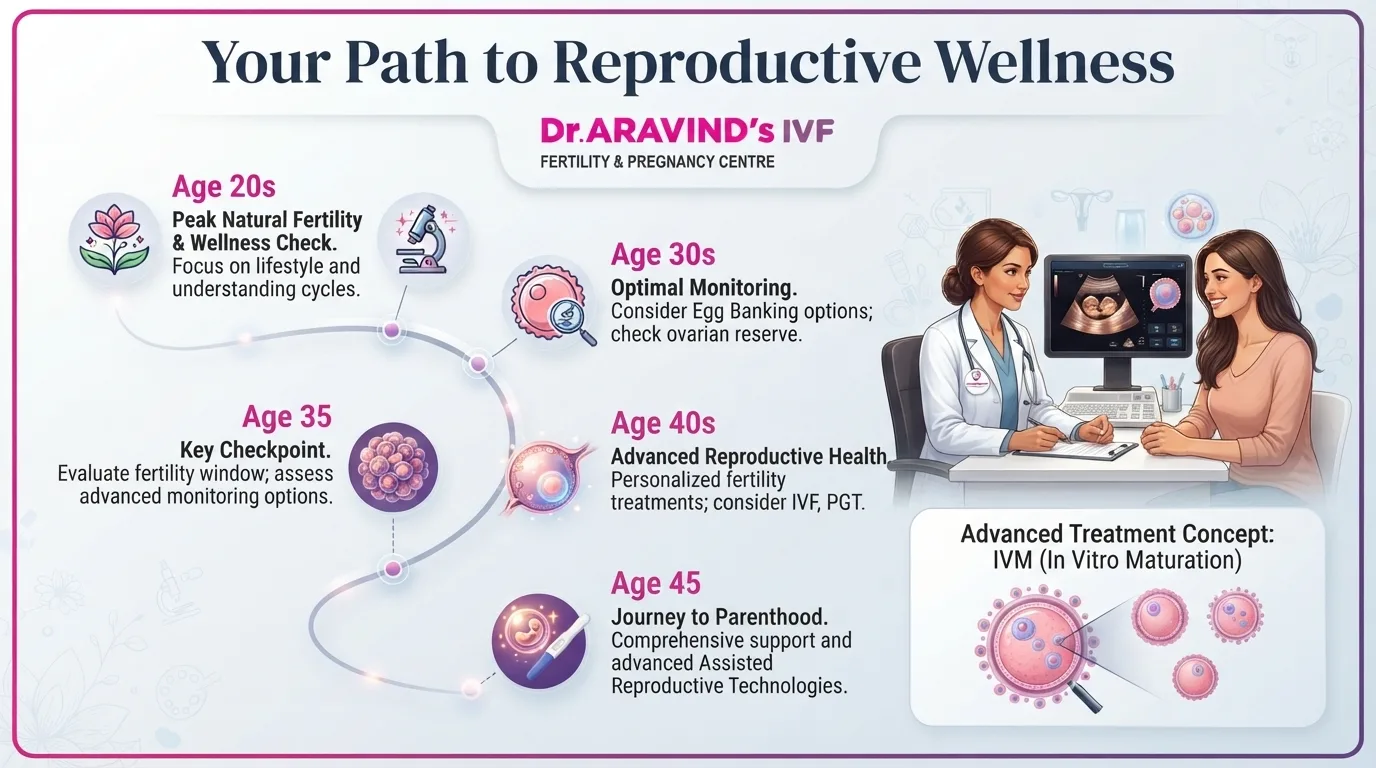
For many women, fertility changes gradually over time. Understanding these changes can help with family planning, fertility preservation, and timely medical support. If you are looking for guidance from a trusted fertility hospital in T.Dasarahalli, knowing how fertility evolves from your 20s through your 40s is an important first step.
Fertility in Your 20s: The Peak Reproductive Years
A woman is born with all the eggs she will ever have, and fertility is generally at its highest during the 20s. During this decade, egg quality and quantity are typically optimal, leading to higher chances of natural conception.
Women in their 20s often experience:
- Regular ovulation cycles
- Better egg quality
- Lower risk of miscarriage
- Higher pregnancy success rates
While fertility is strongest during this stage, lifestyle factors such as smoking, excessive alcohol consumption, obesity, and unmanaged stress can still affect reproductive health.
Fertility in Your Early 30s: Strong but Slowly Changing
Many women today choose to start families in their early 30s due to career goals, financial planning, or personal circumstances. Fertility remains relatively good during this period, but subtle changes begin to occur.
What Happens During This Stage?
The ovarian reserve gradually decreases, and egg quality starts to decline. Although natural conception is still highly achievable, monthly pregnancy rates may be slightly lower compared to the 20s.
Women planning pregnancy after 30 should consider:
- Monitoring menstrual regularity
- Maintaining a healthy weight
- Scheduling routine reproductive health check-ups
- Discussing fertility assessments when needed
Fertility in Your Mid to Late 30s: A Noticeable Shift
By age 35, fertility decline becomes more significant. The number of available eggs decreases more rapidly, and chromosomal abnormalities become more common.
Common Fertility Challenges After 35
- Reduced ovarian reserve
- Lower egg quality
- Increased risk of miscarriage
- Longer time to conceive naturally
This is often the stage when many couples seek consultation at a fertility hospital in T.Dasarahalli for fertility evaluation, ovulation monitoring, or assisted reproductive treatments.
Professional fertility testing can provide valuable insights into reproductive potential and help couples make informed decisions.
Fertility in Your Early 40s: Reduced but Not Impossible
Pregnancy is still possible in the early 40s, but conception rates are significantly lower compared to earlier decades. Egg quality and quantity continue to decline, making natural conception more challenging.
Women in this age group may benefit from:
- Fertility assessments
- Hormonal evaluations
- Advanced reproductive medicine
- Individualized fertility treatment plans
Modern fertility care, including IVF and other assisted reproductive technologies, has helped many women achieve successful pregnancies despite age-related fertility decline.
Age 45 and Beyond: Understanding the Challenges
At age 45 and beyond, natural conception becomes uncommon because ovarian reserve is typically very low. Menopause may be approaching or already beginning for some women.
However, reproductive medicine continues to offer options for suitable candidates. Fertility specialists can discuss available pathways based on medical history, reproductive goals, and overall health.
Factors That Influence Fertility at Any Age
Age is important, but it is not the only factor affecting fertility.
Key Influences Include:
- Hormonal balance
- Polycystic ovary syndrome (PCOS)
- Endometriosis
- Thyroid disorders
- Lifestyle habits
- Nutrition and exercise
- Male fertility factors
Regular health screenings and early fertility evaluations can identify concerns before they become major obstacles.
When Should You Seek Fertility Advice?
Experts generally recommend seeking professional guidance if:
- You are under 35 and have been trying to conceive for 12 months
- You are over 35 and have been trying for 6 months
- You have irregular periods or known reproductive conditions
- You have experienced recurrent pregnancy loss
Early intervention often improves treatment outcomes and expands available fertility options.
Supporting Your Fertility Journey
Every woman's fertility timeline is unique. While age-related changes are natural, understanding them empowers you to make informed reproductive decisions. Whether you are planning for pregnancy now or considering future parenthood, timely guidance can make a meaningful difference.
At Dr Aravind's IVF Fertility & Pregnancy Centre, women receive evidence-based fertility care tailored to their individual needs. If you are looking for a reliable fertility hospital in T.Dasarahalli, expert consultation and personalized fertility solutions can help you confidently navigate every stage of your reproductive journey.