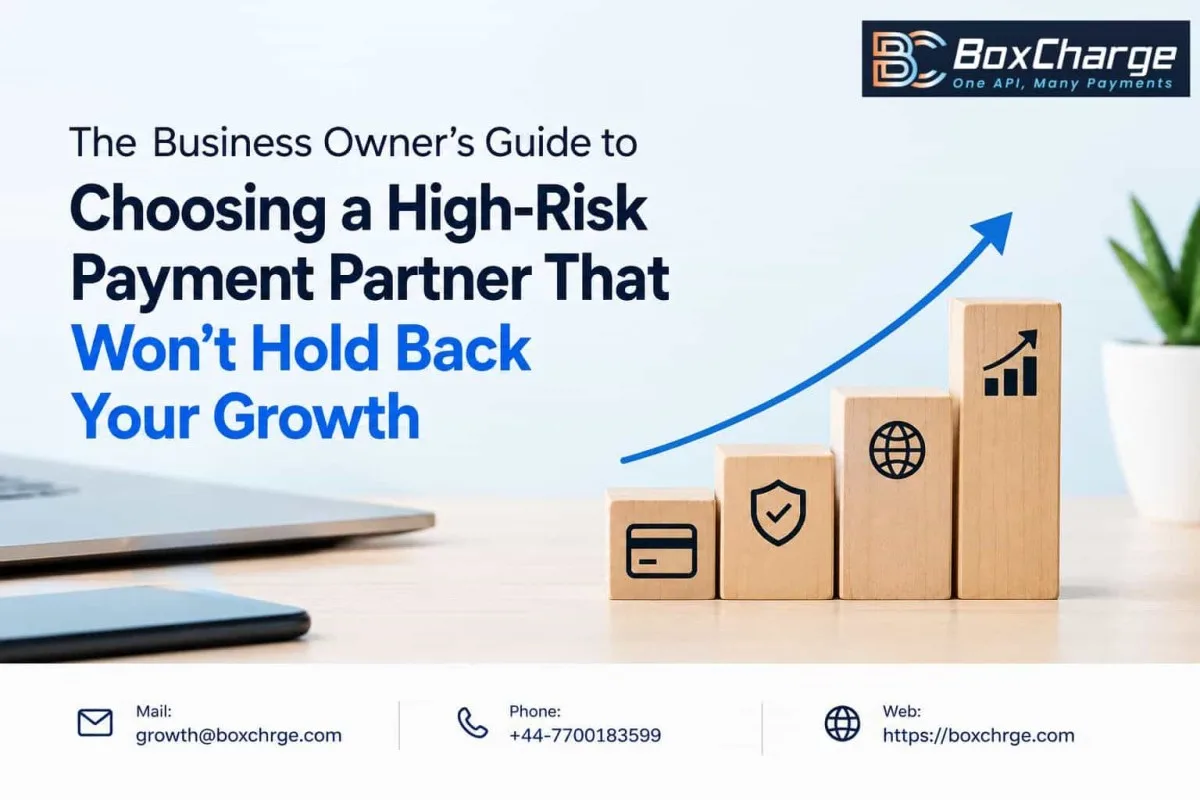
Choosing the right high-risk payment partner can make the difference between scaling a business confidently and spending every month worrying about declined transactions, frozen funds, or sudden account restrictions. For businesses operating in industries such as online gaming, forex trading, adult services, supplements, travel, and subscription services, high-risk payment processing is not simply about accepting cards. It is about finding a provider that understands the business model, supports its target markets, and can handle its risk profile over the long term.
Whether a company sells to customers in the UK, operates across the European Union, targets consumers in the United States, or accepts international payments from Australia and Canada, the right payment partner should support its commercial objectives without overlooking compliance and financial risk.
Yet many business owners make the same mistake: they compare providers based on advertised transaction fees and approval promises before examining the terms that determine whether the relationship will remain viable.
Why Choosing a High-Risk Payment Partner Requires More Care
Traditional payment providers do not all support the same industries. Businesses with recurring billing, elevated chargeback exposure, cross-border transactions, or products subject to additional regulatory scrutiny may face stricter underwriting and fewer acquiring options.
A forex platform, for example, may need a provider that understands its licensing arrangements, customer locations, transaction sizes, and refund procedures. An online subscription business may have different requirements, including recurring card payments, account updater capabilities, and tools for managing cancellations.
The practical consequences can be frustrating. A business might invest in advertising, acquire new customers, and see its sales pipeline grow, only to discover that its processor has introduced a reserve, delayed payouts, or requested additional documentation. Even when the provider is acting within its contractual rights, the resulting cash-flow pressure can make payroll, advertising expenditure, supplier payments, and expansion plans harder to manage.
This is why a high-risk merchant account should be evaluated as a business-critical financial relationship, not just a checkout tool.
1. Look Beyond the Advertised Transaction Fee
A payment provider offering the lowest processing rate is not necessarily the most affordable option. High-risk merchant accounts may include gateway fees, monthly minimums, chargeback fees, cross-border charges, currency conversion costs, and rolling reserves.
Consider an online business in the UK that processes international subscription payments. A provider quotes an attractive transaction rate, but retains a percentage of sales for several months. The business may appear profitable on paper while struggling to cover advertising, software subscriptions, staff costs, and refunds.
Before signing, request a complete pricing schedule covering transaction fees, reserve percentages, release timelines, settlement frequency, and termination charges. Compare the total cost of payment processing, not just the headline rate.
The UK-focused guide from ExpertSure provides additional context on high-risk merchant account fees, reserves, and underwriting.
2. Make Sure the Provider Understands Your Industry
Industry experience matters because payment providers assess different business models differently.
A forex broker serving customers in Europe may need to demonstrate appropriate regulatory authorisation and explain how deposits, withdrawals, and customer funds are handled. An online gaming operator may need to demonstrate licensing, age-verification procedures, and effective dispute management. A subscription business must make recurring charges, cancellation terms, and refund policies clear to customers.
A provider that understands these requirements is better positioned to explain its onboarding process and identify potential obstacles before an application is submitted.
Ask whether the provider accepts your exact business category, legal entity, operating countries, and target customer markets. Do not rely on a general claim that it supports “high-risk businesses.”
Visa's Payment Facilitator and Marketplace Risk Guide describes enhanced due diligence considerations for certain higher-risk merchant categories, including the review of business activities, marketing, locations, and processing history.
3. Understand Reserves, Settlement Delays, and Account Restrictions
One of the most stressful situations for a growing merchant is discovering that approved transactions do not translate into immediately available funds.
A payment processor or acquirer may impose a rolling reserve, delay settlement, or restrict processing under specified contractual and risk conditions. These measures can protect against potential refunds and chargebacks, but they can also place considerable pressure on a business's working capital.
For an ecommerce merchant in Canada, for instance, delayed payouts during a busy sales period could make it harder to replenish inventory just when demand is strongest.
Before accepting an offer, ask:
- What is the expected settlement schedule?
- Is a rolling or upfront reserve required?
- What percentage will be withheld, and when will it be released?
- Under what circumstances can payouts be delayed or processing suspended?
- What happens to outstanding reserves if the agreement ends?
Get the answers in writing. A provider's sales representative may explain the arrangement informally, but the signed agreement determines the applicable terms.
4. Check Fraud Prevention and Chargeback Support
Chargebacks can affect more than revenue. Excessive disputes may lead to higher costs, additional monitoring, changes to processing terms, or termination of an account.
The underlying reasons are often operational. A customer in Australia may not recognise a billing descriptor on their statement. A digital service subscriber may forget signing up for recurring billing. An international customer may dispute a purchase after delivery information or customer support communications were unclear.
A suitable payment partner should offer appropriate tools for fraud screening, transaction monitoring, dispute reporting, and, where available, pre-dispute alerts. Support for 3-D Secure authentication and tokenization may also be valuable, depending on the business model.
Merchants should still take responsibility for clear checkout terms, accessible customer support, transparent billing, and timely refunds. Payment technology can help manage risk, but it cannot compensate for a poor customer experience.
For a broader overview, Chargeflow's guide to high-risk merchant accounts discusses reserves, disputes, and the importance of managing chargeback exposure.
5. Choose a Partner That Can Support International Growth
A provider that meets your current needs may not support your next stage of expansion. Businesses entering Germany, the UK, the United States, or other international markets should confirm geographic coverage, supported currencies, local acquiring options, settlement arrangements, and relevant regulatory requirements.
Ask about payment gateway integrations, recurring billing, multi-acquirer processing, reporting, and the ability to add approved processing routes as transaction volumes grow.
For example, a UK-based subscription company expanding into Canada may discover that its existing provider offers limited local acquiring options or that its international transaction costs are higher than expected. Identifying those limitations before entering a new market makes expansion easier to plan.
Scalability does not mean choosing the provider with the longest feature list. It means choosing a payment infrastructure that fits your business today and has a credible path to supporting its future requirements.
6. Treat Communication as Part of the Service
When a payout is delayed or an underwriting team requests additional documents, a slow response can turn a manageable issue into a serious operational problem.
Ask who will manage your account after onboarding, how technical and compliance queries are escalated, and what information the provider needs when reviewing unusual transaction patterns.
Also check whether the provider communicates changes to fees, reserve requirements, transaction limits, or supported business activities clearly.
A good payment partner should explain its requirements and communicate promptly. It cannot promise that every payment will be approved or that funds will never be held, but it should make the applicable processes and contractual conditions understandable.
The Right Payment Partner Should Protect Your Ability to Grow
Choosing a high-risk payment partner requires more than finding someone willing to approve an application. Business owners need to understand the full cost of processing, the conditions attached to their merchant account, the provider's industry expertise, and the practical support available when problems arise.
Whether you operate an online gaming platform in the UK, a forex business serving European customers, or an international subscription company targeting North America, compare providers against the same commercial and operational criteria.
The strongest payment partnership is one that fits your business model, supports your target markets, manages risk responsibly, and gives you a clear understanding of how your money moves. Take the time to review the agreement, verify the provider's capabilities, and ask difficult questions before committing. That preparation can help you avoid costly surprises and build a more dependable payment operation as your business grows. Talk to the fintech expert today