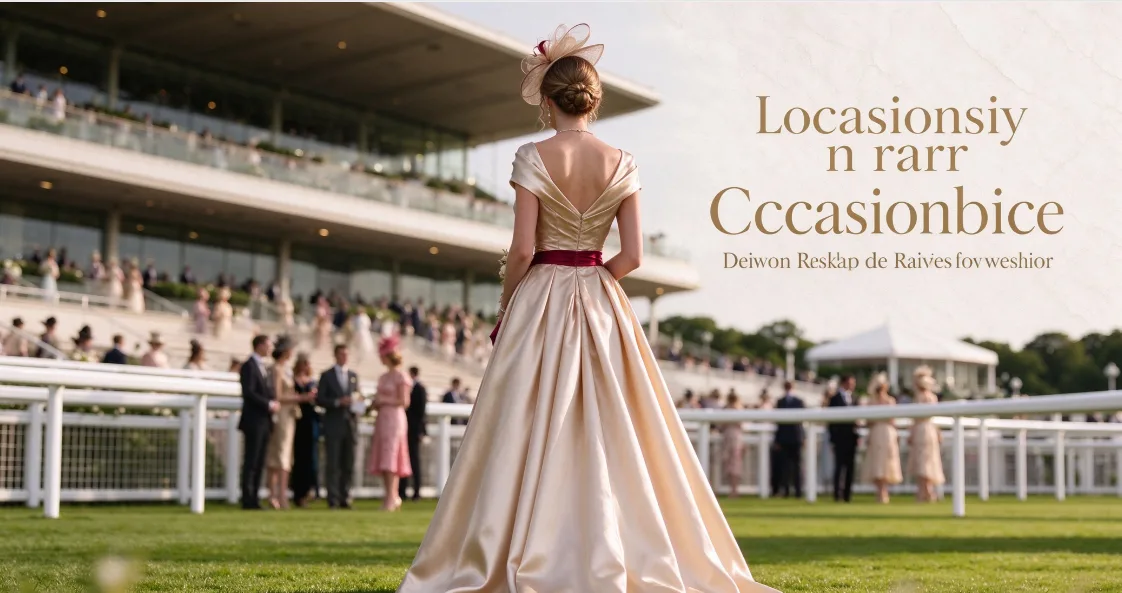
On the first Tuesday of November, Flemington stops being a racecourse and becomes a runway. For one afternoon, tens of thousands of racegoers — many of whom will never bet a dollar — dress as if the whole country is watching. Because, in a sense, it is.
Race day fashion has long been dismissed as a glamorous sideshow to the racing itself. That view is now outdated. What was once a seasonal flourish has grown into a substantial, globalised business — one that sits at the intersection of luxury retail, events tourism and a shifting attitude toward how (and why) people dress up. The numbers tell a story that's anything but frivolous.
A Market Bigger Than Most Expect
Occasionwear — the category built for weddings, balls, ceremonies and formal events — is far larger than its niche reputation suggests. Independent research sizes the global occasionwear market at USD 214.5 billion in 2025, projected to reach USD 314.11 billion by 2032, a CAGR of 5.61% — a growth rate comfortably above the broader apparel market's single-digit pace.
Within the wider fashion economy, formal and ceremonial wear punches well above its cultural footprint: analysts estimate formal wear accounts for around 12% of the global apparel market. And the pull is global — not just Western. Across Asia-Pacific and the Middle East, occasion and ceremony-related clothing drives a significant share of spending, fuelled by wedding seasons, religious festivals and a rising middle class with disposable income to spend on appearance.
Australia: The Case Study That Explains the Trend
No market illustrates occasionwear's commercial weight better than Australia — where a single four-day event makes the business case visible in real time.
The Melbourne Cup Carnival, one of the world's most fashion-obsessed sporting events, delivers a record $533 million economic boost to Victoria, according to the Victoria Racing Club. Fashion is no small slice of that figure: visitors to the carnival spend $63.4 million on fashion, grooming and retail, across 343,495 fashion-related transactions in the host state alone.
Zoom out and the scale compounds. Across the wider national impact, racegoers purchased roughly 46,000 hats and fascinators, 43,000 pairs of shoes and 46,000 dresses over the four racing days — a wave of occasionwear consumption concentrated into a single calendar week. Corporate hospitality revenue rose 10% year-on-year, and attendance topped 286,000.
In other words: a handful of race days generates millions in dresses, hats and shoes — and that's just the tip of Australia's formal-wear economy.
The Deeper Structural Drivers
Why is occasionwear outperforming? The data points to several converging forces:
The "experience economy" is rewriting dress-up. Across mature markets, spending is shifting from owning things toward buying experiences — and events are the natural habitat of occasionwear. Weddings, balls, race days and cultural ceremonies are exactly the moments people are willing to pay a premium to look their best.
Digital channels are unlocking a global customer. Online now accounts for a majority share of occasionwear sales in several key markets, allowing specialist labels to reach customers far beyond their home turf. A niche dress brand in one country can now sell into a market where a single event season doubles demand.
Sustainability is pushing rental and resale. Circular models — renting, pre-owned, resale — are reshaping how occasionwear is consumed, opening new revenue streams and reaching price-conscious customers the original-price model missed.
Australia is punching above its weight as an export hub. The country's fashion industry is valued at roughly A$28 billion, with occasionwear flagged as a key international growth segment. Designers such as Zimmermann and Christopher Esber have carried Australian occasionwear onto the global stage, proving the segment travels.
What This Means for the Industry
For established brands and DTC newcomers alike, the occasionwear opportunity is less about riding a trend and more about building around recurring, emotionally charged moments. The brands winning are those that treat race day and formal season not as a sale window, but as a predictable calendar of demand — matching silhouettes, colours and millinery to each event's distinct dress code, from Derby Day's monochrome to Oaks Day's feminine palette.
The takeaway is clear: occasionwear is no longer a seasonal sideshow. It's a structurally growing, globalised and increasingly digital business — one that happens to dress the world's most glamorous days.