
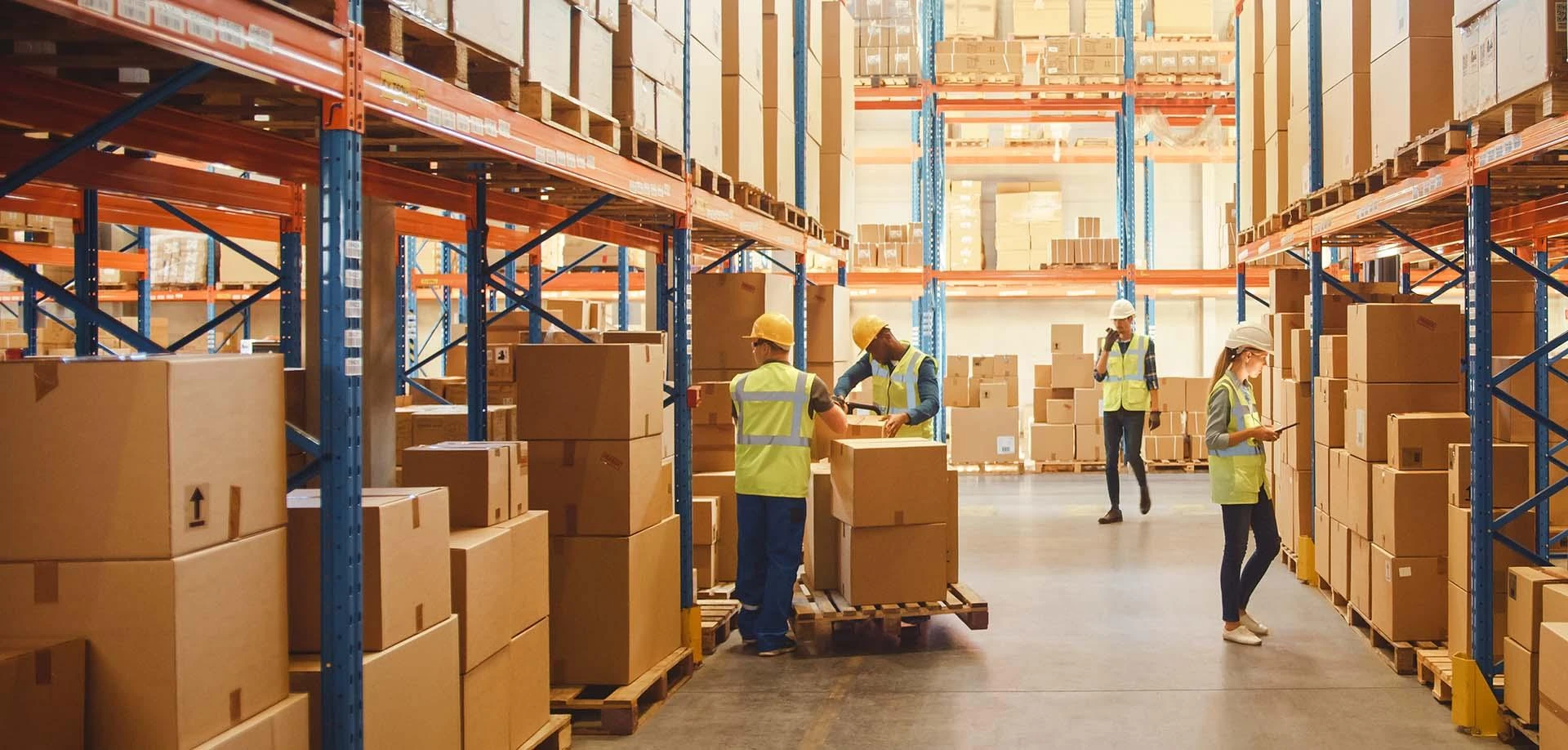
1. Surge of Global Logistics Industry
• Global logistics market was approximately USD 9.6 trillion in 2023, which was about 8–10% of global GDP
• Forecasts indicate an increase to USD 8.1 trillion within 2033, with a 4.02% CAGR from 2025 to 2033
• Automation is growing— warehouse automation estimates alone will surpass USD 30 billion as of 2026.
These numbers are a consequence of high demand, rapid digitalization, and business globalization.
2. The Acceleration of Scale of Logistics & Warehousing in India
The warehousing & logistics sector accounts for around 13–14% of GDP in India and in Q1, 2024, 66% of private equity investments in asset classes were captured—USD 1.54 billion was invested in the portfolio of Reliance Logistics.
89% of the total demand came from the most popular and strong segment of the market — industrial and logistics with a total of 27.1 million sq ft leased and 63% YoY increase of leasing activity in H1 2025.
The Indian warehousing market is projected to more than double from USD 16.4 billion in 2023 to USD 37 billion by 2032.
Supported by e-commerce, 3PL demand, manufacturing growth, and government infrastructure policy
3. Government Initiatives Fueling Infrastructure Expansion
• The Eastern Dedicated Freight Corridor (DFC) is operational and 90% of the Western Corridor is complete in April 2024.
• Developing port-led logistics, multi-modal connectivity and reducing logistics costs under India’s Sagarmala Programme.
• With an anticipated annual freight growth of 8–10%, Multi-Modal Logistics Parks (MMLPs) are being developed to support large freight movement.
• Driven by key digital transformation supported by Logistics Vision 2030 & PM Gati Shakti in place, the demand for logistics in Uttar Pradesh is projected to reach 15.6 trillion ton-km by 2050.
4. Cutting-Edge Technologies Driving Sector Evolution
• Strong adoption of Digital Twins, IoT, Artificial Intelligence, blockchain, and robotics across sectors for warehousing, inventory, tracking, and operational efficiency optimisation in India
• Research overview: The role of LLMs in SCM: advancing forecasting, inventory management, supplier relations, and decision-making tasks
• Modernization of infrastructure through Smart Industrial Parks and cloud-based real-time monitoring systems, facilitated “Logistics 4.0”.
5. Drivers of Growth: Cold Chain & Quick Commerce
• The cold chain logistics market will grow to USD523 billion by 2027. The Euromonitor report noted expansion is being propelled by retail, QSR, pharmaceuticals, and farm-to-fork demand.
• Quick commerce (Q commerce) is driving up in-city micro distribution centers to over 5,000 locations, fast delivery innovation, and automated warehousing in urban India
6. Sustainability at the Core
• Sustainability is becoming mainstream—electric vehicle fleets, renewable-powered facilities, optimized packaging, and circular economy practices are now integral to industry strategies.
7. Talent & Skill Development
• Through the Logistics Skill Center (TNASDCL) in Tamil Nadu, over 130000 students have been trained, out of which 15325 are currently trainees, and over 14000 upskilled professionals. Drivers sector workforce needed: 200,000 extra in by 2030.
• As for warehouse, Tamil Nadu too plans to add 10 million sq ft of space to help with export and logistics demand.
• To ensure industry-aligned education, Gati Shakti Vishwavidyalaya (GSV) - India's first Transportation & Logistics University was established in 2022 at Vadodara.
8. Worldwide Market Swings & Important Business Actions
• Maersk raised its projection for 2025 profits in part due to solid non-U.S. global container demand, and said global demand would grow 2–4%.
• DSV, as its acquisitions which included Schenker will allow it to become the largest logistics company in the world - though it would still have only 6-7% of a fragmented global market
The Future Scope of Logistics, SCM & Warehousing As A Career Path
• The sector is booming and wildly varied — from operations and warehouse management to tech strategy, sustainability and AI integration.
• Technological disruption leads to an increased demand for upskilled professionals in AI, robotics, data science, digital twins.
• Government-backed schemes, infrastructure projects ensure long-term career security in both public and private roles.
• Formal educational pathways, from diploma, apprenticeships, to university degrees e.g., GSV, are creating a range of opportunities for career entry and advancement.
• The bounce back – the resilience and adaptability of the industry e.g., Maersk, DSV underline secure prospects even in a time of global disruption.
Conclusion: A Sector that is Transforming the Future of Work and the Global Economy
The Logistics, Supply Chain Management SCM, and Warehouse Management sector is not just growing – it is transforming how goods move, how businesses operate, and how economies function. Fueled by a once in a lifetime boom in applications from digital technologies, investment in infrastructures, policy innovation, and global demand, this industry has become among the most vital for international trade and national development.
In India, for example, the rapid development of industrial corridors, dedicated freight routes, and multimodal logistics parks is increasing supply chain connectedness and reducing delivery timeframes turning the country into a key logistics hub in South Asia. Similarly, disruptions from pandemics, geopolitical confrontation, and climate events highlight the need for increasingly resilient, agile, and tech-driven supply chains. As a result, logistics and supply chain management are no longer the back-office reserves they once were but are now key front-office priorities.
But what makes the sector really exciting is that all are welcome. No specific background, no single path is required – school graduates can learn how to operate warehouses, logistics professionals can specialize in inventory management while tech junkies can dedicate their time to making AI-powered supply chains hyper-efficient.
The sector is now the rise of new-age jobs:
• Supply Chain Data Analyst
• Digital Twin Engineer
• Inventory Optimization Specialist
• Warehouse Automation Manager
• Last-Mile Delivery Strategist
• Cold Chain Logistics Manager
Now, these roles come not only with high demand and job security, but also with a hefty salary. With the need for businesses to be more customer-centric and cost-effective, talent that can reengineer, analyze, and digitize supply chains is growing in need value.
Additionally, with green logistics and sustainable warehousing being hot topics, there is an entirely new area within ESG logistics, with professionals tackling carbon reduction, reverse logistics, and circular supply chains. Sustainability is no longer a secondary objective; it has become the primary strategy for many logistics players — the operations piece adds a purpose driven dimension to your career as well.
Talent Development: A Chance at Every Level
Governments and institutions have noticed the demand for skills and are pouring money into logistics education and vocational training. While the ITIs and polytechnics are offering diplomas, top-notch institutions such as the IIM Calcutta and the Gati Shakti Vishwavidyalaya is also working on executive education and other level degree programs, this skilling ecosystem is evolving rapidly.
It provides identifiable paths of career trajectories starting with warehouse personnel and progressing into operations, strategy, and supply chain leadership. Global certifications through CILT, APICS (now ASCM), and SCPro play a supplementary role in higher mobility.
Beyond that, the advent of remote monitoring, robotics and AI in warehouses and transport means butcher or chef-level experts in tech have lots of room to crack the surface in space – whether coming from computer science, data analytics or electrical and mechanical engineering
Logistics: A Recession-Resilient Industry
One of the most convincing reasons to pursue a career in this industry is its wealth of stability. No matter if it is a globe-spanning pandemic, a supply chain bottle-neck of a shipping route, the logistics sector does not stop, it continues to adapt. While the pandemic resulted in job losses in many other sectors, logistics did witness job cuts too but more often than not, a rise in demand as was the case with e-commerce delivery, warehousing and cold chain during COVID-19.
Logistics is a future-proof industry thanks to this capability along with continual digital transformation and investment. Logistics will always be needed—so long as people buy, sell, manufacture, farm, and consume.
Final Word
If you are a recent graduate or a mid-career professional wanting to switch gears or someone who is seeking long-term job security and impact, logistics, SCM and warehouse management provide a rewarding career avenue. A field where skills outweigh degrees, where innovation is embraced, and the expansion is vast.
To sum up, this industry is not just employment, but a career path that drives economies, influence technology uptake, and leads to tangible change. Today, anyone who walks into this space, with the right mindset and desire to continue learning, is stepping into the future of high growth, high impact and high potential.
If you’d like, I can assist in exploring specific career paths, training programs, or emerging tech roles in this booming sector! Visit :- https://thelearnskills.com/