
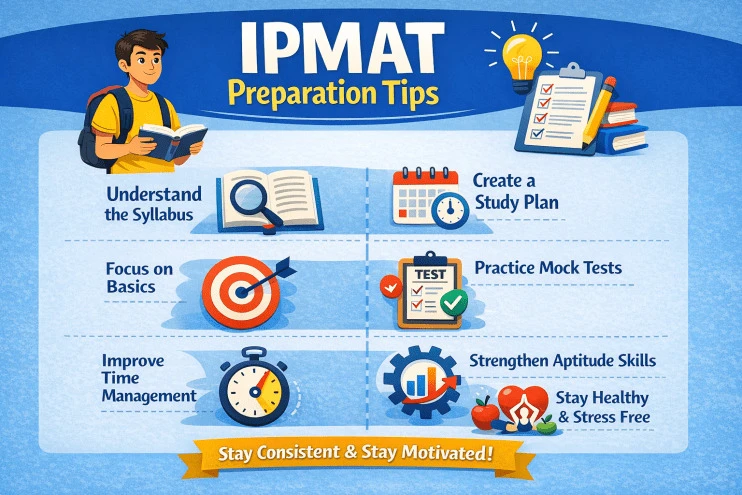
The landscape of management education in India has undergone a seismic shift over the last decade. Traditionally, the path to a prestigious Indian Institute of Management (IIM) required completing a three or four-year undergraduate degree followed by the grueling CAT exam. However, the introduction of the Integrated Programme in Management (IPM) has changed the game for high school students. By choosing smart AI coaching for class 12th, students are now identifying this five-year combined course as a strategic shortcut to a world-class career. This dual-degree program, which merges a Bachelor’s and a Master’s degree, offers a seamless transition from foundational learning to advanced leadership training.
Early Entry into the Ivy League of Indian Management
One of the most significant advantages of the IPMAT (Integrated Programme in Management Aptitude Test) is the opportunity to enter an IIM immediately after finishing school. For many, the brand value of an IIM is the ultimate goal. By clearing this exam, students bypass the immense pressure of the post-graduate CAT cycle, where hundreds of thousands of candidates compete for a limited number of seats. Entering an IIM at the age of 18 or 19 provides a distinct "first-mover advantage." It places students in a high-achieving environment much earlier than their peers, fostering a mindset of excellence and professional discipline from the very beginning of their academic journey.
Holistic and Interdisciplinary Curriculum
Unlike traditional BBA or B.Com courses that focus narrowly on commerce or business, the IIM Integrated Programs are designed with an interdisciplinary approach. The first three years often include a diverse range of subjects such as Mathematics, Statistics, Economics, Psychology, Sociology, and even Humanities and Fine Arts. This broad exposure is crucial in the modern corporate world, where leaders are expected to understand not just balance sheets, but also human behavior and social dynamics. This curriculum structure ensures that when students move into the final two years—the MBA phase—they have a well-rounded perspective that specialized undergraduate degrees often lack.
A Seamless Transition to Post-Graduation
One of the hidden stressors for college students is the constant "what next?" after graduation. Students enrolled in an integrated program are spared from the anxiety of appearing for multiple entrance exams during their final year of college. As long as a student maintains a minimum CGPA requirement during the first three years, they automatically progress to the MBA stage. This allows students to focus entirely on learning, internships, and skill development rather than spending months in coaching centers trying to crack the CAT or GMAT. It creates a stable academic environment where deep learning takes precedence over rote memorization for exams.
Superior Placement Opportunities and ROI
When it comes to return on investment, few undergraduate paths can compete with the IPM. Since the final two years of the program are spent alongside the PGP (Post Graduate Programme) students at IIMs, the placement process is unified. IPM students sit for the same campus interviews and have access to the same high-paying roles in consulting, finance, marketing, and tech as the MBA students. For a student who has studied IPMAT coaching classes in Udaipur or other educational hubs, the prospect of securing a package worth twenty or thirty lakhs per annum straight out of the five-year program is a reality that justifies the initial effort and tuition.
Peer Learning and Networking
The quality of one's network often determines the trajectory of one's career. At an IIM, you are surrounded by the brightest minds in the country. In an integrated program, you grow with a cohort for five years. This long-term association builds deep professional and personal bonds that last a lifetime. Furthermore, because the intake for IPM is highly selective, the peer-to-peer learning environment is incredibly stimulating. You aren't just learning from professors; you are learning from future CEOs, entrepreneurs, and policymakers who sit right next to you in the classroom.
Developing a Global Management Perspective
IIMs are known for their international collaborations and student exchange programs. Students in integrated programs often have the chance to spend a semester abroad at partner universities in Europe, North America, or Asia. This global exposure is vital for anyone looking to work in multinational corporations. Understanding international business ethics, cultural nuances, and global economic trends gives these students a massive edge over those who study in localized UG management programs in India that may not have the same level of global tie-ups.
Personality Development and Soft Skills
Management is as much about "soft skills" as it is about technical knowledge. The residential nature of the IIM IPM programs ensures that students develop independence, teamwork, and leadership skills. Living on campus, participating in student-run committees, organizing national-level fests, and engaging in case-study competitions transforms a shy high school graduate into a confident professional. The rigor of the program teaches time management and resilience, qualities that are highly prized by recruiters in the high-stakes corporate world.
Conclusion: A Strategic Choice for Future Leaders
The Integrated Programme in Management via the IPMAT exam is not just an alternative to traditional degrees; it is a premium fast-track to leadership. By offering early brand association, a diverse curriculum, and guaranteed placement paths, it removes the uncertainty that usually plagues the undergraduate years. For students with an analytical mind and an ambition for leadership, the IPM is perhaps the most efficient way to turn academic potential into professional success. Taking the leap into this program is a commitment to five years of excellence that pays dividends for a lifetime.