A business card is often one of the first physical brand touchpoints a customer, client or business partner receives. While logo, typography and contact details matter, the paper itself can influence how professional and memorable the card feels.
A Texture Visiting Card uses textured paper instead of a completely smooth surface. This adds visible and tactile character to the card without requiring excessive graphics or complicated finishing.
For business owners, consultants, architects, doctors, marketers, startups, designers and other professionals in India, textured cards can be a good choice when the goal is to create a more distinctive brand presentation.
But texture alone does not make a business card better. Paper GSM, artwork, colour contrast, card size, printing side and paper surface should all work together.
What Is a Texture Visiting Card?
A Texture Visiting Card is a business card printed on paper with a visible or tactile surface pattern instead of a completely smooth finish.
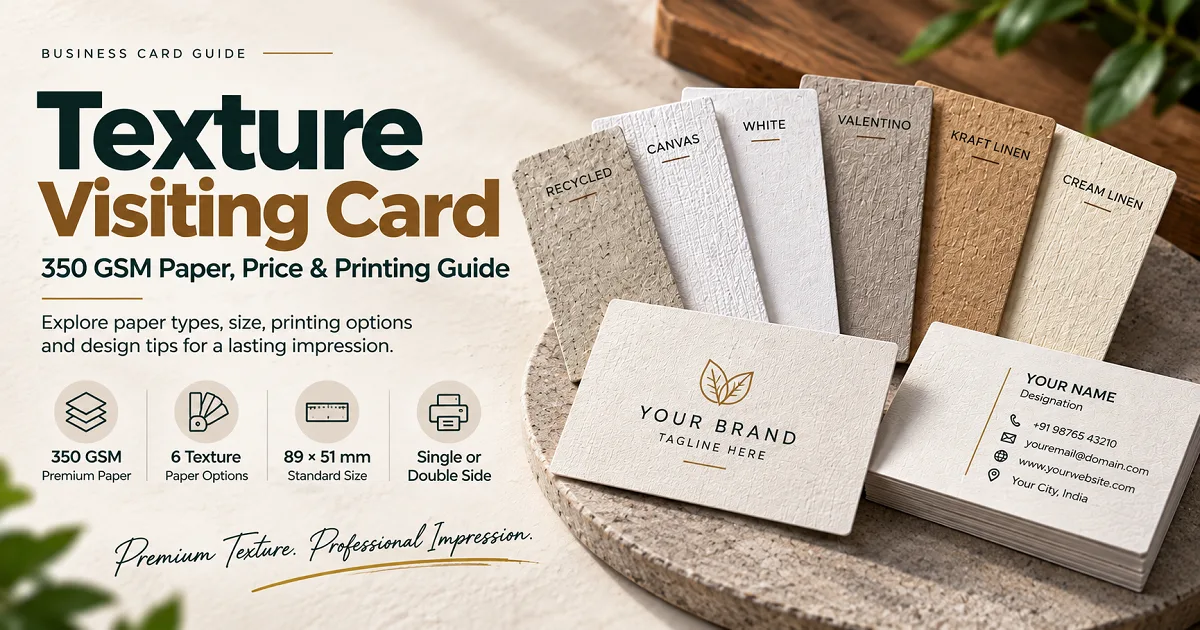
A typical 350 GSM textured visiting card can offer a firmer paper feel along with different surface options. The product discussed in this guide uses 350 GSM paper, an 89 × 51 mm card size, single- or double-sided CMYK printing, six texture paper choices and square or round corner options.
For the current configuration, the starting price is ₹648 for 100 cards including GST, or approximately ₹6.48 per card.
Texture Visiting Card Specifications at a Glance
FeatureDetailsProduct TypeTextured paper visiting cardPaper GSM350 GSMCard Size89 × 51 mmApprox. Size3.5 × 2 inchesTexture Options6Paper ChoicesRecycled, Canvas, White, Valentino, Kraft Linen, Cream LinenPrintingFull-colour CMYKPrinting SidesSingle or double sideCornersSquare or roundMinimum Order100 cardsStarting Price₹648 for 100 cards including GSTApprox. Per Card₹6.48DispatchAround 1 working dayDeliveryAround 4–5 working days across IndiaPrices, delivery estimates and specifications can change, so buyers should confirm the latest details before placing an order.
Is 350 GSM Good for a Visiting Card?
Yes. 350 GSM is a relatively heavy paper stock that can provide a firmer, more substantial feel for professional business cards.
GSM stands for grams per square metre and measures paper weight. It does not directly define exact thickness.
This distinction is important because two different papers can both be 350 GSM but still feel different depending on their density, texture and construction.
When choosing a 350 GSM Texture Visiting Card, do not evaluate the card only by GSM.
Also compare:
- paper surface
- stiffness
- colour of the stock
- print clarity
- card dimensions
- artwork quality
- printing sides
- overall visual style
A heavier paper does not automatically create a better business card if the design is difficult to read or poorly suited to the texture.
Which Texture Paper Should You Choose?
The right visiting card texture paper depends on your brand style, logo, typography and desired visual impression.
The six available paper options include:
Texture PaperBest Considered ForRecycledNatural, understated or eco-inspired brand presentationCanvasDesigns where a more visible surface pattern is desirableWhiteClean designs that need a neutral backgroundValentinoBrands seeking a distinctive textured paper characterKraft LinenEarthy, craft-inspired or understated visual identitiesCream LinenElegant layouts that work well with a warmer paper toneThere is no single “best” texture for every business.
A designer may prefer a more noticeable surface, while a chartered accountant or consultant may prefer a subtle texture that keeps typography highly readable.
For a detailed overview of the paper choices and design considerations, you can also read this 350 GSM textured visiting card guide.
What Size Is a Texture Visiting Card?
The card size discussed here is 89 × 51 mm, approximately 3.5 × 2 inches.
This format provides enough room for essential business information while keeping the card compact and easy to carry.
A professional visiting card usually needs only:
- business logo
- person’s name
- designation
- company name
- phone number
- email address
- website
- QR code, when useful
One of the most common business-card design mistakes is trying to use every available space.
Textured paper already adds visual interest, so generous spacing and a cleaner layout can often create a stronger result than excessive graphics.
Single-Sided vs Double-Sided Texture Visiting Cards
Both options can work well. The correct choice depends mainly on how much information needs to be shown.
Single-Sided Printing
A single-sided card works well when the design is intentionally minimal.
For example:
Logo + Name + Designation + Phone + Website
This can be particularly effective for professionals who want a simple and clean presentation.
Double-Sided Printing
A Double-Sided Texture Visiting Card gives you more space to separate branding from contact details.
For example:
Front
- logo
- brand name
- short tagline
Back
- name
- designation
- phone
- website
- QR code
The advantage of double-sided printing is not simply that it looks more premium. Its real benefit is better information organisation.
How to Design Textured Business Cards Properly
Textured paper requires slightly more design consideration than completely smooth stock.
1. Avoid Very Thin Fonts
Extremely fine typography can lose visual clarity against a noticeable paper texture.
Important details such as phone numbers and email addresses should remain readable at normal viewing distance.
2. Maintain Strong Contrast
Make sure text clearly separates from the paper background.
Cream, recycled and kraft-style stocks may influence the way colours are perceived compared with bright white paper.
3. Keep the Design Simple
Texture itself acts as a design element.
Too many icons, borders, patterns and decorative effects can make the card appear crowded.
4. Use Proper Print Artwork
Avoid uploading screenshots, compressed social media images or low-resolution logos.
Use clean artwork prepared according to the printer's required dimensions, bleed and safe-area specifications.
5. Be Careful With Fine Details
Intricate lines and tiny design elements may reproduce differently on textured stock.
If such details are important to your brand, review the final proof carefully before approving production.
6. Test QR Codes
If your card contains a QR code, check it at the final intended size.
A QR code that works on a large computer screen may not necessarily scan equally well when reduced significantly.
7. Proofread Before Printing
Always double-check:
- name
- designation
- phone number
- email ID
- website
- QR destination
- spelling
A premium card with incorrect contact details quickly loses its practical value.
Textured Business Cards vs Other Card Finishes
Texture is not the only way to create a premium-looking business card.
Card TypeSurfaceBest ForMain ConsiderationTextured paperVisible/tactile paper patternBrands wanting paper to become part of the designFine design details should be testedStandard smooth cardSmooth, flat surfaceGeneral networking and versatile designsLess tactile differentiationVelvet-finish cardSoft-touch finishContemporary or luxury-style brandingDifferent visual and tactile effect from textured stockDouble-sided textured cardTextured stock with two printed sidesBusinesses needing more organised informationAvoid overcrowding both sidesThe best choice depends on the brand rather than which finish sounds more expensive.
If you are comparing textured stock with softer premium finishes, this guide to velvet-finish business cards provides another useful comparison.
What Is the Texture Visiting Card Price?
For the product configuration discussed here, the starting Texture Visiting Card price is ₹648 for 100 cards including GST.
That is approximately:
₹648 ÷ 100 = ₹6.48 per card
The minimum order quantity is 100 cards.
However, buyers should avoid comparing printing companies based only on the lowest advertised price.
Compare the complete specification, including:
- paper GSM
- actual paper texture
- card size
- printing sides
- corner style
- quantity
- tax
- design support
- delivery
Two quotations may appear similar while offering different paper or printing specifications.
Square Corners or Round Corners?
Both square and round corners can work with textured cards.
Square corners create a familiar and structured appearance.
Round corners create a softer profile and may suit brands that already use rounded typography, icons or graphic elements.
The choice should complement the visual identity instead of being treated as an isolated decorative upgrade.
Who Should Choose Premium Textured Business Cards?
Premium Textured Business Cards are particularly useful where face-to-face presentation and personal networking are important.
They can suit:
- architects
- interior designers
- business owners
- consultants
- chartered accountants
- doctors
- startup founders
- marketers
- boutique owners
- creative professionals
- premium service businesses
Who May Not Need Textured Cards?
Textured stock is not automatically the best choice for every business.
A standard card may be more practical when:
- thousands of cards are distributed primarily as inexpensive contact slips
- the design relies heavily on photographic images
- extremely fine lines are essential
- completely uniform smooth colour areas are important
- tactile presentation is not important to the brand
This is an important buying principle:
Choose textured paper because it supports your brand identity, not simply because the word “texture” sounds premium.
How Does Texture Visiting Card Printing Online Work?
Texture Visiting Card Printing Online allows a customer to select specifications, provide artwork and place an order digitally.
A typical process is:
- Choose the required quantity.
- Select the preferred texture paper.
- Choose single- or double-sided printing.
- Select square or round corners.
- Upload or provide your artwork.
- Check the digital proof.
- Verify all contact information.
- Approve the final artwork.
- Proceed with printing and delivery.
For businesses ready to compare current paper options and specifications, the latest texture visiting card printing options can be reviewed before ordering.
The product information currently lists approximately 1 working day for dispatch and 4–5 working days for delivery across India.
Common Mistakes to Avoid Before Ordering
Some mistakes can reduce the effectiveness of even high-quality textured cards.
Avoid:
- choosing paper only from its name
- using very small fonts
- selecting low-contrast colours
- overcrowding the design
- uploading low-resolution artwork
- using an untested QR code
- assuming all 350 GSM papers feel identical
- comparing only the final price
- skipping the artwork proof
- forgetting to verify contact details
Also remember that terms such as Texture Board Visiting Card, textured business card or textured paper card may be used differently by different printers.
Always check the actual GSM, size, printing method and paper stock before buying.
Frequently Asked Questions
What is a Texture Visiting Card?
A Texture Visiting Card is a business card printed on paper with a tactile or visible surface pattern rather than a completely smooth finish.
Is 350 GSM suitable for business cards?
Yes. 350 GSM is a relatively heavy card stock that can provide a firm feel, although actual thickness and stiffness vary depending on the paper type.
What size is the card?
The discussed size is 89 × 51 mm, approximately 3.5 × 2 inches.
How many texture options are available?
There are six paper options: Recycled, Canvas, White, Valentino, Kraft Linen and Cream Linen.
Can texture cards be printed on both sides?
Yes. The specification supports both single-sided and double-sided full-colour CMYK printing.
Can I add a logo and QR code?
Yes. Custom artwork can include a logo, contact information and a QR code. The QR code should be tested at its final print size.
What is the minimum order quantity?
The listed minimum order is 100 cards.
What is the price of 100 texture visiting cards?
The starting price provided is ₹648 for 100 cards including GST, approximately ₹6.48 per card. Always check the latest price before ordering.
Final Thoughts
A Texture Visiting Card can add another dimension to professional branding because the paper itself becomes part of the design.
A 350 GSM card can provide a substantial paper weight, while options such as Recycled, Canvas, White, Valentino, Kraft Linen and Cream Linen allow different visual styles.
However, good results depend on more than paper alone.
Choose a texture that complements your logo, maintain readable typography, use sufficient contrast, prepare high-quality artwork and carefully check the proof before printing.
For most businesses, the best textured card is not the one with the most elaborate design. It is the one that presents the brand clearly, feels appropriate for the audience and makes essential contact information easy to use.