
Healthcare has changed significantly with the adoption of digital technologies that make medical services more accessible and convenient. Patients today expect faster access to doctors without spending hours traveling or waiting in crowded hospitals. At the same time, healthcare providers are looking for efficient ways to improve patient care, reduce operational costs, and manage increasing patient volumes. These changing expectations have accelerated the growth of virtual healthcare services across the world.
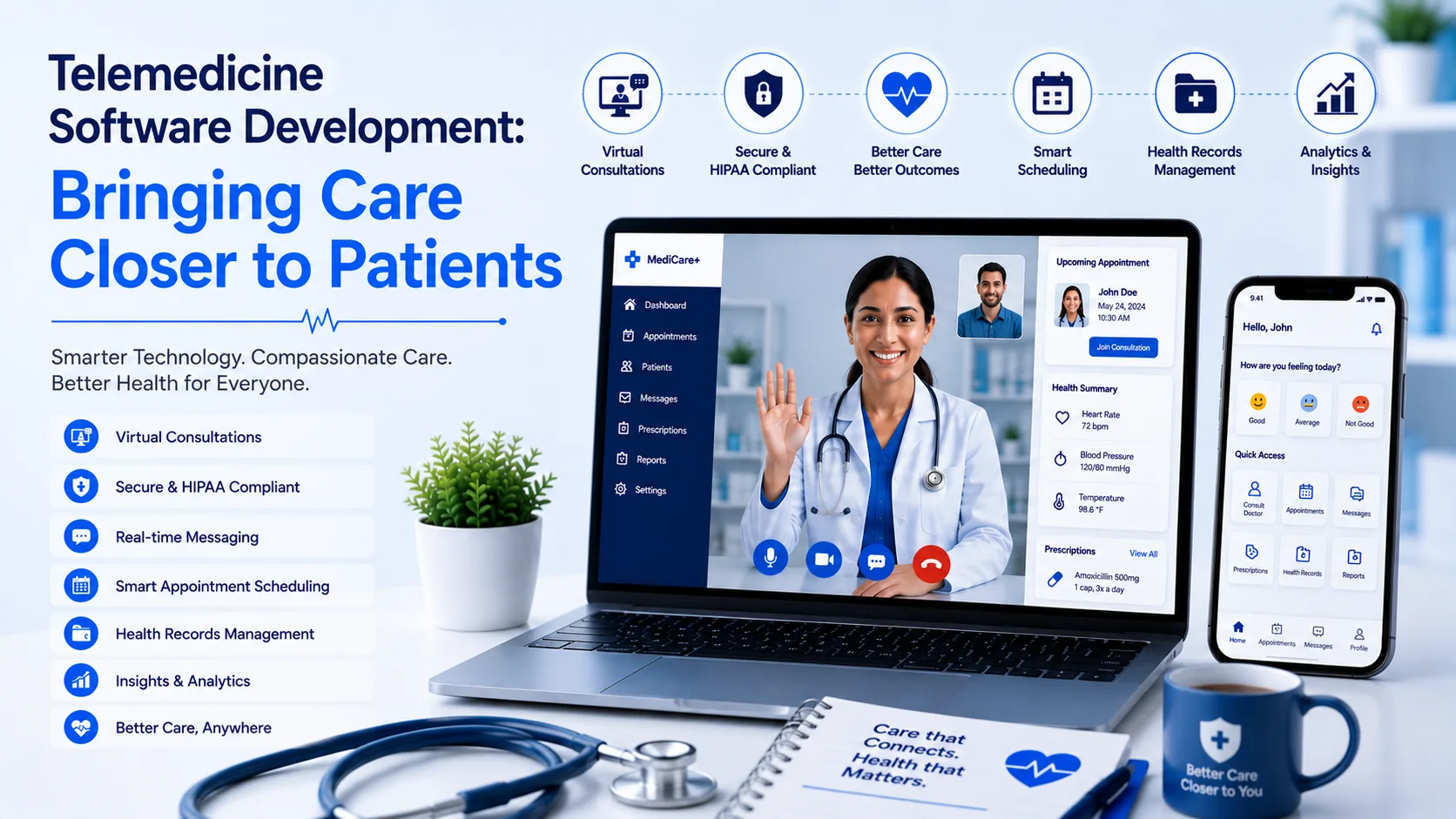
One of the major drivers behind this transformation is Telemedicine Software Development. Modern telemedicine platforms allow hospitals, clinics, and healthcare organizations to provide secure virtual consultations, online appointment scheduling, remote patient monitoring, electronic prescriptions, and digital health record management through one integrated system. These capabilities enable healthcare providers to deliver quality care regardless of patient location while improving operational efficiency.
Unlike basic video conferencing applications, custom telemedicine solutions are built specifically for healthcare workflows. They integrate with Electronic Health Records (EHR), Electronic Medical Records (EMR), Hospital Management Systems, laboratories, pharmacies, billing systems, and patient portals. This connected ecosystem allows healthcare professionals to access complete patient information while providing consistent and personalized care.
This article explains how Telemedicine Software Development is bringing healthcare closer to patients, improving accessibility, strengthening communication, and helping healthcare organizations build a more connected and efficient healthcare experience.
The Growing Need for Virtual Healthcare
The demand for virtual healthcare continues increasing as patients seek more flexible and convenient ways to receive medical attention. Busy lifestyles, increasing healthcare costs, aging populations, and the need for faster medical services have encouraged healthcare providers to expand beyond traditional clinical settings. Virtual care enables hospitals and clinics to reach more patients while maintaining high-quality healthcare delivery.
Healthcare organizations are also recognizing that telemedicine improves operational efficiency by reducing unnecessary hospital visits and simplifying routine consultations. This allows physicians to focus more on patient care while making better use of available healthcare resources.
Improving Healthcare Accessibility
Modern Telemedicine Software Development removes geographical barriers by allowing patients to consult experienced healthcare professionals from any location with an internet connection. Individuals living in rural communities or underserved areas can receive specialist consultations without traveling long distances.
Improved accessibility helps patients receive timely medical attention while reducing delays that could affect treatment outcomes.
Supporting Faster Medical Services
Telemedicine enables patients to schedule appointments, attend consultations, receive prescriptions, and communicate with physicians without visiting healthcare facilities. This significantly reduces waiting times while improving overall patient convenience.
Healthcare providers can also organize their schedules more efficiently, allowing them to serve a greater number of patients every day.
Creating a Better Patient Experience
Patient satisfaction has become one of the most important priorities for healthcare organizations. Patients expect healthcare services that are easy to access, simple to use, and available whenever needed. Telemedicine platforms improve every stage of the patient journey by making healthcare more convenient and connected.
A positive digital experience encourages patients to remain engaged with their healthcare providers while improving long-term treatment outcomes.
Convenient Virtual Consultations
Professional Telemedicine Software Development enables patients to connect with doctors through secure HD video consultations, encrypted messaging, and digital document sharing. Patients can discuss symptoms, review medical reports, and receive treatment recommendations without leaving their homes.
This convenience is particularly valuable for elderly patients, individuals with mobility limitations, and those managing chronic health conditions.
Personalized Patient Engagement
Modern telemedicine platforms maintain detailed patient profiles, consultation histories, treatment plans, and follow-up schedules. Healthcare providers can deliver personalized care based on each patient's medical history rather than treating every consultation independently.
Personalized healthcare improves patient confidence while supporting stronger long-term relationships between patients and providers.
Secure and Reliable Healthcare Communication
Security is one of the most important considerations when developing telemedicine solutions. Healthcare organizations handle confidential medical information that must remain protected throughout every consultation and communication channel.
A secure platform gives both patients and healthcare providers confidence when using digital healthcare services.
Protecting Patient Information
Modern Telemedicine Software Development includes end-to-end encryption, multi-factor authentication, role-based access controls, secure cloud infrastructure, automated backups, and continuous security monitoring. These technologies safeguard confidential patient information against unauthorized access and cyber threats.
Strong security practices also help healthcare organizations comply with healthcare privacy regulations while maintaining patient trust.
Reliable Communication Tools
Telemedicine platforms support secure video conferencing, instant messaging, file sharing, consultation notes, and digital prescriptions within one integrated environment. Physicians can communicate with patients clearly while reviewing diagnostic reports and treatment recommendations in real time.
Reliable communication improves consultation quality while supporting more accurate clinical decision-making.
Integrating Healthcare Systems
Healthcare organizations rely on multiple digital systems to manage patient care efficiently. Telemedicine platforms must integrate smoothly with existing healthcare technologies to create a connected care environment.
System integration improves collaboration while reducing duplicate documentation and administrative complexity.
Connecting Clinical Information
Professional Telemedicine Software Development integrates directly with Electronic Health Records (EHR), Electronic Medical Records (EMR), Hospital Management Systems, laboratory software, pharmacy platforms, billing applications, and patient portals.
Centralized patient information enables healthcare professionals to access complete medical histories during every consultation, improving diagnosis and treatment planning.
Improving Care Coordination
Integrated healthcare systems ensure patient records remain updated after every virtual consultation. Physicians, specialists, pharmacists, and laboratory staff can securely access the latest patient information without relying on manual paperwork.
This coordinated approach improves communication across departments while delivering more consistent healthcare experiences.
Simplifying Appointment Scheduling
Appointment scheduling is one of the first interactions patients have with healthcare providers. A simple and efficient scheduling process creates a positive experience while reducing administrative workloads for healthcare organizations.
Modern telemedicine platforms automate appointment management, making healthcare services easier to access.
Easy Online Scheduling
Modern Telemedicine Software Development allows patients to book appointments online by selecting available physicians, consultation types, and preferred time slots. Automated confirmations simplify scheduling while reducing unnecessary phone calls.
Healthcare providers benefit from organized physician calendars and better resource utilization.
Automated Patient Notifications
Telemedicine systems automatically send reminders, consultation links, follow-up notifications, prescription updates, and healthcare announcements through SMS, email, or mobile applications. These automated communications reduce missed appointments while improving patient engagement.
Timely notifications keep patients informed throughout every stage of their healthcare journey.
Supporting Remote Patient Monitoring
Remote patient monitoring allows healthcare providers to extend medical care beyond scheduled consultations. Connected wearable devices continuously collect patient health information, allowing physicians to monitor chronic conditions and recovery progress remotely.
Continuous monitoring helps identify potential health concerns earlier while reducing unnecessary hospital admissions.
Connected Healthcare Devices
Custom Telemedicine Software Development integrates with wearable devices that measure heart rate, blood pressure, blood glucose, oxygen saturation, and other important health indicators. Patient data is transmitted securely to healthcare providers for ongoing review.
Real-time monitoring supports faster intervention while improving long-term disease management.
Better Long-Term Care
Healthcare providers can monitor patient progress between appointments, adjust medications, recommend additional consultations, and respond quickly when health indicators change. This proactive approach improves patient outcomes while strengthening long-term healthcare management.
Future of Connected Healthcare
The future of healthcare will be built around connected digital ecosystems that enable patients, physicians, hospitals, laboratories, pharmacies, and insurance providers to work together through a single integrated platform. Emerging technologies such as Artificial Intelligence (AI), cloud computing, wearable medical devices, the Internet of Things (IoT), and predictive analytics are making healthcare more proactive, personalized, and data-driven. These innovations will help healthcare providers deliver faster diagnoses, continuous patient monitoring, and more informed clinical decisions.
As digital transformation accelerates, Telemedicine Software Development will continue evolving to support seamless integration with Electronic Health Records (EHR), Hospital Management Systems, patient portals, remote monitoring devices, and healthcare analytics platforms.
AI-powered virtual assistants, automated clinical documentation, multilingual consultations, and intelligent health insights will further improve operational efficiency while enhancing patient engagement. Healthcare organizations that invest in connected telemedicine platforms today will be better positioned to provide accessible, secure, and high-quality care while adapting to the future needs of patients and the healthcare industry.
Conclusion
Telemedicine has transformed healthcare by bringing medical services closer to patients and making care more accessible, convenient, and efficient. Through secure virtual consultations, integrated patient records, online appointment scheduling, remote patient monitoring, and real-time communication, healthcare providers can deliver consistent care regardless of patient location. These capabilities improve patient satisfaction while helping hospitals and clinics streamline daily operations and optimize healthcare resources.
Investing in Telemedicine Software Development enables healthcare organizations to build secure, scalable, and future-ready digital healthcare platforms that support connected care across the entire patient journey. As technologies such as Artificial Intelligence, cloud computing, wearable devices, and predictive analytics continue to advance, telemedicine will play an even greater role in modern healthcare delivery. Organizations that embrace custom telemedicine solutions today will strengthen patient engagement, improve clinical outcomes, reduce operational costs, and establish a strong foundation for long-term digital healthcare growth.