A bright smile has long been associated with health, youth, and confidence. Over time, however, our teeth naturally darken due to diet, lifestyle habits, and the aging process. Today, both professional and at-home whitening options are widely available—but how do they differ, and which is most effective?
This article explores the science behind whitening, compares in-office treatments with at-home methods, and outlines what you should know before deciding on the right approach for your smile.
How Teeth Become Discolored
Discoloration develops in two primary ways:
- Extrinsic Stains – Found on the tooth surface, these stains come from foods and drinks like coffee, tea, wine, and from tobacco use. They are often yellow or brown in appearance.
- Intrinsic Stains – Embedded within the tooth’s enamel or dentin, these stains are more stubborn. They may result from medications, trauma, excessive fluoride exposure, or the natural thinning of enamel with age.
While routine dental cleanings can remove surface stains, deeper discoloration typically requires bleaching agents to penetrate enamel and chemically break down stain molecules.
The Science of Whitening
Both professional and at-home whitening methods rely on the same principle: peroxide-based bleaching agents (hydrogen peroxide or carbamide peroxide). These agents produce oxygen molecules that react with chromogens (the molecules that cause staining), breaking them down into smaller, less visible fragments.
The difference between whitening systems lies in:
- Concentration of the bleaching agent
- How long does the product stay on the teeth
- Protective measures for gums and enamel
Professional Teeth Whitening
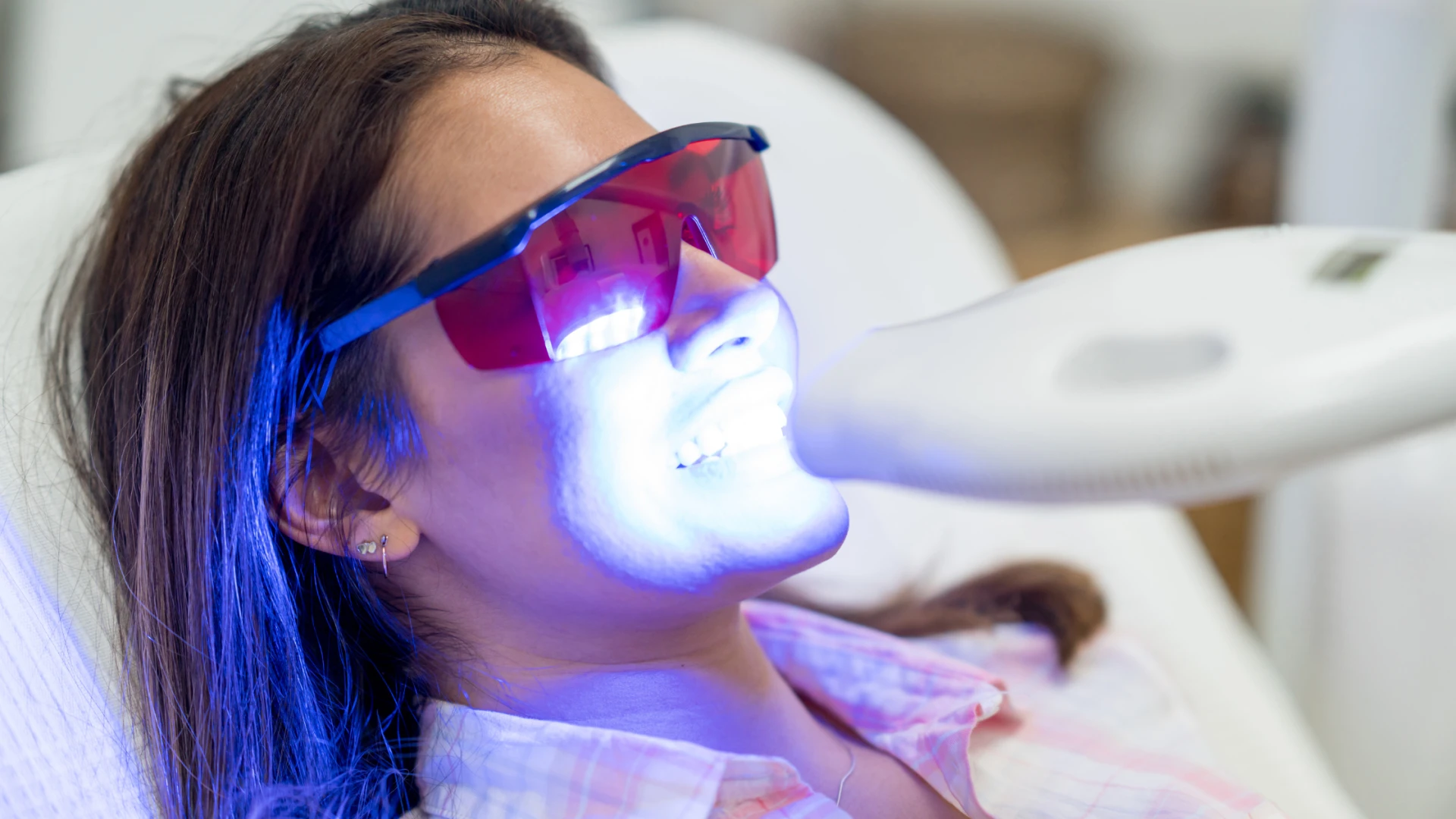
Professional whitening is performed in a dental office under the supervision of trained clinicians.
How It Works
- A protective barrier or gel is applied to shield gums and soft tissue.
- High-concentration bleaching agents are carefully applied to teeth.
- Some systems use light or heat activation, though the effectiveness of these boosters varies.
- Treatment usually takes 45–90 minutes and can produce noticeable results in just one session.
Benefits
- Immediate results: Multiple shades lighter in a single visit.
- Customized treatment: Dentists tailor concentration and technique based on tooth sensitivity and stain type.
- Safety oversight: Professionals minimize the risk of gum irritation or enamel damage.
Considerations
- Cost: Professional whitening is more expensive than at-home kits.
- Temporary sensitivity: Some patients experience tooth or gum sensitivity for a few days.
- Maintenance required: Periodic touch-ups are needed to preserve brightness.
At-Home Whitening Options
At-home whitening methods come in many forms, from custom trays to over-the-counter strips and gels.
Common Types
- Whitening Trays – Either dentist-provided or store-bought. Custom trays provide a closer fit and more consistent results.
- Whitening Strips – Thin, flexible strips coated with bleaching gel. Easy to use but best for front teeth.
- Whitening Toothpaste or Rinses – Useful for mild stain removal, though results are limited.
- Whitening Pens – Portable applicators for targeted areas, but typically less effective for significant stains.
Benefits
- Convenience: Treatments can be done at home, on your own schedule.
- Lower cost: More affordable than professional whitening.
- Gradual change: Results build up over days or weeks, offering a subtle transition.
Considerations
- Lower concentration: At-home products use weaker bleaching agents, so results are less dramatic.
- Longer treatment time: May take several weeks to achieve noticeable change.
- Potential for misuse: Overuse or uneven application can cause sensitivity or inconsistent whitening.
Factors That Influence Whitening Results
- Type of Stain: Extrinsic stains respond better to whitening than intrinsic discoloration.
- Tooth Condition: Teeth with cracks, cavities, or worn enamel may react differently.
- Age: Younger patients often see faster results due to thicker, healthier enamel.
- Lifestyle Habits: Frequent consumption of staining foods or smoking can reduce longevity.
- Consistency: At-home treatments only work if used as directed.
Risks and Side Effects
Both professional and at-home whitening share similar risks, though professional supervision helps minimize them.
- Tooth Sensitivity: A temporary but common side effect, usually resolving within days.
- Gum Irritation: Whitening gel can irritate soft tissues if it leaks beyond teeth.
- Uneven Results: Restorations (like crowns or fillings) will not whiten, which may create shade differences.
- Overuse: Excessive whitening can weaken enamel or create a chalky appearance.
Maintaining Results
Whitening is not permanent, but results can last longer with proper care:
- Brush and floss daily with fluoride toothpaste.
- Reduce consumption of staining drinks like coffee, tea, and red wine.
- Rinse with water after meals to minimize stain buildup.
- Avoid smoking or tobacco products.
- Schedule regular dental cleanings.
- Use touch-up whitening trays or strips as recommended.
Which Option Is Right for You?
- Choose professional whitening if you want quick, dramatic results and prefer treatment under supervision. It’s especially useful before important events or for individuals with stubborn stains.
- Choose at-home whitening if you’re looking for budget-friendly, gradual improvements and are willing to commit to consistent application.
For many, a combination approach works best: professional whitening for initial results, followed by at-home maintenance to extend brightness.
Final Thoughts
The science of whitening is simple: peroxide-based agents break down stains and lighten tooth color. What differs is the concentration, speed, and precision between professional and at-home methods.
If you’re interested in exploring a safe and effective teeth whitening service, consider your goals, budget, and lifestyle. A dental professional can help you decide which method offers the best results while protecting your long-term oral health.