
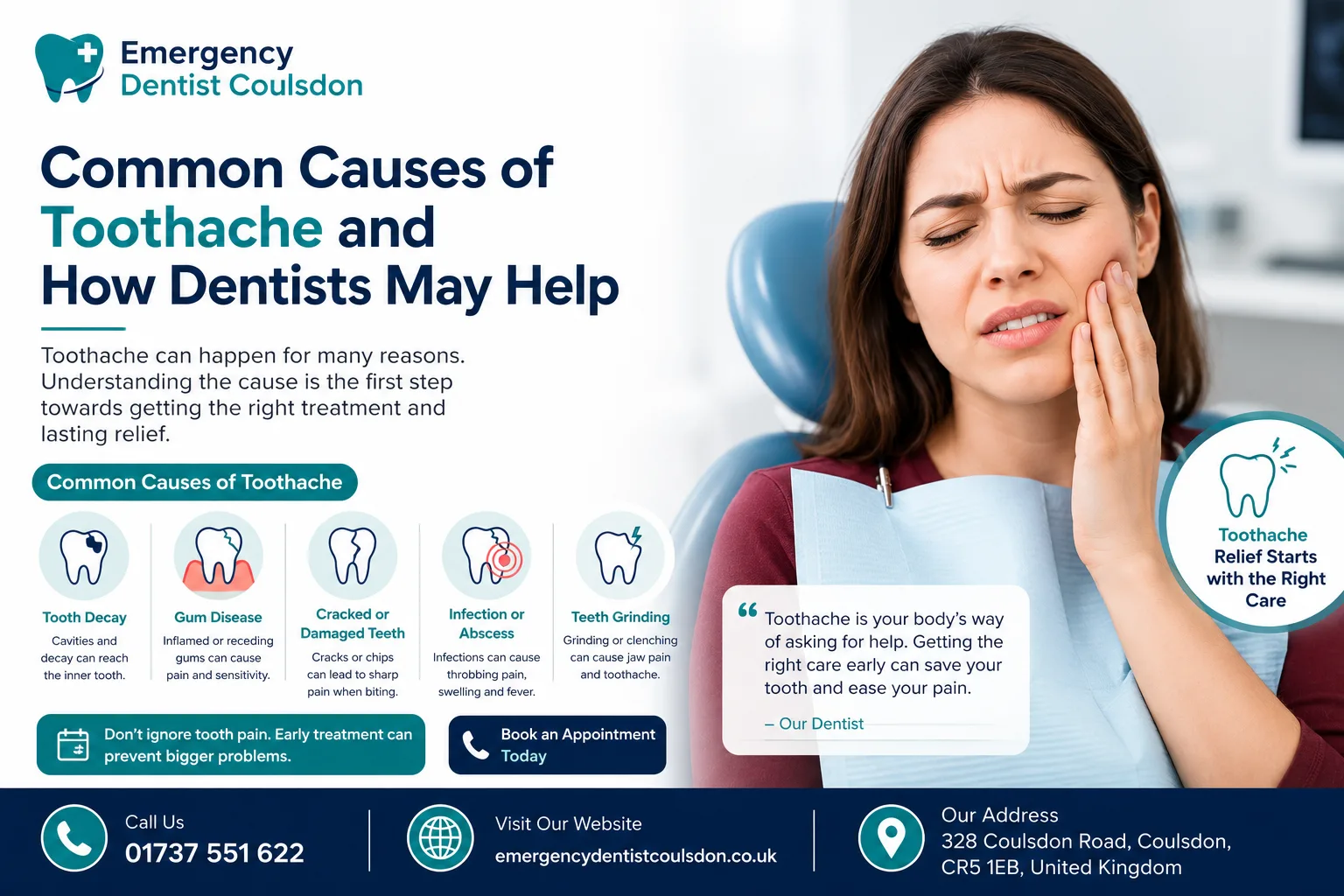
A toothache can range from a mild irritation to severe pain that affects eating, sleeping, and concentration. While some toothaches come on suddenly, others develop gradually over time. Understanding the possible causes may help you know when to seek dental care and what treatment options may be available.
If you are experiencing a Toothache in Coulsdon, prompt advice from a dental professional may help relieve discomfort and prevent the issue from becoming more serious.
What causes a toothache?
Toothache is often a sign that something inside or around the tooth needs attention. The pain may feel sharp, throbbing, constant, or sensitive to hot and cold foods.
Some of the most common causes include:
- Tooth decay
- Gum disease
- Cracked or damaged teeth
- Dental abscesses or infection
- Worn fillings or crowns
- Teeth grinding
- Wisdom tooth problems
A dentist explains:
“Pain is usually the body’s way of telling us something needs attention. Even if a toothache comes and goes, it’s important not to ignore it.”
Tooth decay and cavities
One of the most common reasons for toothache is tooth decay. This happens when bacteria in the mouth produce acids that gradually damage the tooth surface.
Early signs may include:
- Sensitivity to sweets
- Pain when eating or drinking
- Visible holes or dark spots on the tooth
If decay reaches the inner part of the tooth, the pain may become more intense.
How dentists may help
Treatment depends on how advanced the decay is. A dentist may recommend:
- A filling to restore the tooth
- Cleaning and removal of decay
- Root canal treatment if infection reaches the nerve
- Advice on improving oral hygiene habits
Early treatment often helps preserve more of the natural tooth.
Gum disease and gum irritation
Swollen or inflamed gums can also lead to discomfort around the teeth. Gum disease develops when plaque builds up around the gumline.
Symptoms may include:
- Red or bleeding gums
- Bad breath
- Tenderness around teeth
- Gum recession
A hygienist shares:
“Many patients are surprised to learn that gum problems can cause tooth discomfort. Healthy gums play an important role in supporting the teeth.”
How dentists may help
Dental professionals may suggest:
- Professional cleaning
- Improved brushing and flossing techniques
- Regular hygiene visits
- Monitoring gum health over time
Managing gum disease early may help prevent further complications.
Cracked or damaged teeth
A tooth can crack due to biting hard foods, injury, or teeth grinding. Sometimes the crack may be too small to see easily.
Signs can include:
- Sharp pain when biting
- Sensitivity to hot or cold foods
- Discomfort that comes and goes
Treatment options
Depending on the damage, a dentist may recommend:
- Smoothing rough edges
- Dental bonding
- A crown to protect the tooth
- Further treatment if the crack extends deeper
Avoid chewing on the affected side until the tooth has been checked.
Dental abscess or infection
An abscess is a build-up of infection that may occur near the root of the tooth or gums. This type of toothache is often severe and should not be ignored.
Common signs include:
- Throbbing pain
- Swelling in the gums or face
- A bad taste in the mouth
- Fever or feeling unwell
How dentists may help
Treatment may involve:
- Draining the infection
- Cleaning the affected area
- Root canal treatment
- Advice on pain management and aftercare
If swelling affects breathing or swallowing, urgent medical care may be needed.
Teeth grinding and jaw tension
Some people grind or clench their teeth during sleep or stressful situations. Over time, this pressure can cause aching teeth and jaw discomfort.
Symptoms may include:
- Morning jaw pain
- Headaches
- Sensitive teeth
- Worn tooth surfaces
Possible treatments
A dentist may suggest:
- A custom mouthguard
- Advice on reducing strain on the jaw
- Monitoring wear on the teeth
Addressing grinding early may help reduce further damage.
What to do if you have a toothache
If you are dealing with a Toothache Coulsdon, there are a few simple steps that may help while waiting for a dental appointment.
You can try to:
- Rinse your mouth with warm salt water
- Take over-the-counter pain relief as directed
- Avoid very hot, cold, or sugary foods
- Brush gently around the area
- Use a cold compress if swelling is present
These measures may help ease discomfort temporarily, but they do not replace professional care.
When to contact a dentist
Toothache that lasts more than a day or worsens over time should be assessed by a dental professional. Prompt attention may help prevent complications and improve comfort sooner.
At Emergency Dentist Coulsdon, patients experiencing dental discomfort can receive assessment and advice tailored to their needs.
Whether the pain is mild or severe, understanding the cause is often the first step towards relief.
Looking after your long-term oral health
Preventing toothache often starts with regular oral care habits and routine dental visits.
Helpful steps include:
- Brushing twice daily with fluoride toothpaste
- Cleaning between teeth daily
- Limiting sugary snacks and drinks
- Attending regular dental check-ups
- Seeking advice early if sensitivity develops
Good preventive care may help reduce the likelihood of future discomfort.
Finding support for toothache
Living with dental pain can be stressful, especially when it affects daily life. Seeking professional advice early may help identify the cause and provide appropriate treatment options before the issue worsens.
If you are searching for support for a Toothache, contacting Emergency Dentist in Coulsdon may help you access prompt and supportive dental care focused on relieving discomfort and protecting your oral health.