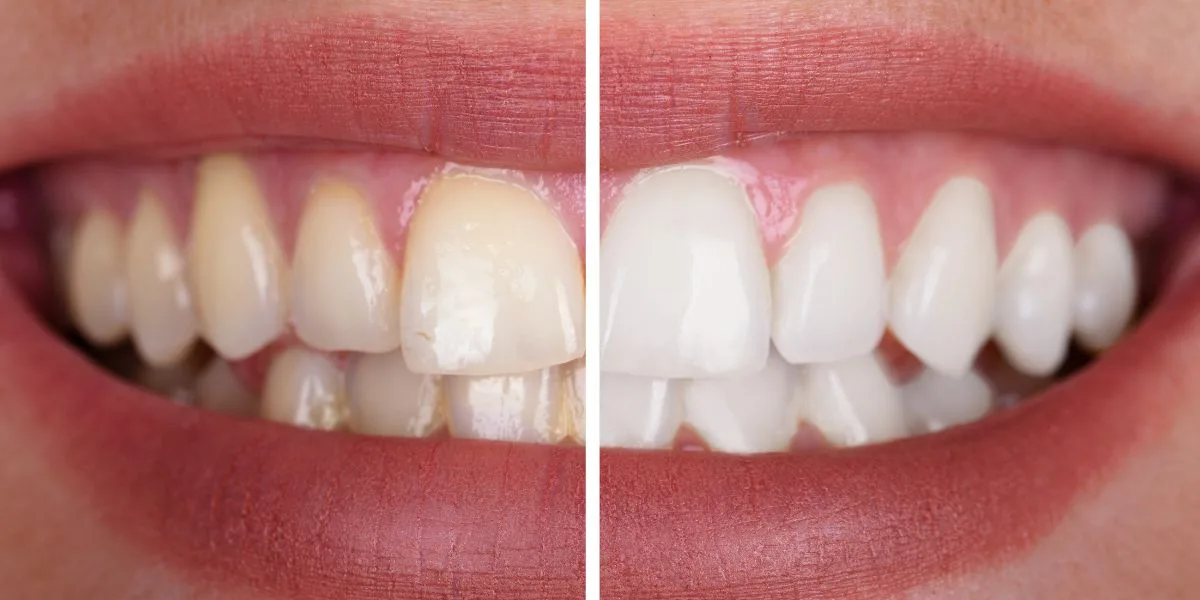
Teeth whitening in Lahore improves tooth color through clinically supervised bleaching systems and stain-removal procedures.
Dental whitening targets extrinsic and intrinsic tooth discoloration using peroxide-based formulations and professional treatment protocols. Clinics across Lahore, including DHA, Gulberg, Johar Town, and Model Town, provide cosmetic whitening under dental supervision.
Tooth discoloration develops through pigment accumulation, enamel changes, and age-related dentin exposure.
Stains, for example coffee stains, tobacco discoloration, and tea pigmentation, affect enamel appearance and smile aesthetics.
Professional whitening focuses on:
- Tooth shade improvement
- Surface stain reduction
- Enamel appearance enhancement
- Cosmetic smile improvement
What Is Teeth Whitening?
Teeth whitening is a cosmetic dental procedure that lightens tooth color using controlled bleaching agents.
Professional whitening uses hydrogen peroxide or carbamide peroxide to oxidize stain molecules inside enamel and dentin.
Whitening differs from routine cleaning because the procedure alters tooth shade rather than only removing plaque or calculus.
Common whitening systems include:
- In-office whitening
- Laser-assisted whitening
- Dentist-supervised home whitening
- Whitening trays
- Combination whitening systems
Dentists evaluate oral condition before whitening to confirm treatment suitability.
Why Teeth Become Discolored
Tooth discoloration occurs through staining, enamel wear, trauma, medication exposure, and aging.
Discoloration develops through external or internal processes.
Extrinsic stains affect enamel surfaces while intrinsic discoloration affects deeper tooth structures.
Major discoloration causes include:
CauseType of StainingCoffee and teaExtrinsicTobacco useExtrinsicPoor oral hygieneExtrinsicDental traumaIntrinsicTetracycline exposureIntrinsicAgingCombinedPigmented foods, including berries, cola beverages, and curry-based foods, contribute to surface staining.
Professional Teeth Whitening Procedures
Professional whitening procedures use clinically controlled bleaching systems for predictable shade improvement.
Dental supervision supports safety and treatment accuracy.
In-Office Teeth Whitening
In-office whitening produces shade improvement during a clinical appointment.
Dentists isolate soft tissues and apply whitening gel directly to tooth surfaces.
The procedure generally includes:
- Dental examination
- Shade recording
- Gingival protection
- Whitening gel application
- Controlled activation when indicated
- Final shade assessment
Appointment duration ranges from 45 to 90 minutes depending on the whitening protocol.
Laser or Light-Assisted Whitening
Laser or light-assisted whitening combines bleaching gel with light activation technology.
The bleaching agent remains the primary whitening mechanism while light systems support protocol-specific activation.
Light-assisted systems include:
- LED activation
- Plasma arc systems
- Laser-assisted systems
Clinical effectiveness depends on stain type, enamel condition, and bleaching concentration.
Home Whitening Trays
Dentist-supervised home whitening uses customized trays and prescribed bleaching gel.
Custom trays improve gel distribution and reduce soft tissue exposure.
Home whitening typically involves:
- Dental impressions or digital scans
- Tray fabrication
- Bleaching gel instruction
- Shade monitoring
If tooth sensitivity develops, gel concentration and wearing time are adjusted after dental review.
Teeth Whitening vs Dental Cleaning
Teeth whitening changes tooth shade while dental cleaning removes plaque and calculus deposits.
The two procedures address different oral concerns.
Dental cleaning focuses on oral hygiene while whitening focuses on aesthetics.
Key differences include:
ProcedurePrimary PurposeScaling and polishingPlaque and calculus removalTeeth whiteningShade enhancementScaling often precedes whitening because plaque and calculus interfere with color assessment.
Candidate Assessment for Teeth Whitening
Teeth whitening suitability depends on oral health condition and stain type.
Clinical evaluation identifies factors affecting treatment success.
Dentists examine:
- Enamel integrity
- Gum health
- Existing restorations
- Tooth sensitivity
- Stain classification
Restorations, including crowns, veneers, and composite fillings, do not change shade through bleaching.
If active decay or gum disease exists, treatment occurs after oral health stabilization.
Whitening Results and Shade Improvement
Whitening results depend on stain severity, enamel characteristics, and bleaching protocol.
Professional treatment commonly improves shade levels measured through dental shade guides.
Factors affecting outcomes include:
- Baseline tooth color
- Smoking exposure
- Dietary staining habits
- Enamel thickness
- Bleaching concentration
Yellow-toned teeth often respond differently than gray or tetracycline-related discoloration.
According to cosmetic dentistry research, professional whitening systems demonstrate measurable shade improvement within controlled treatment settings.
Tooth Sensitivity After Whitening
Temporary sensitivity represents the most common whitening-related side effect.
Sensitivity occurs because peroxide diffusion affects dentinal tubules.
Symptoms include:
- Cold sensitivity
- Mild discomfort
- Temporary tooth awareness
Sensitivity duration varies according to concentration and enamel condition.
Desensitizing agents, such as potassium nitrate and fluoride formulations, support symptom management.
Safety and Clinical Standards in Whitening
Professional whitening follows controlled clinical protocols and infection-control standards.
Dentists protect oral tissues during bleaching.
Safety measures include:
- Soft tissue isolation
- Controlled gel concentration
- Clinical monitoring
- Post-treatment guidance
The American Dental Association recognizes professional oversight as an important element of whitening safety.
Unauthorized bleaching products and unsupervised chemical use increase risk of soft tissue irritation.
Teeth Whitening in DHA Lahore
DHA Lahore contains dental clinics offering cosmetic whitening through modern clinical systems.
The area provides access to digital dental evaluation and supervised cosmetic care.
Patients evaluate whitening services through measurable criteria.
Important assessment factors include:
- Dentist qualification
- Whitening protocol
- Clinical hygiene
- Shade documentation
- Treatment transparency
Ideal Smile Dentistry provides state-of-the-art dentistry in DHA Lahore under the supervision of qualified doctors. The clinic offers professional whitening and cosmetic dental procedures with attention to affordability and modern clinical standards.
Maintaining Whitening Results
Post-whitening care supports color stability and reduces recurrent staining.
Daily habits influence whitening longevity.
Recommended maintenance practices include:
- Brush with fluoride toothpaste twice daily
- Limit frequent staining exposure
- Maintain professional cleaning schedules
- Use prescribed maintenance products when indicated
- Monitor oral hygiene consistently
Staining beverages, for example black tea, coffee, and red wine, affect long-term shade retention.
If stain recurrence develops, maintenance whitening is evaluated after examination.
Cost Factors for Teeth Whitening in Lahore
Teeth whitening cost depends on procedure type, materials, and clinical technology.
Different whitening systems involve different resources and appointment requirements.
Cost-related factors include:
FactorClinical InfluenceWhitening systemIn-office and home systems differGel concentrationClinical protocol variesTechnology useLight-assisted systems differNumber of sessionsMulti-session care increases durationDental assessmentDiagnostic evaluation affects planningTreatment planning determines final procedure selection and associated cost.
Conclusion
Teeth whitening in Lahore provides cosmetic shade enhancement through professional bleaching systems and structured dental protocols.
In-office whitening, home trays, and light-assisted systems improve tooth appearance while maintaining clinical safety standards. DHA Lahore clinics, including Ideal Smile Dentistry, deliver cosmetic dental care supported by qualified supervision, modern technology, and evidence-based whitening procedures.
FAQ
What is professional teeth whitening?
Professional teeth whitening is a dentist-supervised bleaching procedure that lightens tooth color.
The procedure uses peroxide-based systems and controlled clinical protocols.
How long does teeth whitening take?
Whitening duration depends on treatment method and stain severity.
In-office procedures generally occur during a single appointment while home systems involve multiple applications.
Why do teeth become yellow?
Teeth become yellow through staining, enamel wear, and dentin exposure.
Dietary pigments, smoking, and aging commonly influence tooth color.
What stains respond best to whitening?
Extrinsic stains respond more predictably than some intrinsic discolorations.
Coffee, tea, and smoking-related stains often improve through professional bleaching.
How is professional whitening different from over-the-counter products?
Professional whitening uses dentist-supervised protocols, controlled concentrations, and individualized assessment.
Clinical supervision supports treatment accuracy and oral tissue protection.