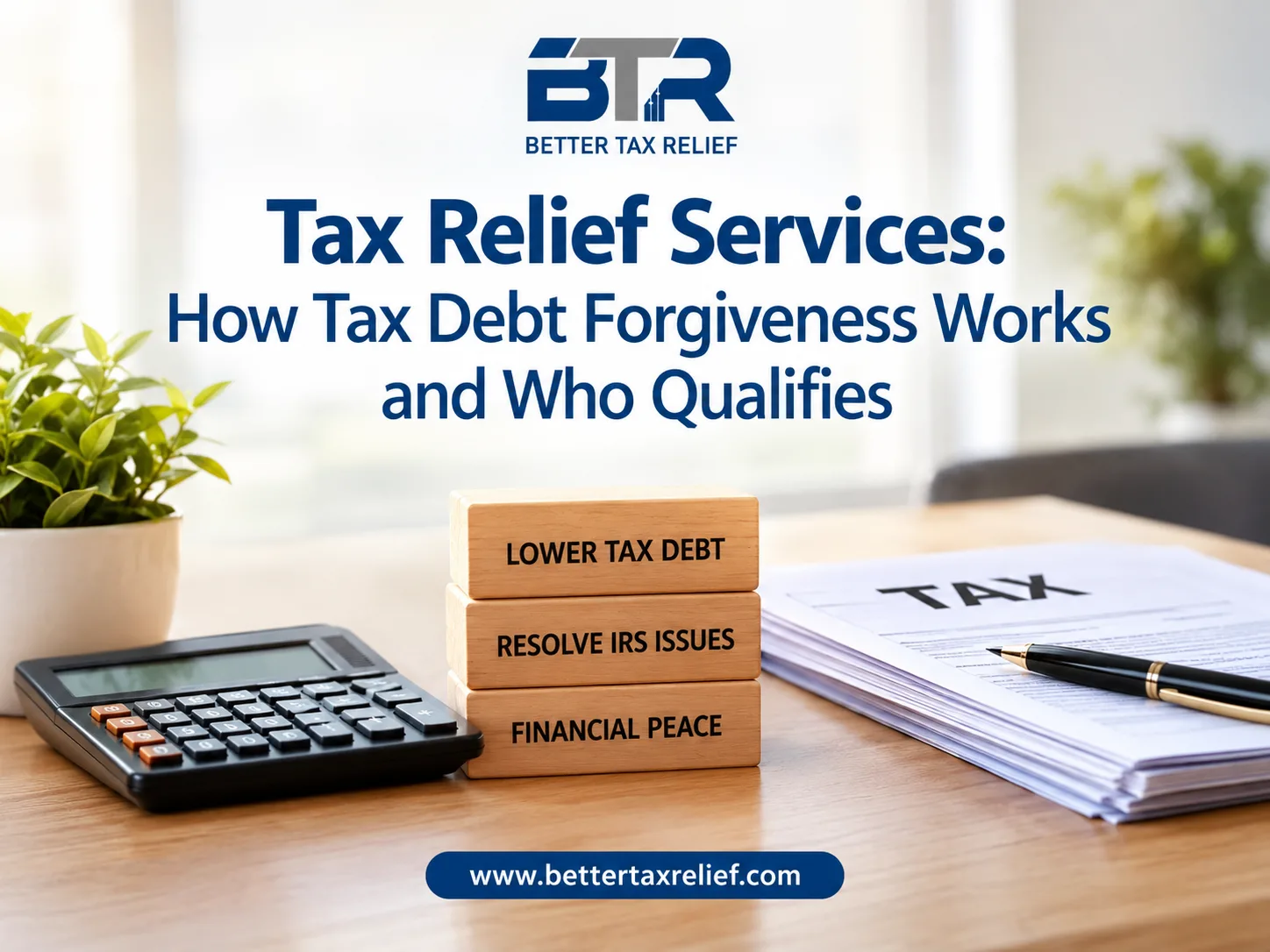
Owing back taxes to the Internal Revenue Service (IRS) can make it difficult to manage household expenses or maintain financial stability. However, eligible taxpayers may have options to settle their tax debt, arrange payments, or request relief from certain penalties.
Tax relief services help individuals and small businesses understand available IRS programs, evaluate their eligibility, prepare documentation, and navigate the resolution process. Better Tax Relief provides support with tax resolution, IRS negotiations, payment arrangements, and other tax-related matters.
Understanding how tax debt forgiveness works can help you identify the options worth exploring and take informed steps toward resolving outstanding tax liabilities.
What Is Tax Debt Forgiveness, and How Does It Work?
Tax debt forgiveness generally refers to reducing or eliminating some tax debt through an applicable relief program. The IRS does not automatically forgive unpaid taxes simply because someone is experiencing financial difficulty. Eligibility and approval depend on the specific program and individual financial circumstances.
One option is an Offer in Compromise (OIC). This IRS program allows qualifying taxpayers to settle eligible tax liabilities for less than the full amount owed. The IRS evaluates factors such as income, allowable living expenses, assets, and ability to pay before deciding whether to accept an offer.
Other resolution options may help taxpayers who cannot pay their full tax balance immediately:
- Installment Agreement: Allows eligible taxpayers to pay their tax debt through an approved payment plan.
Currently Not Collectible (CNC) status: May temporarily pause IRS collection activity when a taxpayer cannot afford payments because of financial hardship.
These options have different eligibility rules and outcomes. A payment arrangement, for example, does not necessarily reduce the original tax balance.
How Can Tax Relief Services Help You Find the Right Option?
Professional tax relief services can help taxpayers understand their outstanding liabilities, review their financial circumstances, and determine which IRS resolution options may apply.
According to Better Tax Relief’s published service information, the process involves several key steps.
1. Review your tax and financial situation. The first step is to understand the amount owed, outstanding tax returns, income, expenses, and assets. This information helps establish which resolution options may be appropriate.
2. Identify a suitable IRS program. Depending on eligibility, an Offer in Compromise, Installment Agreement, penalty abatement, or Currently Not Collectible status may be worth considering.
3. Prepare supporting documents. Applications and requests may require financial statements, tax records, and specific IRS forms. Accurate and complete documentation helps the IRS evaluate the request.
4. Coordinate with the IRS. Tax professionals can assist with communications, application preparation, and negotiations on behalf of clients. Better Tax Relief offers support across these stages, with recommendations tailored to individual circumstances.
Before choosing a service, understand its fees, the scope of representation, and the fact that no provider can guarantee IRS approval.
Who May Qualify for Tax Debt Forgiveness?
Eligibility depends on the relief program, the amount owed, and the taxpayer’s financial position.
For an Offer in Compromise, the IRS generally considers whether the proposed payment reflects what it can reasonably expect to collect based on the taxpayer’s circumstances. Income, allowable expenses, asset equity, and future earning potential can all influence the decision.
Taxpayers who cannot afford a lump-sum payment may wish to explore an Installment Agreement. Those experiencing significant financial hardship may qualify for Currently Not Collectible status, which can temporarily delay collections.
Keeping required tax filings current is also an important part of evaluating resolution options. If returns are missing, addressing them may be necessary before pursuing a settlement.
Better Tax Relief offers a review of available options to help taxpayers understand their circumstances and the next steps they can take. The appropriate solution depends on the facts of each case, not simply the total tax debt.
Frequently Asked Questions
1. What are tax relief services?
Tax relief services help taxpayers explore IRS programs, prepare required documents, negotiate tax resolutions, and understand potential ways to address outstanding tax debt.
2. Can the IRS forgive tax debt?
Yes, qualifying taxpayers may settle eligible tax debt for less than the full amount through an approved Offer in Compromise. Approval is not guaranteed.3. Who qualifies for tax debt forgiveness?
Eligibility depends on the program and factors such as income, expenses, assets, ability to pay, and tax filing compliance.
4. Does an IRS payment plan reduce tax debt?
Not necessarily. An Installment Agreement allows eligible taxpayers to pay over time, but the outstanding tax balance may still include applicable penalties and interest.
5. How can Better Tax Relief help with IRS tax debt?
Better Tax Relief offers assistance with tax resolution, IRS negotiations, payment arrangements, and evaluating potential relief options based on individual circumstances.
Conclusion
Tax debt forgiveness may be possible for eligible taxpayers, but it is not automatic. Understanding IRS programs such as Offers in Compromise, Installment Agreements, and Currently Not Collectible status can help you make informed decisions about outstanding tax liabilities.
With professional tax relief services, taxpayers can receive assistance reviewing their financial situation, preparing documentation, and evaluating potential resolution strategies. Better Tax Relief can help you explore available options and understand the steps involved in addressing your IRS tax debt.
Take the next step: Visit Better Tax Relief to request a consultation and discuss which tax resolution options may fit your situation.