
Industrial startups in Texas demand precision, discipline, and airtight execution from day one. When you plan a compressed air blow in Houston, Texas, you cannot treat it as a routine cleaning step. Within the first stages of commissioning, your team must remove debris, moisture, loose rust, and construction residue fast—without compromising critical assets. For plant commissioning teams and mechanical contractors, engineered air blow strategies make the difference between a smooth startup and costly rework.
You already know that complex piping systems across LNG, petrochemical, refinery, and power generation facilities rarely follow a “standard template.” That’s why a compressed air blow in Houston, Texas, requires site-specific engineering, detailed calculations, and proper tank sizing. Instead of relying on generic blowdowns, you need a structured approach that accounts for system volume, metallurgy, pressure ratings, and cleanliness standards.
Understanding the Challenges of Complex Piping Networks
Texas industrial facilities often feature long pipe runs, multiple branches, elevation changes, dead legs, and sensitive downstream equipment. If you rush the process, debris can migrate into turbines, compressors, or rotating equipment. That scenario never ends well.
You must first evaluate:-
- Pipe diameter and total system volume
- Contamination levels from construction
- Equipment sensitivity downstream
- Acceptable pressure and temperature limits
- Environmental and safety controls
When you tailor each step, you avoid over-pressurization, vibration damage, and unsafe discharge conditions. More importantly, you protect startup schedules. Instead of “blow and hope,” you engineer and execute.
Engineering a System-Specific Air Blow Plan
Every system behaves differently under high-velocity air. So you start with detailed calculations. You determine required air mass, pressure ramp-up rates, target velocity, and blow duration. Then you design the discharge path carefully, install proper supports, and integrate silencers to control noise.
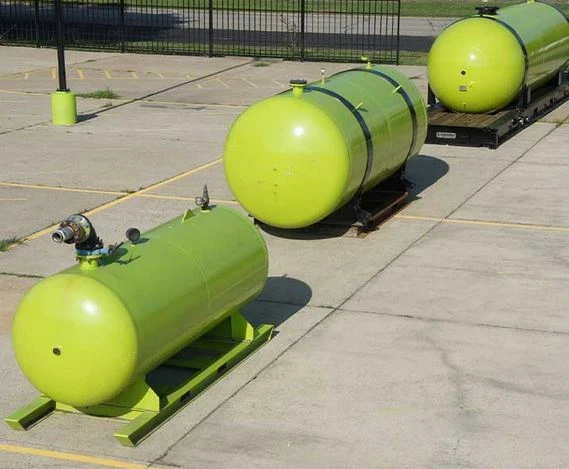
You cannot overlook tank capacity either. Large industrial sites may require multiple air tanks ranging from 10,000 gallons down to smaller 200-gallon units, depending on system size. When you scale tank selection correctly, you maintain flow consistency and achieve repeatable results.
You also select between super-dry air or saturated air depending on the objective. If moisture removal stands as the priority, dry air becomes essential. If debris mobilization requires higher density, you adjust accordingly. This flexibility ensures you clean effectively without overstressing piping.
Execution: Control, Monitoring, and Safety
Execution drives outcomes. During a compressed air blow in Houston, Texas, you must control velocity and discharge direction precisely. You position exit silencers to reduce sound impact. You stabilize temporary piping. You secure target plates for visual verification of cleanliness.
Real-time monitoring strengthens control. You measure pressure fluctuations, confirm target impact results, and document every blow cycle. When you document correctly, you provide proof of cleanliness for owners and EPC teams.
Safety remains non-negotiable. High-velocity air carries energy. You establish exclusion zones, implement clear communication protocols, and enforce lockout procedures. When veteran-led teams execute with discipline, they minimize risk and maintain schedule integrity.
Equipment Versatility and Adaptability
No two industrial projects in Texas look identical. That reality demands equipment versatility.
You might need:-
- Variable density air systems
- Custom blow piping
- Engineered supports
- Target inserters
- Exit point silencers
- Monitoring instrumentation
When you adapt equipment to the piping configuration, you accelerate debris removal. You also reduce repeated cycles. That efficiency often shortens commissioning timelines significantly.
For commissioning teams, time equals money. Every extra day delays revenue generation. When you tailor the air blow correctly, you reduce downtime and protect startup windows.
Documentation and Compliance Matter
Plant owners demand documentation. Regulators expect compliance. You cannot treat air blowing as an undocumented field activity.
You generate engineered procedures in clear PDF formats. You outline calculations, safety controls, blow sequences, and acceptance criteria. Then you record results and archive them properly.
This systematic process does more than satisfy paperwork. It builds confidence. It shows that you cleaned systems methodically and intentionally. When startup begins, leadership trusts the integrity of the piping network.
Why Tailored Air Blows Protect Critical Assets
Complex systems house high-value equipment—turbines, compressors, heat exchangers, control valves. Even minor debris can cause scoring, imbalance, or catastrophic failure.
By tailoring each compressed air blow in Houston, Texas, you eliminate loose mill scale, weld slag, dirt, and liquids before they reach sensitive components. You also prevent secondary contamination that often occurs when teams rely on rushed, poorly engineered blowdowns.
I’ve seen projects where rushed cleaning led to repeated flushes and mechanical repairs. That approach drains budgets and morale. When you commit to engineered air blows upfront, you avoid those headaches entirely.
Strategic Outsourcing for Commissioning Efficiency
You might handle many commissioning activities internally. However, specialized cleaning demands refined equipment and experienced execution teams. When you outsource this phase strategically, you reduce in-house risk and protect core project resources.
Specialist teams focus solely on pre-commissioning cleaning. They refine proprietary tools, improve injection methods, and streamline execution workflows. That specialization often reduces commissioning duration by a noticeable margin.
You gain:-
- Reduced schedule slips
- Lower risk exposure
- Improved cleanliness verification
- Better protection of capital equipment
And you maintain focus on broader startup coordination.
Air Blow Methods Built for Texas Industrial Demands
Texas projects operate under intense timelines, extreme weather conditions, and strict safety oversight. You cannot rely on generic approaches imported from unrelated markets.
Engineered air blow methods account for Gulf Coast humidity, site logistics, and large-scale infrastructure. From LNG terminals to refineries, you must adapt procedures to local realities.
You also coordinate closely with mechanical contractors to align tie-ins, temporary piping, and discharge routing. When collaboration improves, execution flows smoothly.
You drive momentum instead of reacting to problems.
Conclusion
Complex piping systems require more than forceful airflow—they require engineered precision, adaptable equipment, disciplined execution, and clear documentation. When you plan and execute a compressed air blow in Houston, Texas, you protect startup timelines, safeguard critical equipment, and reduce commissioning risk. For plant commissioning teams and mechanical contractors across Texas industrial projects, investing in tailored air blow strategies ensures faster, safer, and more reliable system readiness.
Ultimately, a properly engineered compressed air blow in Houston, Texas, supports performance, compliance, and long-term operational success.