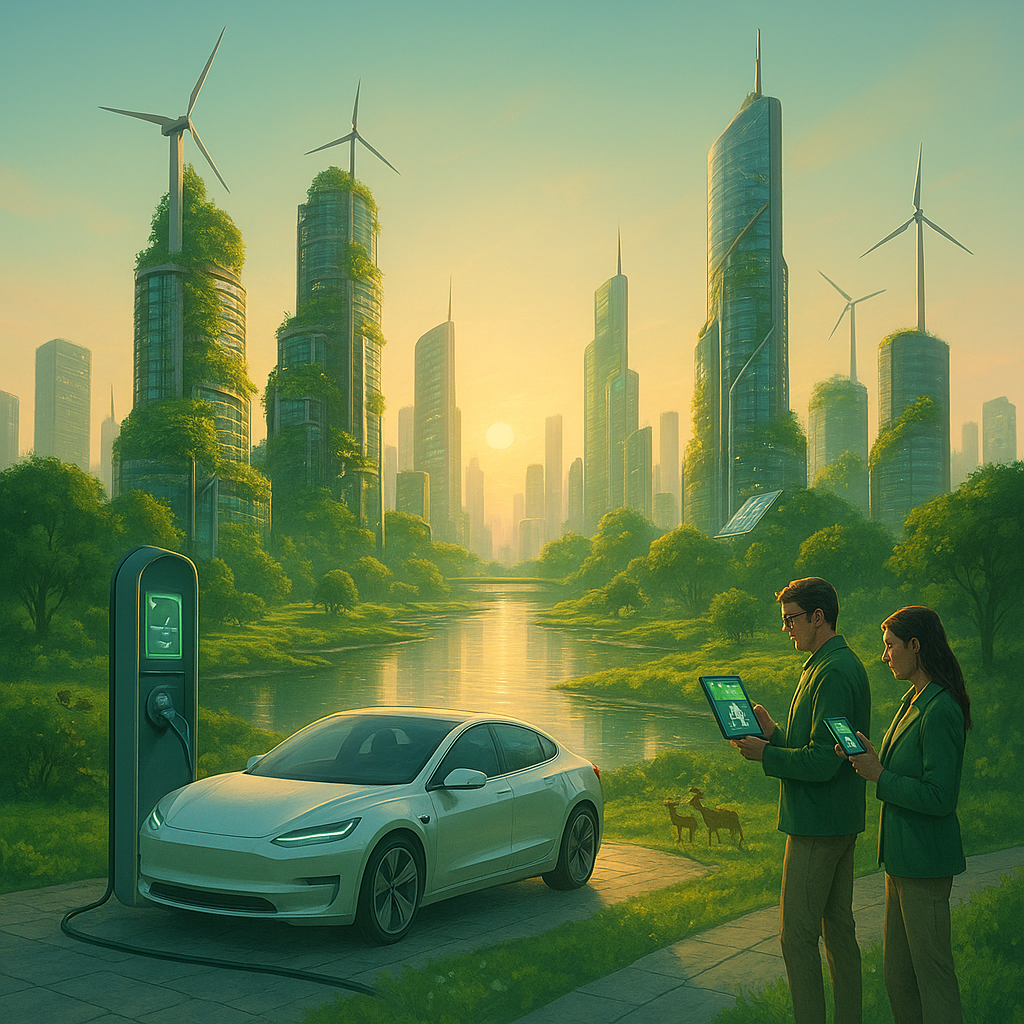
Setting the Stage: A Planet at a Crossroads
In 2026, the urgency of sustainability has never been more palpable. Global temperatures continue to hover perilously close to the 1.5°C threshold outlined in the Paris Agreement, while natural disasters and resource scarcities have intensified worldwide. The stakes are high: humanity faces an unprecedented challenge to harmonize economic growth with the preservation of finite ecological systems. As the world grapples with climate change, biodiversity loss, and social inequities, sustainability emerges not just as a buzzword but as the ultimate litmus test for global innovation and resilience.
Consider the startling fact that, according to the United Nations Environment Programme (UNEP), over 75% of the earth’s land surface has been significantly altered by human activity, leading to widespread habitat degradation. The consequences ripple across food security, water availability, and public health. This stark reality demands a radical reimagining of how societies operate. Against this backdrop, the concept of sustainability has transformed from niche environmentalism into a comprehensive framework encompassing economic, social, and environmental dimensions.
“Sustainability is no longer optional; it is the defining challenge of our generation,” remarked Dr. Lina Martinez, an environmental economist at the Global Institute for Sustainable Development.
Tracing the Evolution: How We Arrived at Today’s Sustainability Paradigm
The modern sustainability movement traces its roots back to the 1987 Brundtland Report, which coined the seminal definition: "development that meets the needs of the present without compromising the ability of future generations to meet their own needs." This milestone laid the foundation for the United Nations’ Sustainable Development Goals (SDGs) launched in 2015, which provide a universal blueprint for peace and prosperity on a healthy planet.
Since then, sustainability has evolved from a primarily environmental concern to a multifaceted agenda integrating social equity and economic viability. The 2020s saw accelerated efforts in corporate social responsibility, green finance, and circular economy models. Yet, progress has been uneven. According to the latest Sustainable Development Report 2026, only 12% of countries are on track to achieve most SDGs by 2030, underscoring persistent gaps in implementation.
Global supply chains, urbanization, and consumer behaviors have all complicated the sustainability equation. The rise of digital technologies, however, has introduced new tools for transparency and efficiency. Blockchain-enabled traceability and AI-powered resource optimization have begun to reshape industries ranging from agriculture to manufacturing. These innovations reflect a growing recognition that sustainability is deeply intertwined with technological advancement and systemic change.
Decoding the Data: Key Sustainability Metrics and Trends in 2026
Concrete data is essential to understanding the trajectory of sustainability efforts worldwide. According to the International Energy Agency (IEA), global renewable energy capacity expanded by 14% in 2025 alone, with solar and wind installations reaching record highs. Yet, fossil fuels still account for approximately 60% of global energy consumption, highlighting a critical transition challenge.
Carbon emissions present a mixed picture. While advanced economies have reported a 10% decrease in emissions since 2020, emerging markets have seen a 7% rise, largely due to industrial expansion. This divergence underscores the need for equitable climate finance mechanisms and technology transfer to support sustainable development in lower-income countries.
Waste management and circularity indicators have gained prominence. The Ellen MacArthur Foundation estimates that only 9% of global plastic waste is recycled, though investments in chemical recycling technologies are accelerating. Similarly, water stress affects over 40% of the global population, prompting innovations in desalination and water reuse.
- Renewable Energy Growth: 14% increase in capacity (2025)
- Global Carbon Emissions: 10% decrease in advanced economies vs. 7% increase in emerging markets
- Plastic Recycling Rate: 9% globally
- Water Stress: Affects 40% of the world’s population
- Investment in Circular Economy: $1.2 trillion in 2025, projected to double by 2030
“Data-driven sustainability is the future. Without rigorous measurement, progress is a mirage,” emphasizes Dr. Raj Patel, lead analyst at the International Sustainability Data Consortium.
2026 Milestones: Breakthroughs and Challenges in Sustainability
The year 2026 has already marked several pivotal developments. Governments worldwide have ratcheted up commitments to carbon neutrality, with the European Union advancing its Green Deal to incorporate stricter industrial emissions standards. China announced a bold initiative to achieve net-zero emissions in its manufacturing sector by 2040, accelerating timelines initially set for 2060.
Corporate sustainability reporting has matured significantly. Regulatory bodies in the US and EU now require standardized, audited disclosures aligned with the latest Global Reporting Initiative (GRI) frameworks. This shift has improved investor confidence, catalyzing a surge in green bonds and sustainability-linked loans. According to Bloomberg, green bond issuance topped $1.3 trillion in 2025, reflecting growing market appetite for responsible investment.
Technological innovation continues to propel sustainability. Breakthroughs in energy storage, such as solid-state batteries, have improved electric vehicle range and grid stability. Urban centers are implementing smart infrastructure, integrating IoT sensors for efficient resource management. Agriculture is benefiting from AI-driven precision farming, reducing water and chemical inputs while boosting yields.
- EU Green Deal Updates: Stricter emissions regulations for heavy industries
- China’s Net-Zero Goal: Manufacturing sector target moved to 2040
- Green Finance Growth: $1.3 trillion green bonds issued in 2025
- Tech Advances: Solid-state batteries and AI precision farming
- Urban Sustainability: Smart infrastructure expansion in 150+ cities globally
Despite these advances, challenges persist. Climate adaptation funding remains inadequate, particularly for vulnerable communities. Biodiversity loss continues at an alarming rate, with the World Wildlife Fund reporting a 45% decline in global wildlife populations since 1970. Moreover, many developing countries face barriers in accessing clean technology, exacerbating global inequities.
Voices from the Field: Expert Insights and Industry Impacts
Leading experts emphasize that sustainability is fundamentally a systems challenge requiring coordinated action across sectors. Maria Chen, CEO of GreenFuture Technologies, highlights how private sector innovation is indispensable: “The fusion of sustainability with digital transformation unlocks unprecedented opportunities. Companies that embed environmental and social governance at their core are outperforming peers and attracting top talent.”
In finance, sustainability is reshaping investment paradigms. TheOmniBuzz’s own coverage in Why AI and Sustainability Will Redefine Investing Horizons details how AI-driven ESG analytics enable investors to identify high-impact ventures and mitigate risks more effectively. This trend is driving capital towards renewable infrastructure, circular business models, and social enterprises at scale.
The fashion industry represents a microcosm of broader sustainability dynamics. As explored in How AI and Sustainability Are Shaping Fashion’s Bold New Frontier, brands are leveraging AI to optimize supply chains, reduce waste, and design eco-friendly materials. These efforts cater to a growing consumer demand for transparency and ethical production.
“Sustainability is no longer a siloed initiative but a strategic imperative that drives innovation and competitiveness,” asserts Dr. Helena Ortiz, sustainability strategist at the World Business Council for Sustainable Development.
Looking Ahead: What to Watch in Sustainability’s Next Phase
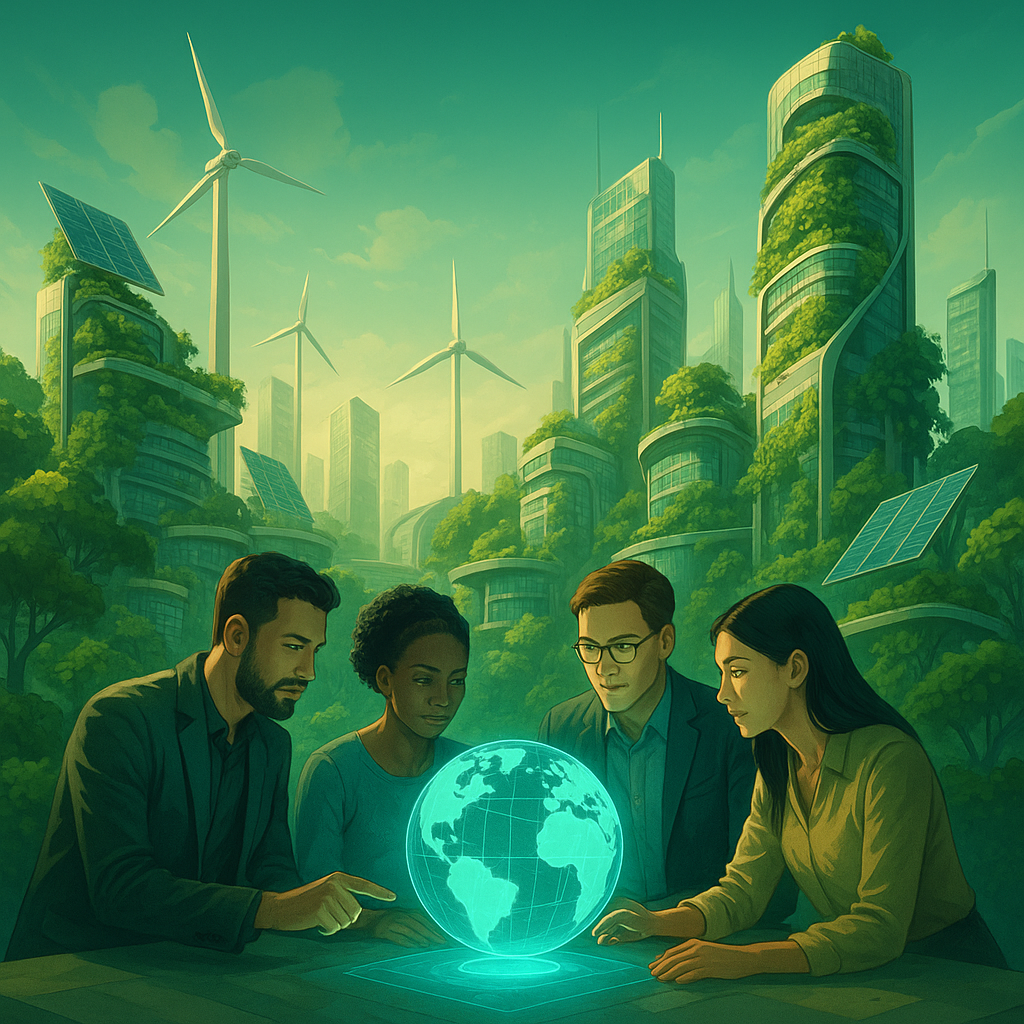
The path forward calls for deeper integration of sustainability into all facets of decision-making. Experts predict that digital twins—virtual replicas of physical systems—will revolutionize urban planning and environmental monitoring, enabling real-time simulations that optimize resource use and emissions reduction.
Climate finance will need to scale dramatically. The UN estimates an annual investment gap of $4 trillion to meet the SDGs by 2030. Innovative financing mechanisms, such as blended finance and impact investing, are expected to play critical roles. Additionally, social sustainability—focusing on equity, inclusion, and human rights—will gain prominence alongside environmental concerns.
Policy frameworks must evolve to incentivize circular economies and penalize unsustainable practices effectively. Governments and corporations alike face pressure to embed sustainability into corporate governance, supply chains, and product life cycles. Consumer behavior will continue to influence markets, with younger generations demanding accountability and authenticity.
- Emergence of Digital Twins: Enhancing environmental management and urban resilience
- Scaling Climate Finance: Closing a $4 trillion annual investment gap
- Focus on Social Sustainability: Addressing equity and inclusion
- Strengthening Policy Incentives: Promoting circular economy adoption
- Consumer Influence: Driving demand for transparency and ethics
Ultimately, sustainability in 2026 is a dynamic frontier where technology, policy, and social innovation converge. The ongoing challenges underscore the need for bold leadership and collaborative action—from governments, businesses, and civil society. For those interested in sustainability’s trajectory, TheOmniBuzz’s Sustainability in 2026: Progress, Challenges, and Future Pathways offers an in-depth exploration of emerging trends and critical insights.
As global pressures mount, the measure of success will not only be reduced emissions or waste but also the resilience of societies to thrive within planetary boundaries. This complex journey demands innovation beyond technology—embracing new economic models, cultural shifts, and systemic transformations. The test for sustainability is the test for humanity’s future.