
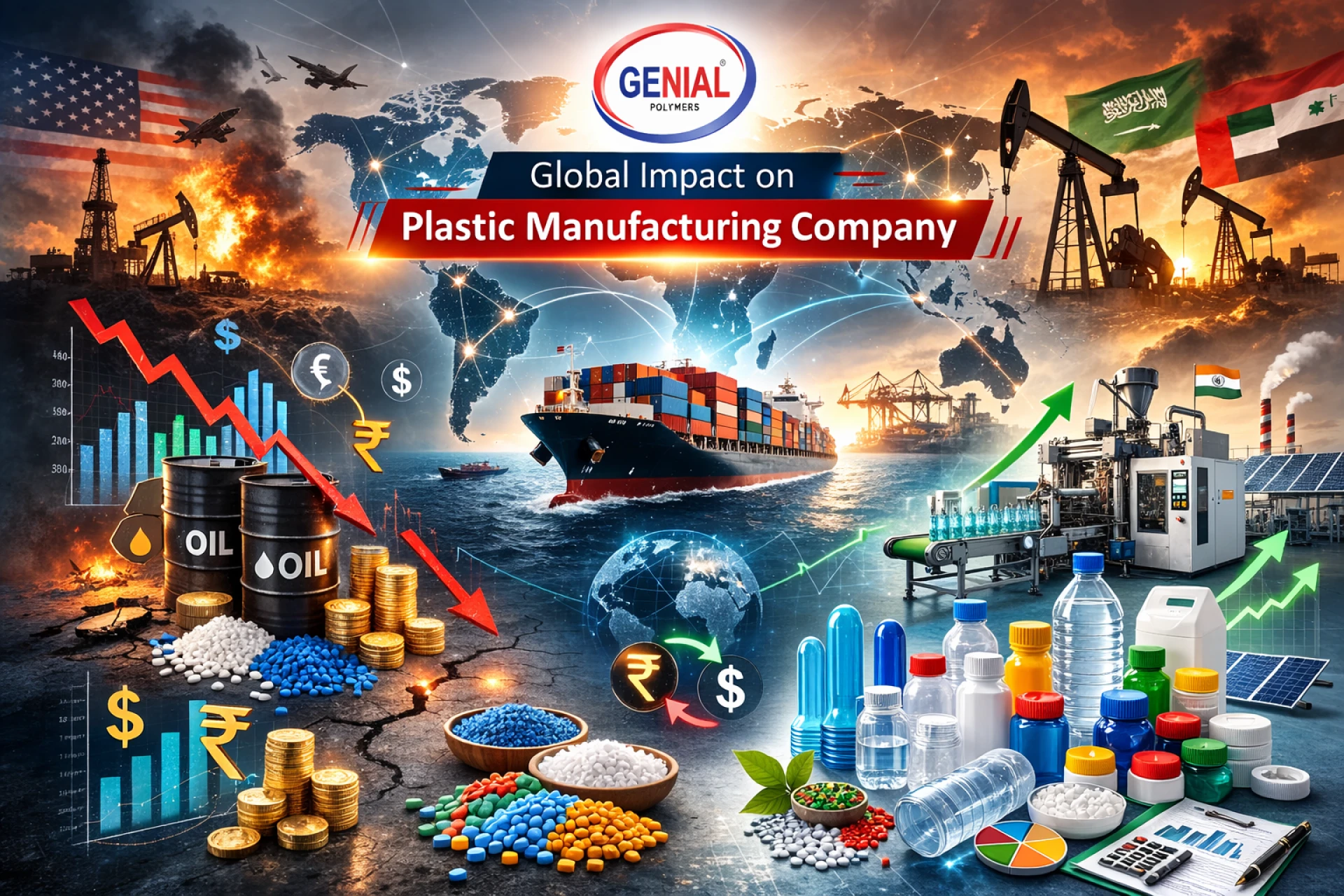
The geopolitical tension between America and the Middle East has significantly disrupted global supply chains. From oil production uncertainty to shipping route risks, manufacturers worldwide are reassessing their sourcing strategies. India’s plastic sector is no exception. Instead of depending heavily on limited suppliers, companies are now focusing on diversification to reduce risk exposure and ensure production continuity.
For a modern Plastic manufacturing Company, supply chain resilience has become just as important as production efficiency. Companies that relied on single-region raw material imports have experienced cost spikes and delivery delays. As a result, diversification is no longer optional—it is a strategic necessity.
Raw Material Sourcing Challenges
Polymers are largely derived from crude oil and petrochemicals. When tensions rise in oil-producing regions, resin availability and pricing become unpredictable. This directly affects production planning and working capital requirements.
An established Industrial polymers Company mitigates this risk by sourcing from multiple global suppliers, including domestic refineries and Asian petrochemical hubs. Diversified procurement contracts help stabilize pricing and reduce dependency on politically unstable zones.
Strengthening Domestic Partnerships
India’s growing petrochemical infrastructure offers opportunities for local sourcing. By building stronger relationships with domestic suppliers, manufacturers can reduce import reliance and improve lead times.
A forward-looking Polymer innovation Company often collaborates with research institutes and local compounders to develop alternative raw material blends. These partnerships create flexibility in formulation, reducing vulnerability to sudden international disruptions.
For a resilient Plastic manufacturing Company, local vendor development is becoming a long-term strategy for supply stability.
Logistics and Route Optimization
Shipping disruptions in sensitive regions such as the Red Sea and Gulf waterways have forced exporters to explore alternative routes. Freight rates have increased, impacting cost structures.
A globally active Industrial polymers Company now invests in advanced logistics planning tools, port diversification, and multi-modal transportation. Warehousing near strategic ports reduces delays and improves shipment predictability.
Inventory Management and Risk Buffering
Just-in-time inventory models are being reconsidered due to geopolitical uncertainty. Companies are now maintaining safety stock to cushion supply interruptions.
A technologically advanced Polymer innovation Company integrates digital inventory monitoring systems to balance stock levels without over-blocking capital. Smart forecasting tools allow better demand prediction, reducing operational stress.
Meanwhile, a responsive Bottle Manufacturing Company ensures continuous packaging supply to clients even during raw material fluctuations by maintaining strategic reserve stocks.
Building Regional Export Hubs
To reduce dependency on long shipping routes, Indian manufacturers are exploring regional export hubs in nearby countries. This allows faster distribution and lower risk exposure.
A strategically positioned Bottle Manufacturing Company can serve Middle Eastern, African, and Southeast Asian markets more efficiently by leveraging regional warehousing partnerships. This improves customer satisfaction and strengthens global relationships.
Financial Risk Management
Supply chain diversification also involves financial discipline. Currency fluctuations and price volatility require careful planning.
An experienced Industrial polymers Company uses hedging mechanisms and forward contracts to stabilize costs. Risk-adjusted pricing models help maintain profit margins even during volatile periods.
Long-Term Competitive Advantage
Although diversification requires initial investment, it builds long-term resilience. Companies that adapt quickly are gaining competitive advantages over slower competitors.
A proactive Plastic manufacturing Company that integrates supplier diversity, local sourcing, and logistics flexibility is better prepared for global uncertainties. Similarly, a research-driven Polymer innovation Company that develops alternative material solutions can maintain uninterrupted production despite external shocks.
In conclusion, the America–Middle East conflict has acted as a wake-up call for supply chain restructuring. Indian plastic manufacturers are transitioning from reactive strategies to proactive resilience planning. Diversification, technology adoption, and financial discipline are shaping a more stable and competitive future for the industry.