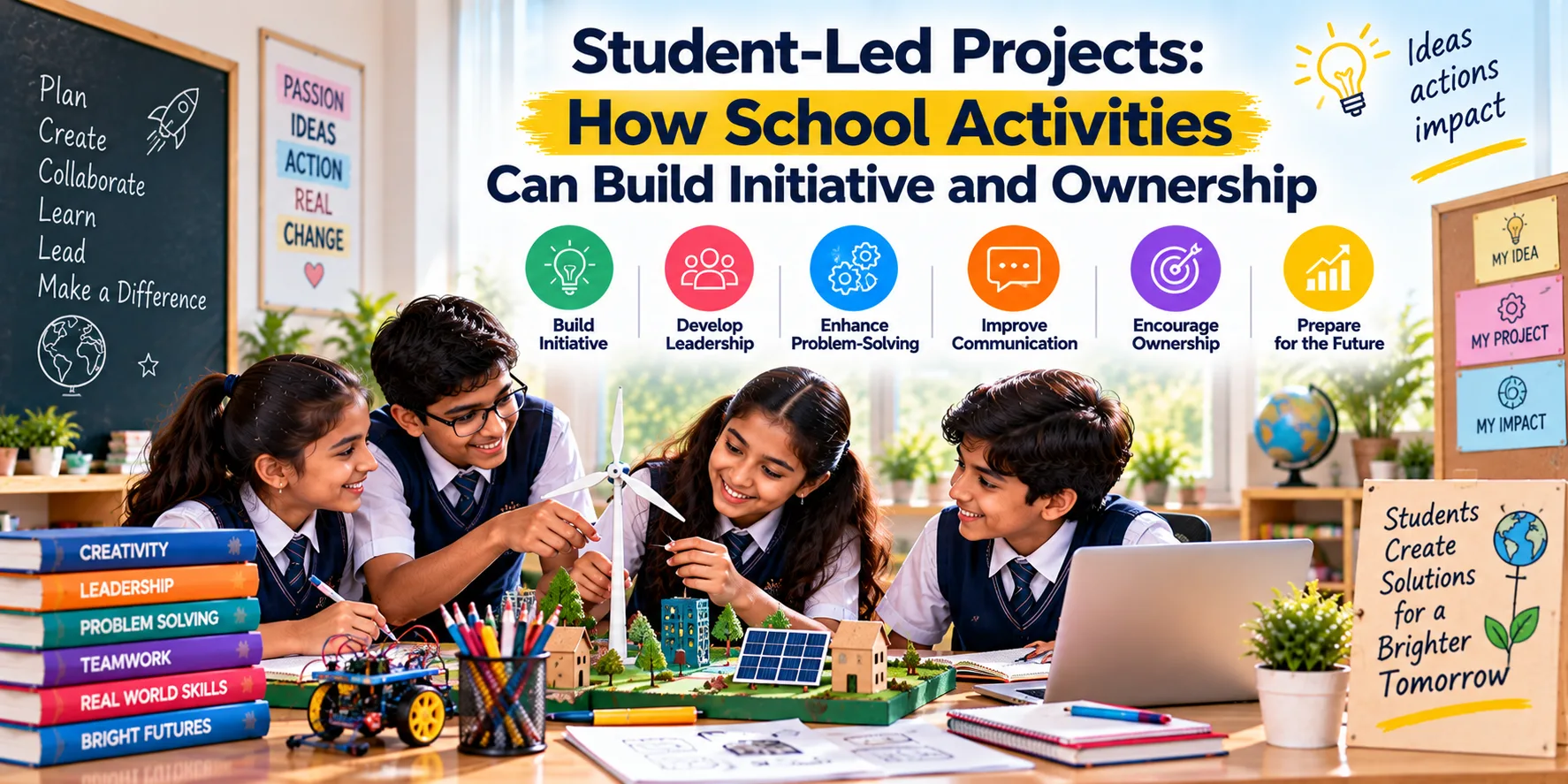
Extracurricular activities can give children opportunities to explore interests that may not fit neatly into a textbook lesson. But an activity becomes especially valuable when students do more than follow instructions. They can plan an idea, make decisions, work with others, learn from setbacks, and reflect on the result. For parents searching for the Best CBSE School with Extracurricular Activities, it is worth looking at whether students have opportunities to take ownership of projects.
Student-led activities do not mean leaving children without guidance. Teachers still set boundaries, provide resources, and support learning. The difference is that students are encouraged to contribute ideas and make age-appropriate decisions.
1. Give Students a Meaningful Problem to Solve
A useful project often begins with a real question. Students might investigate how to make a classroom library easier to use, plan a campaign to reduce litter, organise a reading corner, or develop a simple guide for younger students.
The problem should be manageable and relevant to the age group. A project does not need to transform an entire community to be worthwhile. Even a small improvement can help students understand how planning and cooperation lead to results.
Teachers can guide students to define the problem clearly. What needs to change? Who will benefit? What resources are available? How will the group know whether its idea worked?
These questions encourage learners to think beyond simply completing a task.
2. Build Planning Skills Through Small Steps
Students may have creative ideas but struggle to turn them into action. A project gives them a chance to practise planning.
A group can divide a task into stages: researching the problem, developing options, assigning responsibilities, preparing materials, carrying out the activity, and reviewing the outcome.
Students can use a basic timeline or checklist to track progress. They may also need to adjust their plan when an activity takes longer than expected or a resource is unavailable.
These experiences teach an important lesson: planning is not about predicting everything perfectly. It is about making thoughtful decisions, monitoring progress, and adapting when circumstances change.
Teachers can provide different levels of support according to students’ ages and experience.
3. Make Teamwork More Than Dividing the Work
In a group project, one student may naturally take the lead while another prefers research, design, writing, or presenting. Giving everyone a role can help students contribute, but effective teamwork also requires communication and shared responsibility.
Students should learn how to listen to suggestions, explain disagreements, and make decisions fairly. Teachers can encourage groups to discuss what each member needs to complete their task and how they will handle delays.
Roles can also rotate over time. A student who usually presents may try organising materials, while a quieter learner may lead a small discussion. This gives children a chance to develop skills outside their usual comfort zone without forcing every student into the same role.
The objective is not to eliminate disagreement. It is to help students manage it constructively.
4. Let Students Learn From Unsuccessful Attempts
Projects rarely proceed exactly as planned. A display may not attract attention, a design may not work, or a group may discover that its original idea is too complicated.
These moments can be valuable when teachers help students analyse what happened. Which assumptions were incorrect? What feedback did they receive? What would they change if they tried again?
If adults immediately take over whenever a project becomes difficult, students may miss the opportunity to develop persistence. However, teachers should intervene when safety, fairness, or the project’s practical limits require it.
A balanced approach allows students to experience manageable challenges while knowing that guidance is available.
5. Connect Activities With Academic Learning
Student-led projects can reinforce classroom concepts in practical ways. A school garden project may involve measurement, observation, record keeping, and scientific reasoning. A reading campaign can develop communication, organisation, and creative design. A school event may involve budgeting, writing, scheduling, and teamwork.
These connections do not mean that every activity must become an academic exercise. Children also benefit from creativity, play, performance, and personal exploration.
The important point is to help students recognise that knowledge is useful in different situations. They may begin to understand why clear writing matters when preparing instructions or why mathematics is helpful when planning resources.
Reflection after an activity can make these connections more visible.
6. Record Progress, Not Just Awards
Schools often celebrate competitions and public performances, but not every valuable activity ends with a trophy. A student may make significant progress by learning to speak in a group, finishing a difficult project, helping a teammate, or improving a design after feedback.
A simple project portfolio can record the process. Students might include an initial idea, a plan, photographs where appropriate, feedback, changes made, and a short reflection on what they learned.
This record helps children recognise progress that may not be captured by a competition result. It can also support conversations with parents and teachers about interests and future opportunities.
Reflection should remain age-appropriate and should not turn every hobby into another source of pressure.
7. Check Whether Activities Are Inclusive
A wide activity list is useful only if students can participate meaningfully. Parents can ask whether the school offers different types of activities, how students choose them, and whether opportunities are available to beginners as well as experienced performers.
Practical factors matter too. Activity schedules should allow time for academic work, rest, and family life. Students should not feel that they must excel at every activity to be valued.
Schools can also help students explore interests they have not tried before. A child who does not initially identify as an artist, athlete, or performer may discover a new strength when given a welcoming opportunity.
8. Questions Parents Should Ask
When comparing a school that aims to offer meaningful extracurricular learning, parents can ask:
- Do students have opportunities to propose or lead projects?
- How are roles and responsibilities assigned?
- Are mistakes and revisions treated as part of learning?
- Can students explore activities without needing prior experience?
- How are activities balanced with academic work and rest?
- Do teachers help students reflect on skills developed through participation?
Parents exploring the Best CBSE School with Extracurricular Activities can visit Grand Columbus International School and ask about its current activity options, student participation, and project opportunities before deciding whether the school fits their child.
Conclusion
Extracurricular activities can help students practise initiative, cooperation, planning, creativity, and resilience. Their value is not limited to how many activities a school lists or how many awards students win.
When children are given meaningful responsibilities and appropriate guidance, they begin to see themselves as contributors rather than passive participants. That sense of ownership can support their development both inside and outside the classroom.