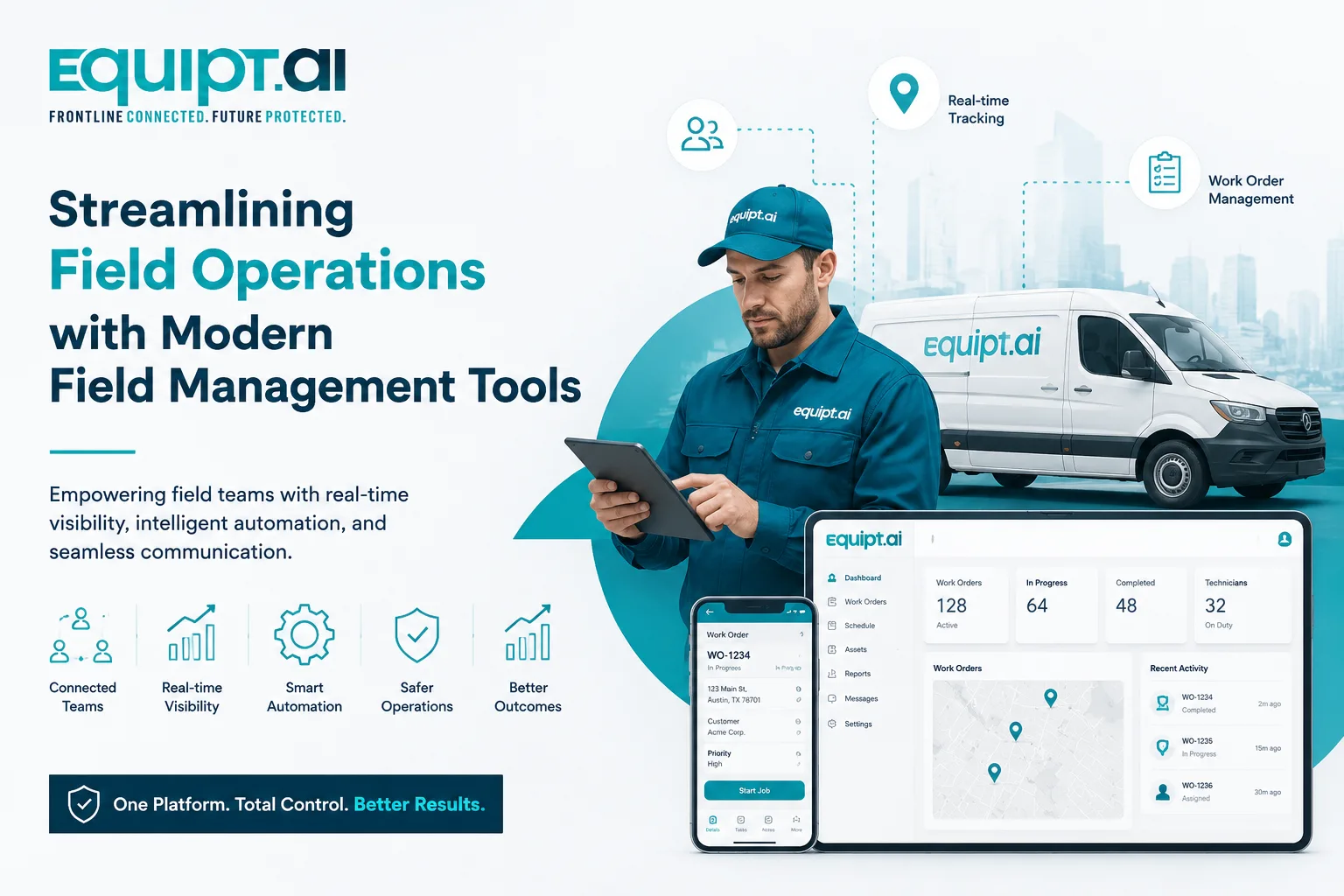
Managing a team of technicians, schedules, and service requests across multiple locations can quickly turn into a chaotic juggling act. For growing service businesses, relying on manual entry, paper forms, messy spreadsheets, or scattered phone calls often leads to delayed response times, missed appointments, and frustrated customers. To stay competitive and deliver consistent service quality, organizations must adopt modern digital solutions that bring clarity, speed, and efficiency to their daily workflows.
Every field service operation relies on coordination between dispatchers in the office and workers on the ground. When this communication is clear, job completion times drop, customer satisfaction scores rise, and operational costs decrease. Conversely, when field teams lack instant access to customer history, equipment details, or live route navigation, businesses lose productive hours every day. Moving away from legacy tracking systems toward centralized, real-time management is no longer just an upgrade—it is an operational necessity.
Transitioning to automated digital tools allows businesses to standardize their processes from the moment a customer requests support to the final invoice generation. Clear tracking of assets, clear visibility into technician availability, and instant field updates give operational leaders total control over their daily workflow. This approach minimizes human error, improves accountability across teams, and enables businesses to scale their operations smoothly without taking on unnecessary administrative overhead.
The Challenges of Traditional Field Operations
Traditional methods of managing mobile workforces present significant challenges for service-oriented businesses. Paper job sheets are easily damaged, misplaced, or filled out incorrectly, leading to inaccurate record-keeping. When a customer calls with an urgent request, dispatchers without real-time tracking must call multiple technicians to locate the nearest available worker. This inefficient process consumes valuable time and increases fuel consumption and vehicle wear and tear.
Another major hurdle in traditional management is the lack of immediate visibility into job progress. Office managers often have no way of knowing whether a technician has arrived at a job site, completed the work, or encountered an unexpected issue until the end of the work day. This delay slows down customer status updates and postpones billing, which negatively affects cash flow. Invoicing delays of even a few days can accumulate, creating financial bottlenecks for growing enterprises.
Furthermore, communication barriers between back-office staff and field crews frequently result in repetitive errors. Missing parts lists, incomplete job notes, and outdated customer histories force technicians to make extra trips back to the warehouse or job site. These repeated visits lower first-time fix rates, drive up operational costs, and erode customer trust. Resolving these deep-rooted operational pain points requires a structured digital framework that keeps everyone on the same page.
Understanding Key Capabilities of Service Management Technology
Modern operations software bridges the gap between office administrators and field teams by consolidating all work orders, schedules, and customer details into a single platform. Dispatchers gain access to dynamic scheduling boards that allow them to drag and drop assignments based on technician availability, geographic proximity, and specific skill sets. By matching the right technician to the right job automatically, dispatchers reduce downtime and eliminate unnecessary travel across service zones.
Mobile integration is another vital component of modern operational systems. Field technicians equipped with mobile devices can view their daily schedules, job directions, and customer histories in real time. They can record notes, upload photos of completed work, capture digital signatures, and update job statuses directly from the field. This immediate flow of data eliminates manual administrative entry at the end of the day and drastically reduces administrative workloads.
Inventory management and parts tracking are also seamless when integrated into field operations systems. Technicians can check warehouse stock or service vehicle inventory directly from their mobile apps, ensuring they have the necessary components before arriving at a job location. If a part is missing, they can request or order it on the spot. By streamlining inventory visibility, service operations maintain high first-time fix rates and keep projects running on schedule.
Businesses seeking to eliminate administrative bottlenecks and streamline dispatching can implement field service management software to automate scheduling, track mobile teams, and improve overall operational productivity.
Data reporting and performance analytics provide managers with deep insights into their operational efficiency. Built-in analytics engines monitor key performance indicators such as job completion times, technician productivity, response speeds, and travel costs. With accurate performance metrics readily available, managers can identify operational bottlenecks, optimize resource allocation, and make data-driven decisions that continuously improve profitability.
Major Benefits of Automating Field Workflows
Automating daily service workflows transforms how a business operates on every level. The most immediate benefit is a dramatic reduction in administrative workload. When work orders generate automatically upon request and route optimization handles dispatching, administrative staff can redirect their focus toward strategic growth, customer service, and business development rather than repetitive data entry.
Customer experience improves significantly when service operations transition to automated systems. Customers appreciate clear communication, precise arrival windows, and real-time status updates. Automated notification features can send customers SMS or email alerts when a technician is en route, complete with live tracking links. This level of transparency builds strong customer confidence, lowers inbound call volumes for status updates, and boosts long-term customer retention.
Accuracy in financial operations is another critical advantage. When job details, labor hours, and parts used are logged instantly on-site, invoices can be generated and sent to customers immediately upon job completion. Faster billing cycles directly improve company cash flow and reduce the staff hours spent auditing past work orders or resolving client billing disputes.
Scalability is equally important for ambitious companies. As a business takes on more clients and expands its service territory, managing operations manually becomes impossible. Modern operations software scales effortlessly, allowing companies to add new technicians, manage multiple locations, and handle higher job volumes without compounding operational complexity or administrative costs.
Key Considerations for Choosing the Right System
Selecting the ideal management solution requires careful evaluation of your business needs, team structure, and growth plans. Start by mapping out your current workflow from initial customer intake to final billing. Identify specific friction points—such as slow dispatching, poor inventory visibility, or delayed invoicing—so you can prioritize features that address your biggest operational challenges.
Usability is critical when introducing new software to a mobile team. If the user interface is complex or confusing, field technicians may resist using it, leading to low adoption rates and incomplete data collection. Choose a solution that offers an intuitive mobile experience, easy navigation, and reliable offline access so technicians can work without disruption, even in areas with weak internet connectivity.
Integration capabilities should also play a central role in your selection process. Your field management solution needs to connect seamlessly with your existing technology stack, including accounting software, customer relationship management (CRM) platforms, and enterprise resource planning systems. Smooth data flow across all software eliminates data silos, reduces duplicate entries, and ensures financial and operational accuracy across the entire company.
Finally, consider vendor support, system security, and scalability. Choose a provider that offers reliable customer support, regular software updates, and robust data protection measures to keep sensitive customer and operational information safe. A flexible, secure platform ensures your technology investment will continue to support your business as your operational demands grow over time.
Best Practices for Successful Implementation
Successfully rolling out a new software solution requires clear leadership, structured planning, and comprehensive staff training. Start by establishing a realistic implementation timeline that includes system setup, data migration, user training, and a pilot testing phase. Involving key office staff and lead field technicians early in the testing phase helps gather valuable feedback and encourages team adoption.
Comprehensive training programs are essential for a smooth transition. Conduct dedicated training sessions for office administrators, dispatchers, and field personnel to ensure everyone understands how to use the platform effectively. Create clear standard operating procedures for job updates, photo uploads, inventory logging, and customer sign-offs so all team members follow a consistent workflow.
Once the system is live, monitor key performance metrics closely to evaluate its impact on your operations. Track metrics like response times, daily completed jobs per technician, first-time fix rates, and customer feedback to measure performance improvements. Regularly review this data with your team to refine processes, address technical questions, and continually improve operational efficiency.
The Future of Field Operations and Automation
The field service industry continues to evolve rapidly, driven by ongoing advancements in mobile technology, cloud computing, and real-time data analytics. Modern service businesses are shifting from reactive maintenance models to proactive, predictive maintenance strategies. Remote monitoring devices and connected hardware can now alert service management systems to equipment faults before a failure occurs, automatically generating service tickets and dispatching technicians preemptively.
Mobile apps are becoming more powerful, incorporating tools like digital augmented reality assistance to help technicians diagnose complex equipment issues on-site with guidance from remote experts. Modern route optimization algorithms are also becoming smarter, taking into account real-time traffic conditions, historical job durations, and technician skill levels to build the most efficient schedules possible.
Companies that embrace digital transformation and adopt modern workflow automation now will be best positioned to lead their industries in the years ahead. By streamlining field management, optimizing resource allocation, and delivering fast, transparent service, businesses can build a resilient operation that delights customers and achieves sustainable, long-term growth.