In the modern service economy, customer satisfaction and operational efficiency are deeply intertwined. Whether managing residential repairs, commercial HVAC installations, telecom infrastructure, or heavy industrial machinery maintenance, service organizations operate in an increasingly fast-paced marketplace. Modern clients expect near-instant response times, highly accurate arrival estimates, and complete transparency into job progress. Meeting these high standards while maintaining healthy profit margins presents a continuous operational challenge for growing service businesses.
Historically, field service organizations relied on manual tracking systems—ranging from physical pinboards and paper job sheets to basic phone calls and static spreadsheets. While these legacy routines may suffice for small operations with limited daily calls, they quickly fracture as business volume expands. Inefficient workflows create friction between back-office administrators and field technicians, leading to scheduling conflicts, delayed billing, miscommunicated job requirements, and inflated operational expenses.
Identifying the Bottlenecks in Traditional Field Management
Scaling a service business without modern administrative tools often exposes severe structural vulnerabilities across everyday workflows:
Manual Scheduling and Inefficient Dispatching
Assigning service calls without real-time tracking leads to sub-optimal dispatch decisions. Dispatchers frequently assign urgent tasks to technicians who are far away or lack the specific parts required, resulting in excessive drive time, higher fuel consumption, and delayed arrivals.
Administrative Paperwork and Billing Friction
Relying on paper work orders and handwritten timesheets creates severe administrative bottlenecks. Office staff must manually process physical paperwork, verify entries, and rekey data into accounting platforms before generating customer invoices. This slow process extends billing cycles, increases data entry errors, and disrupts cash flow.
Information Gaps and Low First-Time Fix Rates
When field personnel rely on physical paper forms or verbal updates, critical details can easily be missed. Technicians often arrive at job sites without access to equipment service histories, client notes, or necessary replacement parts. Consequently, unresolved issues require repeat visits, which increase labor costs and frustrate customers.
Limited Operational Transparency
Without real-time data visibility, service managers struggle to monitor workforce performance accurately. Tracking job progress, technician availability, and vehicle locations through frequent phone calls drains administrative efficiency and distracts personnel from technical tasks.
Modernizing Operations Through Digital Automation
To overcome operational bottlenecks, forward-thinking service companies are creating a unified, connected environment for both office staff and field personnel. Connecting mobile workers directly to central management systems in real time ensures seamless communication and eliminates data entry delays.
Digitizing operational workflows allows service companies to handle higher job volumes without needing to double administrative headcount. Dispatchers manage schedules effortlessly using interactive calendars, field technicians access complete client records on mobile devices, and leadership gains complete visibility into daily performance metrics.
Organizations aiming to improve field execution regularly adopt dedicated operational platforms. Implementing a robust field service management software enables businesses to automate dispatching, track technician routes, digitize work orders, and process invoices faster, directly transforming operational efficiency into business growth.
By replacing manual spreadsheets with unified digital systems, service organizations establish a scalable infrastructure. Teams spend less time managing administrative overhead and more time delivering top-tier technical service.
Essential Features Driving Modern Operational Success
To maximize return on investment, field-focused digital solutions incorporate specialized features designed to solve everyday operational friction points.
Intelligent Scheduling and Dynamic Dispatch
Modern systems utilize visual drag-and-drop schedule boards paired with automated dispatch algorithms. Dispatchers match job requirements against technician availability, skill sets, live locations, and part inventories. Automated alerts notify technicians instantly on their mobile devices regarding schedule changes or emergency tasks.
Mobile App Empowerment for Field Staff
Providing technicians with functional mobile apps is essential for daily job efficiency. Mobile interfaces allow field personnel to receive instant job alerts, review client service histories, capture digital signatures, upload site photos, and submit complete work orders directly from their mobile devices—even when working offline in remote locations.
Real-Time GPS Tracking and Smart Route Planning
Integrated GPS tracking provides dispatchers with complete visibility into vehicle locations across service areas. Route optimization features calculate the fastest driving paths between job sites, helping reduce fuel expenditure, lower vehicle wear and tear, and enable accurate customer arrival windows.
Digital Work Orders and Immediate Invoicing
Replacing paper work orders with digital forms accelerates operational throughput. Technicians record parts used, labor hours, and client sign-offs directly on-screen. Upon completion, digital work orders automatically convert into invoices, drastically shortening billing cycles and eliminating lost paperwork.
Automated Inventory Control
Maintaining clear oversight of spare parts and equipment inventory across central warehouses and service vans prevents project delays. Automated inventory management updates stock levels in real time as technicians log components on digital work orders, ensuring timely stock replenishment.
Concrete Business Benefits of Operational Transformation
Adopting an integrated digital framework delivers clear, long-term advantages across every level of a service enterprise.
Higher First-Time Fix Rates
Equipping technicians with complete asset histories, accurate diagnostic data, and required replacement parts prior to arrival dramatically increases first-time fix rates. Resolving issues on the initial visit eliminates repeat service calls, lowers operational costs, and reinforces customer trust.
Reduced Operating Expenses and Increased Workforce Output
Automated route optimization cuts travel duration and fuel consumption, enabling field teams to handle additional service calls without increasing workforce headcount. Simultaneously, automated administrative workflows reduce back-office labor costs.
Improved Customer Experience and Loyalty
Today's clients value transparency, prompt communication, and reliable service. Automated notification updates inform customers of precise technician arrival windows, eliminating guesswork and driving high customer retention rates.
Data-Driven Decision Making and Performance Insights
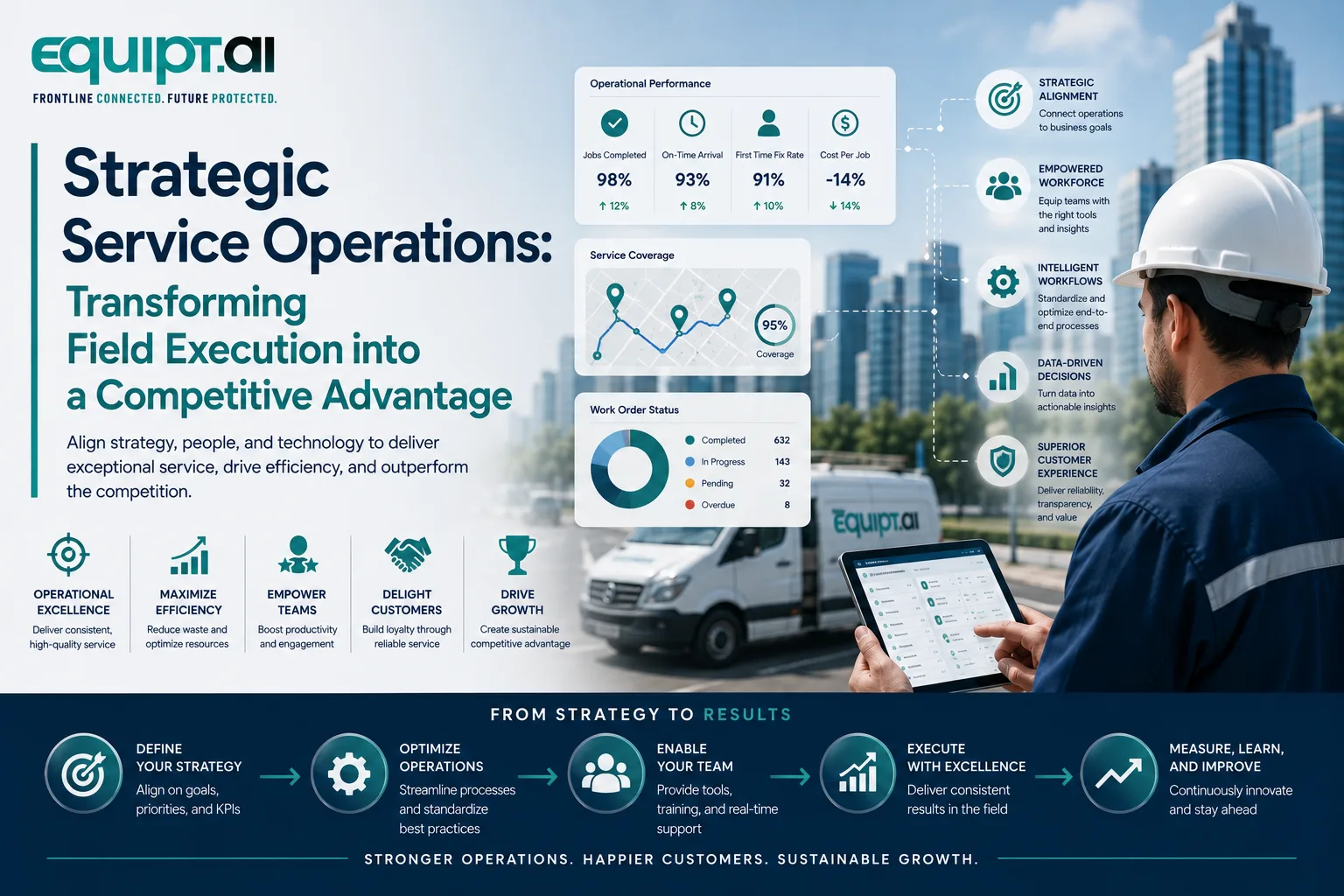
Digital platforms automatically compile valuable performance data across operations. Executive dashboards track critical metrics—such as job completion times, technician utilization rates, average travel duration, and profitability per job—empowering managers to make confident, data-backed operational decisions.
Best Practices for System Rollout and Team Adoption
Successfully deploying modern operational tools requires structured planning, proper team onboarding, and continuous process refinement.
1. Map Existing Operational Workflows
Begin by analyzing your current operational flow from initial job intake to payment collection. Identify primary friction points—such as dispatch delays, lost paperwork, or delayed billing—to define clear goals for operational improvement.
2. Prioritize User-Friendly Mobile Tools
Since field staff use mobile tools daily, select solutions with intuitive, straightforward user interfaces. Minimizing mandatory steps allows technicians to document job details quickly without interfering with their technical work.
3. Provide Structured, Role-Based Training
Offer targeted training sessions tailored specifically for dispatchers, service managers, and field technicians. Help team members understand how digital workflows reduce administrative burden, eliminate paper handling, and make daily jobs easier.
4. Monitor Key Performance Indicators Continuously
After deployment, regularly review key performance metrics to track operational progress. Collect feedback from field personnel and dispatchers to adjust scheduling rules, improve workflows, and support continuous business growth.
Building a Future-Ready Service Business
As technology continues to advance, the field service sector is becoming increasingly data-driven and automated. Emerging innovations—such as IoT-enabled equipment monitoring and predictive AI analytics—will continue to transform field operations, allowing companies to identify and service failing components before breakdowns occur.
Embracing automated, connected field service management tools builds a sustainable foundation for long-term operational success. Eliminating administrative delays, optimizing workforce scheduling, and delivering consistent, high-quality customer service empowers service companies to scale efficiently and build a strong market presence.