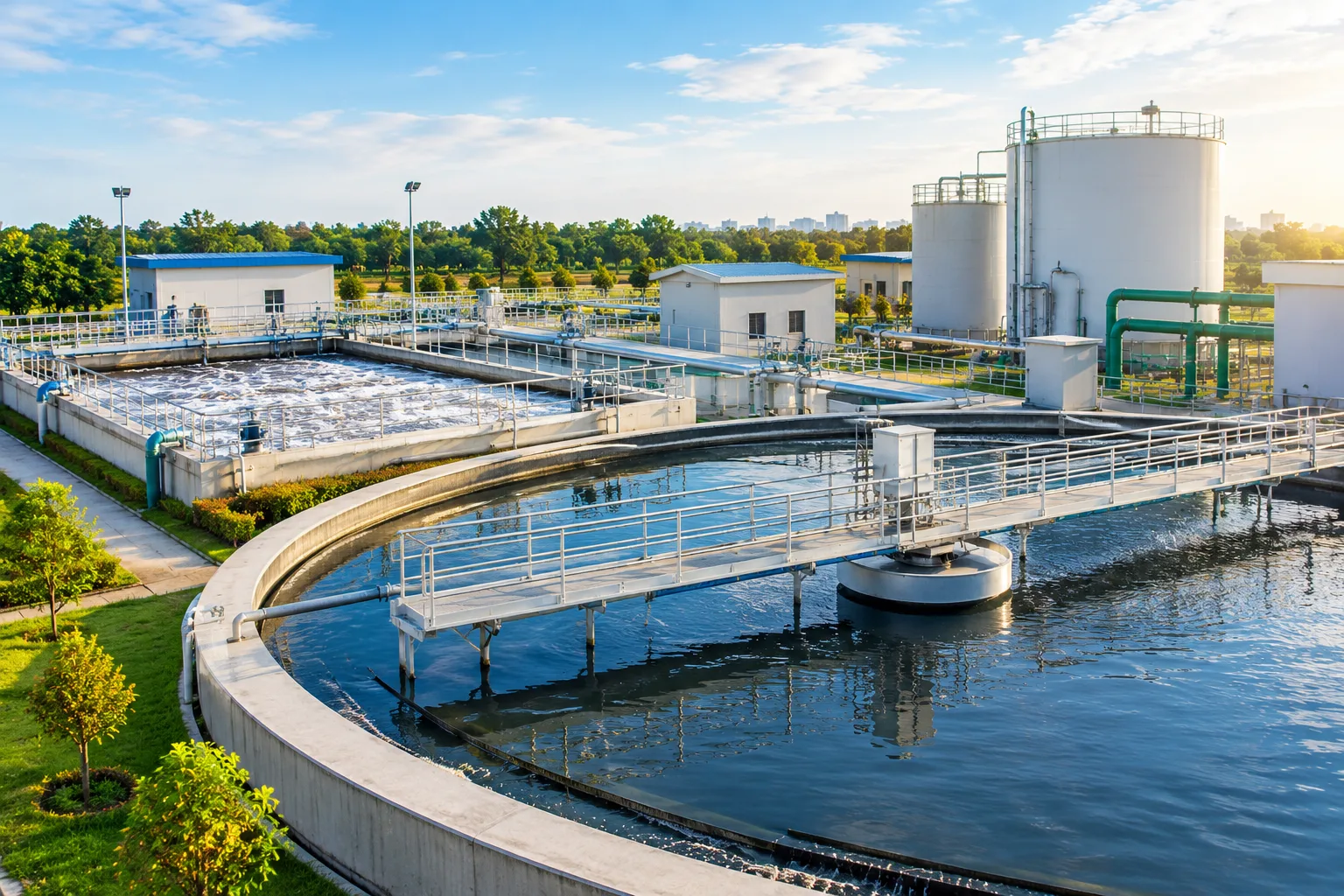
Every building, campus, and city produces wastewater that must be treated before it returns to the environment. This modern sewage treatment guide explains how sewage treatment plants (STPs) work, compares the main technologies, and helps you choose the right one. Some people search for "TP technologies" when they mean STP technologies, so we cover both terms here.
What Is a Sewage Treatment Plant (STP)?
A sewage treatment plant removes solids, organic matter, nutrients, and disease-causing organisms from domestic wastewater so it can be safely discharged or reused. Without treatment, sewage pollutes rivers, contaminates groundwater, and spreads waterborne disease.
Modern sewage treatment goes beyond disposal. Today's plants recover water for flushing, landscaping, and cooling, and larger plants can capture biogas from sludge.
How Does Modern Sewage Treatment Work?
Sewage passes through four stages: preliminary, primary, secondary, and tertiary treatment. Each stage targets a different contaminant.
- Preliminary: Screens and grit chambers remove plastics, rags, and sand.
- Primary: Settling tanks separate suspended solids as sludge.
- Secondary: Microorganisms consume dissolved organic matter, measured as biochemical oxygen demand (BOD) and chemical oxygen demand (COD).
- Tertiary: Filtration, chlorination, or UV disinfection polishes the water for reuse.
The U.S. Environmental Protection Agency describes how these processes are regulated under its NPDES program. India's Central Pollution Control Board publishes national guidance on sewage treatment and discharge.
What Are the Main STP Technologies?
The four most common STP technologies are the activated sludge process (ASP), the moving bed biofilm reactor (MBBR), the sequencing batch reactor (SBR), and the membrane bioreactor (MBR). They differ in footprint, effluent quality, and running cost.
TechnologyHow It WorksFootprintEffluent QualityBest ForASPAeration tank plus secondary clarifierLargeGoodMunicipal plants with ample landMBBRBacteria grow on floating plastic mediaMediumVery goodRetrofits, variable loadsSBRFill, react, settle, and decant in one tankSmall to mediumVery goodApartments, hotels, officesMBRMembranes replace the clarifierSmallestExcellentWater reuse, tight sitesHow does an MBBR differ from an SBR?An MBBR runs continuously and uses media to hold more bacteria in the same tank volume. An SBR treats water in timed batches within a single tank. MBBR tolerates shock loads well, while SBR needs less equipment but relies on good control systems.
Is an MBR worth the extra cost?An MBR is worth it when you need high-quality reusable water or have very little space. Its membranes produce clear, low-turbidity effluent, but they add energy use, cleaning chemicals, and eventual replacement costs.
Which STP Technology Should You Choose?
Choose based on available land, discharge or reuse standards, how much your flow fluctuates, and your operating budget. No single technology wins in every case.
- Limited land or reuse goals: MBR.
- Fluctuating flows (hotels, hospitals, campuses): MBBR or SBR.
- Large municipal flows with low land cost: ASP.
- Upgrading an overloaded plant: MBBR media can often be added to existing tanks with little new civil work.
Practical tip: Design for peak flow, not average flow. Undersizing is one of the most common reasons plants fail to meet standards. Also plan for future expansion, since adding buildings later without reassessing capacity degrades treatment quality.
What Are the Discharge Standards for Treated Sewage?
Standards vary by country and by where the treated water goes. In India, the CPCB and State Pollution Control Boards set the limits, and National Green Tribunal directions have pushed newer plants toward stricter values, such as BOD near 10 mg/L and total suspended solids (TSS) near 20 mg/L. Limits change, so confirm the current figures with your State Pollution Control Board. The Ministry of Housing and Urban Affairs' CPHEEO also publishes design manuals for sewerage and sewage treatment.
If you plan to reuse the water, the EPA's water reuse resources explain treatment levels for irrigation, industrial cooling, and other applications.
How Much Does It Cost to Run an STP?
The main operating costs are electricity, sludge handling, chemicals, and skilled labor. Aeration usually consumes the largest share of power. MBR systems add membrane cleaning and replacement, while ASP demands more land and civil work. Compare lifecycle cost over 10 to 15 years, not just the installation price.
Common STP Mistakes to Avoid
- Skipping pre-screening: Wipes and plastics clog pumps and blowers.
- Irregular testing: Check BOD, TSS, pH, and dissolved oxygen on a fixed schedule.
- Untrained operators: Poor maintenance shortens equipment life and risks non-compliance.
- Ignoring sludge management: Unmanaged sludge quickly undermines effluent quality.
Conclusion
The right choice depends on space, discharge standards, load patterns, and lifecycle cost. Use this modern sewage treatment guide as a starting point, then consult a qualified engineer and your local pollution control authority before finalizing a design. Done well, modern sewage treatment protects public health and turns wastewater into a reusable resource.