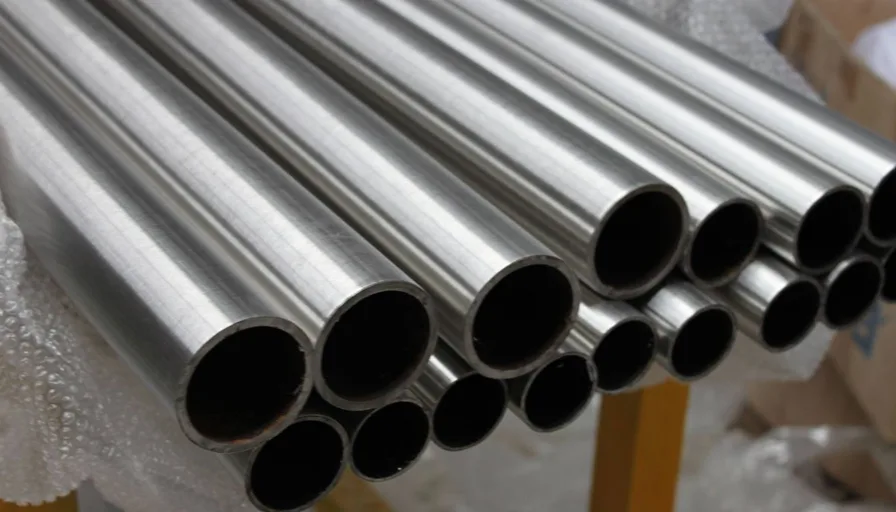
Stainless Steel 316L ERW Pipes
Stainless Steel 316L ERW Pipes are widely used in applications where corrosion resistance, weldability, durability, and reliable dimensional accuracy are important. The low-carbon version of 316 stainless steel offers good resistance to corrosion in chloride-containing and chemical environments, while the ERW manufacturing process provides consistent pipe dimensions and a practical solution for many industrial piping systems. These pipes are commonly selected for chemical processing, pharmaceutical equipment, food processing, marine applications, petrochemical systems, and general industrial fabrication.
The “L” designation indicates a lower carbon content than standard 316 stainless steel. This helps reduce the risk of carbide precipitation during welding and makes the material suitable for fabricated piping systems involving welding operations. Depending on the application, pipe dimensions, wall thickness, surface finish, and applicable specification are selected according to operating pressure, temperature, fluid characteristics, and fabrication requirements.
Understanding Stainless Steel 316L ERW Pipes
Stainless Steel 316L ERW Pipes are manufactured from 316L stainless steel strip or sheet that is formed into a cylindrical shape and joined along the longitudinal seam using electric resistance welding. The welded section is then processed to achieve the required dimensions and surface condition. The process allows manufacturers to produce pipes in a range of outside diameters and wall thicknesses with consistent dimensional control.
Grade 316L contains chromium, nickel, and molybdenum, with molybdenum contributing to improved resistance against pitting and crevice corrosion compared with many conventional austenitic stainless steel grades. The material also provides good toughness and fabrication characteristics. Its low carbon content makes it particularly useful for welded construction where corrosion resistance around the welded area is an important consideration.
For industrial buyers, selecting suitable Stainless Steel 316L ERW Pipes Suppliers involves more than comparing price. Pipe size, wall thickness, grade certification, manufacturing specification, surface finish, testing requirements, quantity, and delivery schedule should all be considered. Proper documentation is also important when the pipes are intended for regulated or critical industrial applications.
Manufacturing Process and Quality Considerations
The manufacturing process begins with suitable 316L stainless steel material. The strip is passed through forming equipment that gradually changes its shape into a circular section. The longitudinal edges are brought together and electrically welded. After welding, the pipe may undergo sizing, straightening, surface treatment, heat treatment where required, and other finishing operations according to the applicable manufacturing specification.
Quality control can include dimensional inspection, visual examination, weld inspection, mechanical testing, chemical composition verification, and non-destructive testing depending on the applicable standard and purchase requirements. The finished pipes should have uniform dimensions and a sound longitudinal weld suitable for the intended service.
When purchasing from Stainless Steel 316L ERW Pipes Stockists, buyers may benefit from readily available sizes and shorter delivery schedules. Stock availability can be particularly useful for maintenance projects, replacement requirements, fabrication work, and orders involving standard commercial dimensions.
Standards, Sizes, and Specifications
Stainless Steel 316L ERW Pipes can be supplied according to applicable ASTM, ASME, and other recognized specifications depending on the intended service. ASTM A312/A312M is commonly associated with seamless, welded, and heavily cold-worked austenitic stainless steel pipes for high-temperature and general corrosive service. Other specifications may apply where the pipe is intended for particular fabrication, sanitary, pressure, or industrial requirements.
The required specification should be confirmed before ordering because the manufacturing process, testing, dimensions, heat treatment, and acceptance criteria can vary between standards. Buyers should also specify whether the pipe is required for pressure service, general process piping, sanitary applications, structural fabrication, or another particular use.
Available dimensions can vary according to the manufacturing capability and applicable specification. Pipes may be supplied in standard or custom lengths, with finishes selected according to the end-use requirements. Surface finish is especially important in pharmaceutical, food-processing, and hygienic applications where cleanability and surface condition are critical.
Why 316L Is Used for Industrial Piping
316L stainless steel combines corrosion resistance with good fabrication characteristics. Its molybdenum content improves resistance to localized corrosion in environments containing chlorides and other aggressive substances. This makes the grade suitable for a variety of process and industrial applications.
The low-carbon composition is another important characteristic. During welding, lower carbon content can help reduce the formation of chromium carbides at grain boundaries, supporting corrosion resistance in welded constructions when the material is properly processed. This is one reason 316L is frequently specified for fabricated piping assemblies.
The pipes also offer a combination of strength, toughness, corrosion resistance, and relatively easy fabrication. However, material selection should always be based on the actual operating environment rather than grade designation alone. Concentration, temperature, pressure, chloride exposure, chemical composition, and cleaning conditions can all affect service performance.
Applications of Stainless Steel 316L ERW Pipes
These pipes are used across industries where stainless steel piping is required for corrosive or hygienically controlled environments. Typical applications include chemical processing lines, pharmaceutical plants, food and beverage processing systems, marine equipment, petrochemical facilities, water-treatment systems, heat-exchanger-related piping, and industrial fabrication.
In pharmaceutical and food-processing facilities, 316L is often selected because of its corrosion resistance and suitability for fabrication and cleaning processes. Surface finish and manufacturing requirements become particularly important in these applications.
In chemical and petrochemical facilities, the grade can be used for process lines and equipment where resistance to corrosion is required. The final suitability depends on the specific chemicals, concentrations, temperatures, and operating conditions involved.
Choosing a Reliable Manufacturer and Supplier
Working with experienced Stainless Steel 316L ERW Pipes Manufacturers can help buyers obtain material manufactured according to the required specification and dimensions. A reliable manufacturer should be able to provide information about grade, manufacturing process, dimensions, testing, surface finish, and material documentation.
For domestic procurement, buyers may search for Stainless Steel 316L ERW Pipes Manufacturers in India when they require locally produced material, project-specific manufacturing, or larger quantities. Documentation such as material test certificates can be important for quality verification and project records.
Companies looking for ready stock can also work with Stainless Steel 316L ERW Pipes Stockists in India, particularly when standard sizes are required quickly. Stockists can maintain commonly requested dimensions and arrange material according to project quantities and delivery requirements.
For overseas procurement, Stainless Steel 316L ERW Pipes Exporters can supply material to international customers according to agreed specifications, packing requirements, inspection procedures, and shipping documentation. Export orders may require additional documentation depending on the destination country and project requirements.
Buyers searching specifically for domestic export-oriented supply can consider Stainless Steel 316L ERW Pipes Suppliers in India for requirements involving multiple sizes, bulk quantities, and international delivery coordination. The supplier should confirm material availability, applicable standards, testing requirements, packing, and delivery terms before order placement.
Testing and Documentation
Testing requirements depend on the applicable product specification and purchase order. Common quality checks can include chemical analysis, tensile testing, hardness testing where applicable, dimensional inspection, visual inspection, and weld-related examination. Hydrostatic or other non-destructive testing may also be required according to the relevant specification.
Material Test Certificates provide important information about the supplied material, including chemical composition, mechanical properties, heat or batch identification, and compliance information. For critical projects, buyers may also require third-party inspection, additional testing, or specific certification.
Proper identification and traceability are particularly important when pipes are used in pressure, chemical, pharmaceutical, petrochemical, or other demanding applications.
A M Industries for Stainless Steel 316L ERW Pipes
A M Industries supplies stainless steel products for industrial requirements, including pipes and tubes used across chemical, petrochemical, pharmaceutical, power, oil and gas, fabrication, and other engineering sectors. The company focuses on supplying material according to customer requirements for grade, dimensions, quantity, finish, testing, and documentation.
For customers looking for Stainless Steel 316L ERW Pipes Exporters in India, A M Industries can support domestic and international sourcing requirements with attention to product specifications and project requirements. Buyers should provide the required pipe size, wall thickness, quantity, applicable specification, finish, testing requirements, and delivery destination when requesting a quotation.
Frequently Asked Questions
What are Stainless Steel 316L ERW Pipes?
They are pipes manufactured from 316L stainless steel strip or sheet and longitudinally joined using electric resistance welding. They are used in industrial systems requiring corrosion resistance and consistent dimensions.
What is the difference between 316 and 316L stainless steel?
316L has a lower carbon content than 316. The lower carbon level makes 316L particularly suitable for welded construction because it reduces the risk of sensitization during welding.
Where are 316L ERW Pipes commonly used?
They are used in chemical processing, pharmaceutical, food processing, petrochemical, marine, water-treatment, and general industrial applications.
Which specification should be selected?
The correct specification depends on the application, service conditions, dimensions, testing requirements, and applicable project standards. ASTM A312/A312M is one commonly used specification for austenitic stainless steel pipe, but the required specification should be confirmed for each application.
Can 316L ERW Pipes be supplied from India?
Yes. They can be sourced from Indian manufacturers, suppliers, and stockists in required sizes and quantities, subject to availability and applicable manufacturing requirements.
What information should be provided when requesting a quotation?
Buyers should specify grade, pipe size, wall thickness or schedule, length, quantity, applicable standard, surface finish, testing requirements, certification requirements, and delivery location.