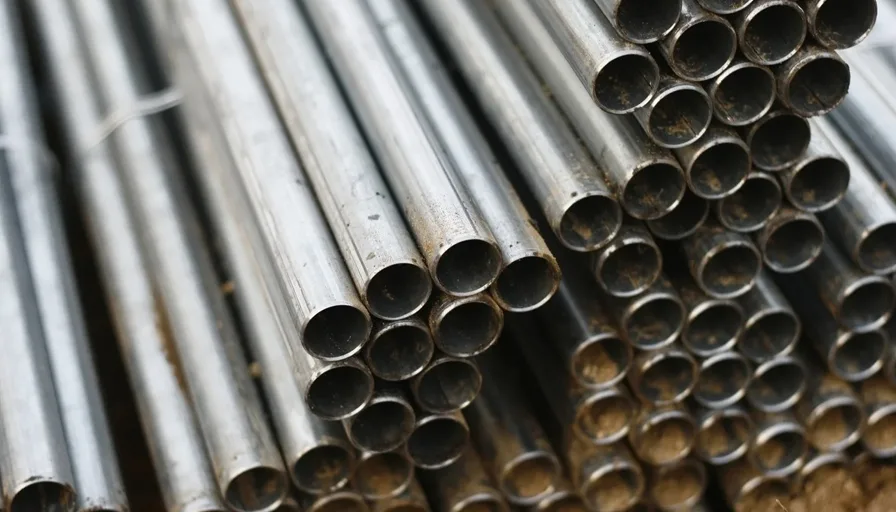
Stainless Steel 304L ERW Pipes are widely used where corrosion resistance, fabrication performance, dimensional accuracy, and reliable service are important. The low-carbon 304L grade is particularly suitable for welded applications because its reduced carbon content helps minimize the risk of carbide precipitation during welding. These pipes are manufactured by forming stainless steel strip or sheet into a cylindrical shape and joining the longitudinal seam through electric resistance welding. Their combination of strength, weldability, and resistance to many common corrosive environments makes them suitable for chemical processing, food processing, pharmaceutical equipment, water systems, heat exchangers, and general industrial applications.
Material and Construction
304L is the low-carbon version of 304 stainless steel and belongs to the austenitic stainless steel family. It generally contains chromium and nickel as its main alloying elements, which provide its characteristic corrosion resistance and stable performance in many industrial environments. The low carbon content makes the grade well suited for welded pipe systems where post-weld heat treatment may not be practical.
During ERW pipe production, stainless steel strip is continuously formed into a round profile. The edges are then heated by electrical resistance and pressed together to create a longitudinal welded seam. After welding, the pipe can undergo sizing, straightening, surface treatment, inspection, and dimensional checks. The manufacturing process allows consistent dimensions and efficient production of pipes in a wide range of sizes and wall thicknesses.
Why 304L ERW Pipes Are Widely Used
The main advantage of Stainless Steel 304L ERW Pipes is their balance between corrosion resistance, fabrication characteristics, and cost. The material performs well in atmospheric conditions and in many water-based, chemical, food, and industrial environments. It also offers good formability and welding characteristics, allowing manufacturers to fabricate piping systems, tanks, process equipment, and other components without excessive difficulty.
The low carbon chemistry is especially valuable for welded construction. When stainless steel is welded, exposure to elevated temperatures can cause chromium carbide precipitation in susceptible grades. The reduced carbon content of 304L lowers this risk and helps maintain corrosion resistance around welded areas when appropriate fabrication practices are followed.
Manufacturing and Quality Control
The manufacturing of Stainless Steel 304L ERW Pipes involves several controlled stages to achieve a reliable finished product. Stainless steel coils or strips are inspected before forming. The material is then shaped through forming rolls, followed by electric resistance welding of the longitudinal edges. Depending on the required specification, the welded seam and pipe surface may receive additional treatment.
Sizing and straightening operations help maintain the required outside diameter, wall thickness, roundness, and straightness. Finished pipes may undergo visual inspection, dimensional inspection, surface examination, and other tests specified by the applicable purchase order or standard. Proper control of welding parameters is important because the quality of the longitudinal seam directly affects the service reliability of the finished pipe.
For projects requiring certified material, buyers generally specify the applicable ASTM, ASME, or other international standard along with grade, dimensions, schedule, surface finish, testing requirements, and documentation.
Standards and Specifications
Stainless Steel 304L ERW Pipes can be supplied according to different standards depending on their application and service requirements. ASTM A312 / ASME SA312 is commonly associated with seamless, welded, and heavily cold-worked austenitic stainless steel pipe for high-temperature and general corrosive service. Other standards may apply where the application involves sanitary service, mechanical requirements, heat exchanger service, or specialized dimensions.
Buyers should confirm the required standard before ordering because the applicable specification can influence manufacturing requirements, dimensions, testing, heat treatment, tolerances, and inspection documentation. Pipe dimensions may also be specified according to ASME B36.19M or other recognized dimensional standards where applicable.
Applications
The combination of corrosion resistance and weldability allows 304L ERW pipes to serve many industrial sectors. They are commonly considered for process piping, water handling systems, food and beverage equipment, pharmaceutical facilities, chemical processing equipment, architectural structures, and general fabrication.
In food and pharmaceutical applications, stainless steel is valued for its clean surface characteristics and resistance to corrosion. In industrial piping, the material can provide a practical solution for conveying liquids and gases where the environment is compatible with 304L stainless steel.
The actual suitability of 304L depends on the operating environment. Factors such as chloride concentration, temperature, acidity, chemical composition, pressure, and cleaning chemicals should be reviewed before selecting the grade.
Selection Factors
When purchasing these pipes, buyers should consider more than the stainless steel grade. Outside diameter, wall thickness, pipe schedule, length, end finish, surface finish, welding requirements, applicable standard, testing, and inspection documentation should all be defined clearly.
For welded piping systems, the condition and quality of the weld seam are particularly important. Buyers should also confirm whether the project requires hydrostatic testing, non-destructive examination, positive material identification, dimensional inspection, or specific certificates.
Supply and Export Requirements
Reliable supply is important for projects that require multiple pipe sizes or scheduled deliveries. Stainless Steel 304L ERW Pipes Manufacturers generally support production according to specified dimensions, standards, surface finishes, and testing requirements. Buyers should review the manufacturer's technical capabilities and quality documentation before placing a large project order.
For regular inventory requirements, Stainless Steel 304L ERW Pipes Suppliers can provide commonly required sizes and assist with sourcing specific specifications. Suppliers may also coordinate documentation, inspection requirements, packing, and delivery according to project needs.
For customers requiring ready stock, Stainless Steel 304L ERW Pipes Stockists can be useful when standard dimensions are required within shorter delivery schedules. Stock availability can vary by size, thickness, finish, and quantity, so confirming inventory before purchase is important.
For international projects, Stainless Steel 304L ERW Pipes Exporters can arrange packing and documentation suitable for overseas shipment. Export orders may require material test certificates, commercial documentation, inspection reports, country-specific requirements, and appropriate packaging to protect the pipes during transportation.
Availability in India
India has a strong market for stainless steel piping used in chemical, pharmaceutical, food processing, engineering, construction, and industrial projects. Stainless Steel 304L ERW Pipes Manufacturers in India can supply pipes in different sizes and specifications depending on production capabilities and project requirements.
For customers sourcing material for Indian industrial projects, Stainless Steel 304L ERW Pipes Suppliers in India can support requirements involving standard dimensions, project quantities, documentation, and delivery schedules. It is useful to provide complete technical specifications when requesting a quotation so that the supplier can offer material matching the intended application.
Where immediate material availability is important, Stainless Steel 304L ERW Pipes Stockists in India may offer commonly requested sizes from existing inventory. Stock-based purchasing can help reduce waiting periods for standard requirements, subject to actual availability and quantity.
For overseas buyers sourcing from India, Stainless Steel 304L ERW Pipes Exporters in India can support international orders with export packing, documentation, inspection coordination, and shipment arrangements. The exact documentation should be confirmed according to the destination country and buyer's purchase requirements.
Choosing the Right Supplier
A suitable supplier should be able to provide clear technical information about the material, manufacturing process, applicable standards, dimensions, testing, and documentation. Buyers should avoid selecting pipes based only on price because material grade, manufacturing quality, weld integrity, tolerances, testing, and certification can significantly affect the final performance of a piping system.
For industrial procurement, it is useful to provide the required grade, pipe size, wall thickness or schedule, length, standard, quantity, surface finish, testing requirements, delivery location, and documentation requirements in the initial enquiry. This allows the supplier to understand the requirement accurately and reduce specification-related delays.
Frequently Asked Questions
What is 304L ERW pipe?
304L ERW pipe is a stainless steel pipe manufactured by forming stainless steel strip into a tubular shape and joining the longitudinal edges using electric resistance welding. The 304L grade has a lower carbon content than standard 304 stainless steel.
What is the advantage of 304L over 304 for welded applications?
The lower carbon content of 304L reduces the risk of chromium carbide precipitation during welding. This makes 304L particularly suitable for many welded stainless steel constructions.
Which industries use 304L ERW pipes?
They are used across chemical processing, food processing, pharmaceutical, water treatment, engineering, construction, and general industrial applications where the corrosion resistance of 304L is suitable.
What information should be included in a purchase enquiry?
A purchase enquiry should normally specify the grade, pipe dimensions, wall thickness or schedule, applicable standard, quantity, length, surface finish, testing requirements, inspection requirements, and documentation needed.
Can 304L ERW pipes be used for corrosive service?
304L provides good corrosion resistance in many environments, but it is not suitable for every corrosive application. Chloride levels, temperature, chemicals, concentration, and operating conditions should be evaluated before selecting the material.
A M Industries – Stainless Steel 304L ERW Pipes
A M Industries supplies stainless steel products for industrial requirements and supports customers looking for reliable material according to specified grades, dimensions, standards, and documentation. Stainless Steel 304L ERW Pipes Manufacturers and Stainless Steel 304L ERW Pipes Suppliers requirements can be handled according to project specifications, quantity, and delivery requirements. For domestic and international enquiries, customers can share their required pipe size, thickness, standard, quantity, and testing or certification requirements to receive a suitable quotation.