
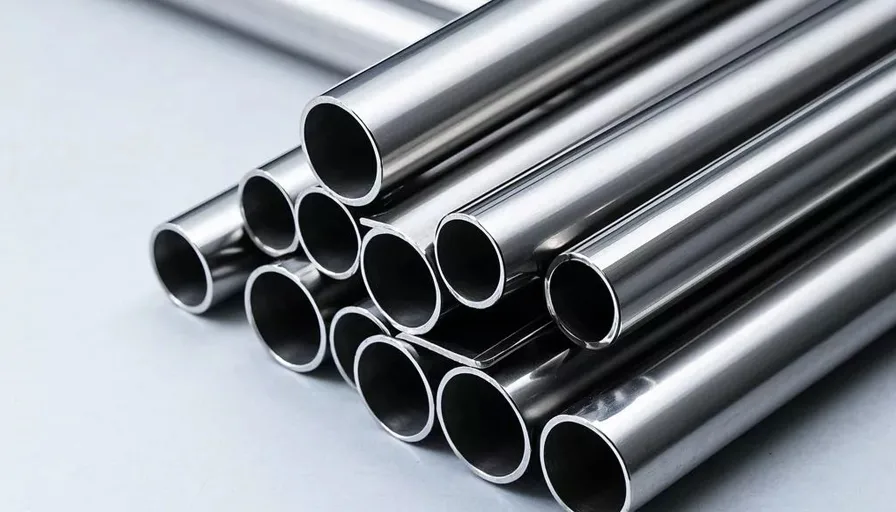
Stainless Steel 304 ERW Pipes
Stainless Steel 304 ERW Pipes are widely used where consistent dimensions, good corrosion resistance, clean surface finish, and reliable fabrication performance are required. Produced through the Electric Resistance Welding process, these pipes are formed from stainless steel strip or sheet and longitudinally welded without the need for filler metal. Their combination of strength, weldability, and resistance to atmospheric and process-related corrosion makes them suitable for a broad range of industrial systems.
Stainless Steel 304 ERW Pipes Manufacturers produce these pipes in different outside diameters, wall thicknesses, lengths, and surface finishes according to application requirements and applicable standards. Grade 304 is an austenitic stainless steel containing chromium and nickel, giving it good resistance to oxidation and many common corrosive environments. ERW production also allows manufacturers to maintain uniform pipe dimensions, which is important for fabrication, installation, and connection with other piping components.
The quality of Stainless Steel 304 ERW Pipes Suppliers depends on material traceability, forming control, welding quality, dimensional accuracy, and inspection procedures. Suppliers generally provide pipes in standard and customized sizes depending on the requirements of engineering contractors, fabricators, process plants, equipment manufacturers, and maintenance companies. Material certificates and inspection documentation can also be supplied when required for industrial projects.
For buyers requiring readily available material, Stainless Steel 304 ERW Pipes Stockists maintain commonly requested sizes and specifications in inventory. Stock availability can help reduce procurement lead times, particularly for replacement work, fabrication projects, maintenance requirements, and urgent industrial requirements. Proper storage and identification of stainless steel products are also important to prevent surface contamination and preserve material quality.
International project requirements are supported by Stainless Steel 304 ERW Pipes Exporters who supply material according to destination-country requirements, project specifications, and agreed documentation. Export orders may include dimensional inspection reports, material test certificates, packing details, certificates of origin, and other shipping documents. Pipes can be packed appropriately for transportation to reduce the risk of mechanical damage and contamination during handling.
For domestic industrial requirements, Stainless Steel 304 ERW Pipes Manufacturers in India serve sectors that require dependable stainless steel piping products for fabrication and process applications. Indian manufacturers can produce pipes in multiple dimensions and finishes while following relevant ASTM, ASME, EN, DIN, or other project-specific specifications. Selection of the appropriate specification should always be based on the intended service conditions and purchaser requirements.
The procurement network of Stainless Steel 304 ERW Pipes Suppliers in India supports industries such as chemical processing, food processing, pharmaceuticals, water treatment, petrochemicals, architecture, and general engineering. Grade 304 is particularly useful in applications where moderate corrosion resistance and good fabrication characteristics are required. The material also offers good formability and weldability, making it practical for many fabricated piping assemblies.
Businesses looking for readily available sizes can work with Stainless Steel 304 ERW Pipes Stockists in India for standard requirements and project quantities. Stockists may supply pipes in different schedules, wall thicknesses, lengths, and surface conditions depending on inventory. Before purchasing, buyers should confirm the grade, standard, dimensions, quantity, surface finish, testing requirements, and documentation needed for the application.
Global procurement is further supported by Stainless Steel 304 ERW Pipes Exporters in India, who supply products to international customers across engineering and industrial markets. Export supply requires attention to packaging, marking, documentation, inspection, and shipment requirements. Pipes may be supplied with identification markings that help buyers verify material grade, size, specification, heat number, and other relevant information.
Material Characteristics of Stainless Steel 304 ERW Pipes
Stainless Steel 304 is an austenitic stainless steel commonly selected for its balance of corrosion resistance, strength, fabrication performance, and availability. Its chromium content supports the formation of a passive surface layer, while nickel contributes to its austenitic structure. The grade is generally non-magnetic in the annealed condition, although cold working can increase magnetic response.
ERW Manufacturing Process
The ERW manufacturing process starts with stainless steel strip or coil that is slit to the required width. The strip is progressively formed into a cylindrical shape before the longitudinal edges are heated and joined through electrical resistance welding. After welding, the pipe can undergo sizing, straightening, cutting, surface treatment, and inspection.
Weld-zone quality is particularly important because the longitudinal seam is an integral part of the finished pipe. Depending on the applicable specification, inspection may include dimensional checks, visual examination, hydrostatic or other pressure testing, and non-destructive examination where required.
Standards and Specifications
Stainless Steel 304 ERW Pipes can be manufactured or supplied according to applicable product standards such as ASTM A312/ASME SA312 for certain stainless steel pressure piping applications. Other standards may apply depending on whether the pipe is intended for general service, sanitary applications, heat exchangers, structural use, or specialized process equipment.
The purchaser should identify the required standard before ordering because manufacturing, testing, dimensions, tolerances, and acceptance criteria can vary between specifications. Project drawings and engineering specifications should also be checked to ensure that the selected pipe is suitable for the intended service.
Applications
These pipes are used in a wide range of industrial and commercial applications. Common areas include process piping, food and beverage equipment, pharmaceutical installations, chemical handling systems, water treatment equipment, architectural fabrication, machinery, instrumentation support systems, and general engineering.
Grade 304 is also frequently selected for fabricated assemblies because it can be welded and formed effectively using appropriate procedures. Surface finish requirements may vary significantly depending on whether the pipe is intended for industrial processing, hygienic service, architectural use, or general fabrication.
Inspection and Quality Control
Quality control should cover the complete production cycle, beginning with incoming raw material verification and continuing through forming, welding, sizing, finishing, and final inspection. Dimensional checks confirm outside diameter and wall thickness, while visual inspection helps identify surface defects and welding irregularities.
For critical applications, buyers may request material test certificates, chemical analysis, mechanical test results, pressure testing records, or non-destructive testing reports. Maintaining heat-number traceability throughout production and supply provides additional control over material identification.
Selecting the Right Pipe
When purchasing Stainless Steel 304 ERW Pipes, buyers should consider operating temperature, pressure, fluid characteristics, corrosion exposure, required dimensions, connection method, surface finish, applicable standard, and testing requirements. Correct specification selection helps ensure that the pipe performs reliably under the actual service conditions.
A reliable supply partner should also be able to provide consistent material quality, accurate dimensions, proper packaging, technical documentation, and dependable delivery. These factors are particularly important for industrial projects where incorrect material or dimensional variations can create fabrication and installation problems.
Conclusion
Stainless Steel 304 ERW Pipes provide a practical combination of corrosion resistance, weldability, dimensional consistency, and fabrication performance for a wide variety of applications. Their ERW construction makes them suitable for many piping and fabrication requirements, while the availability of different sizes, finishes, and specifications allows buyers to select material according to project needs. Careful attention to standards, testing, dimensions, and service conditions is essential when selecting the appropriate product.