
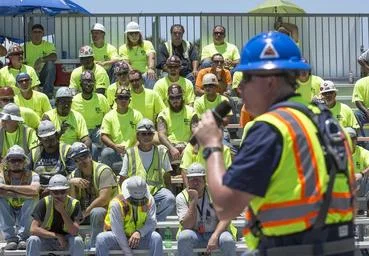
The Site Supervisors’ Safety Training Scheme (SSSTS) is a recognised CITB training course designed for people who have, or are about to take on, supervisory responsibilities within the construction industry. Unlike basic site safety awareness training, SSSTS focuses on the supervisor’s responsibility for planning work safely, controlling site activities and ensuring workers operate in accordance with current health and safety requirements.
What Does the SSSTS Course Cover?
SSSTS provides practical knowledge that supervisors need to manage health and safety effectively on construction sites. The course typically covers the supervisor’s legal responsibilities, risk assessments, method statements, control measures, accident prevention, communication and the implementation of safe systems of work.
A key part of the training is understanding the Health and Safety at Work etc. Act, Construction (Design and Management) Regulations (CDM), and other legislation and guidance relevant to construction supervision. Candidates also learn how to identify hazards, respond to unsafe working practices and communicate safety requirements effectively to their teams.
The course is therefore not simply about understanding construction hazards; it is about developing the knowledge required to supervise work and actively contribute to safer site operations.
How Long Does an SSSTS Course Take?
The standard SSSTS course is delivered over two days, making it substantially more comprehensive than shorter site safety awareness courses. Training is normally delivered through a combination of tutor-led instruction, discussions, case studies, group activities and knowledge checks.
Candidates are expected to participate throughout the course rather than simply attend. Successful completion normally requires meeting the course assessment requirements, including the relevant examination or knowledge assessment.
Because SSSTS is intended for people with supervisory duties, candidates should be prepared to understand how health and safety principles apply to real construction-site situations rather than relying solely on theoretical knowledge.
How Much Does an SSSTS Course Cost?
The SSSTS course cost varies between training providers and locations, so there is no single UK-wide price. Fees can be influenced by whether the course is delivered at a training centre, online or on a company’s premises, as well as by location, course dates and provider.
When comparing prices, employers and individuals should look beyond the headline fee. It is important to confirm that the course is delivered by an appropriate CITB-approved training provider, that the advertised price includes the required assessment and that the qualification or certificate issued meets the employer’s requirements.
For businesses booking several supervisors, an on-site course may also provide greater practical value and reduce travel and accommodation costs.
Who Needs an SSSTS Course?
SSSTS is primarily intended for construction supervisors and people who are moving into supervisory positions. It can be particularly relevant to site supervisors, chargehands, forepersons, team leaders and experienced tradespeople who are expected to oversee other workers.
The course is also valuable for individuals whose role involves allocating work, monitoring site activities, implementing risk controls or ensuring workers follow safe working practices.
SSSTS should not, however, be confused with the Site Management Safety Training Scheme (SMSTS). SSSTS is aimed at supervisory-level responsibilities, whereas SMSTS training is designed for construction managers and those with broader management responsibilities.
Is SSSTS Worth Doing?
For someone progressing from a skilled trade role into construction supervision, SSSTS can provide an important foundation in managing health and safety responsibilities. It demonstrates structured safety training and helps supervisors understand that their role involves more than coordinating work—it includes recognising risks, implementing controls and maintaining safe working practices.
The most suitable course should always be selected according to the individual’s current role, level of responsibility and employer requirements. If a candidate is moving into a management position with wider responsibility for planning and controlling construction operations, SMSTS may be the more appropriate qualification.