Strong summer sunshine does not always translate into stronger solar production. Dirt, heat, shade, residue, and overlooked maintenance can quietly change the equation.
Picture a familiar summer afternoon. The sky is bright, the roof is flooded with sunlight, and the solar monitoring app should be showing a great day.
Instead, the production curve looks disappointing.
That can feel confusing. If the sun is stronger and the days are longer, why are the solar panels losing power?
The answer is not always one dramatic failure. Summer can bring several smaller issues together at once. Dry weather can leave dust sitting on the glass. Bird droppings may remain in place for weeks. Sprinklers can leave mineral deposits. Fast-growing trees can create new shade. At the same time, high panel temperatures can affect electrical performance.
The U.S. Department of Energy explains that real-world solar energy yield is influenced by factors including heat, dirt, and shade. Higher temperatures can also reduce voltage, which means a hot, cloudless day is not automatically the same thing as an ideal operating day.
That is why a summer production dip deserves a thoughtful check rather than a quick assumption.
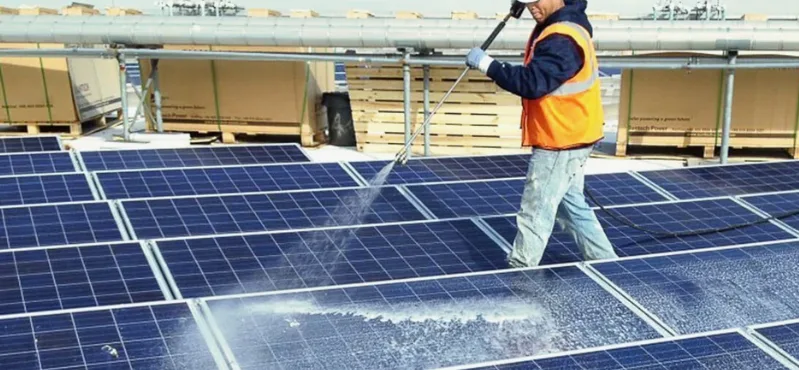
Often, the smartest response begins with solar panel cleaning, visual inspection, performance comparison, and consistent solar panel maintenance.
Key Takeaways
- Strong sunshine does not rule out dirt, heat, shade, or maintenance-related losses.
- Compare similar days before deciding that something is wrong with the system.
- Good solar care combines clean surfaces, regular observation, and professional inspection when the cause is unclear.
Why Are Solar Panels Losing Power in Summer?
Direct answer: Solar panels losing power during summer may be affected by high operating temperatures, accumulated dirt, bird debris, mineral deposits, changing shade, localized panel problems, or inconsistent maintenance.
Solar panels produce electricity from sunlight, but the amount of usable energy reaching the system depends on more than brightness alone.
Summer heat itself can be a meaningful part of the performance puzzle. The U.S. Department of Energy notes that, based on typical temperature coefficients, conventional rooftop crystalline-silicon PV modules can lose as much as 30% of power on hot summer days in sunny or desert locations. That figure describes particularly hot operating conditions, not an expected loss for every home or commercial array.
This is why a bright, cloudless afternoon does not automatically guarantee peak production. Panel temperature, airflow, installation conditions, dirt, shade, and the characteristics of the equipment all influence what owners ultimately see in their monitoring data.
Still, it helps explain why solar panels losing power should sometimes be investigated from the surface down.
Seven Summer Checks Worth Making
1. Has Dust Slowly Covered the Glass?
Dust is easy to underestimate because it often builds gradually.
A homeowner may look at the roof every day without noticing how much the panels have changed. Property teams can face the same problem across large arrays where minor buildup becomes visually normal.
Dry summer conditions can make this more noticeable because long stretches without meaningful rainfall allow contamination to remain on the modules.
If solar panels losing power are also visibly dull or dusty, surface condition deserves attention.
Professional solar panel cleaning can be especially useful when rooftop access is difficult, the array is large, or the buildup cannot be safely managed from the ground.
2. Are Bird Droppings Blocking Small Areas?
General dust tends to spread across a surface. Bird droppings create a different problem because they can form concentrated patches.
They may also be more stubborn than loose dirt.
Look around roof edges, nearby trees, antennas, gutters, and places where birds regularly perch. A few obvious deposits do not prove that they caused the entire production change, but they are worth documenting and removing appropriately.
For property managers, recurring bird activity can also signal that solar panel maintenance should include more than occasional visual checks.
3. Is Hard Water Leaving a Film Behind?
Water does not always leave solar glass cleaner.
Sprinkler overspray and mineral-rich water can dry on the surface and leave visible spots or cloudy residue. Repeated exposure may create buildup that ordinary rinsing does not address well.
This is one reason random rooftop spraying is not the same as professional solar panel cleaning.
If residue keeps returning, the better question is not simply, "How often should these panels be rinsed?" It is, "Where is the water coming from, and why is it reaching the array?"
Correcting the source can be just as important as cleaning the glass.
4. Did Summer Growth Create New Shade?
Shade changes.
A branch that caused no problem earlier in the year may reach farther across an array after months of growth. Nearby landscaping, new structures, rooftop equipment, or accumulated debris can also alter the sunlight reaching individual modules.
The Department of Energy specifically identifies partial shading as one of the factors that can reduce PV system energy yield.
When solar panels losing power show an unusual pattern at roughly the same time each day, changing shade is worth checking.
Do not assume every summer decline starts on the panel surface.
5. Is Heat Part of the Difference?
This surprises many solar owners.
More sunlight is useful, but photovoltaic cells do not necessarily perform better simply because the panels are hotter. The Department of Energy notes that solar cells generally perform better at lower temperatures and that higher temperatures can reduce voltage.
A blazing summer afternoon can provide strong sunlight while simultaneously creating less favorable operating temperatures.
That is why comparisons matter. Compare today's output with a similar clear day, not automatically with a cooler day from another season.
When evaluating solar panels losing power, heat should be separated from dirt before anyone assumes cleaning will solve everything.
6. Is One Panel Behaving Differently?
A clean-looking array can still deserve inspection.
Visual checks may reveal cracks, damaged wiring, unusual discoloration, debris around components, or other conditions that require closer attention. More advanced inspection methods can also help identify abnormalities that are difficult to recognize from ground level.
This is where knowledgeable solar panel maintenance becomes important.
Cleaning should not become a substitute for diagnosis. When a significant production change remains after obvious dirt, shade, and weather differences are considered, the system may need a qualified technical review.
7. Has Maintenance Become Reactive?
Many systems receive attention only after somebody notices a large change.
That makes troubleshooting harder.
A simple history of cleaning dates, photos, weather conditions, and production readings gives owners something useful to compare. For facilities teams responsible for several properties, documentation becomes even more valuable.
Consistent care turns solar panels losing power from a vague complaint into a question that can be investigated.
For homeowners, scheduled residential solar cleaning may also make it easier to prevent heavy buildup rather than waiting until panels look obviously neglected.
Which Clue Points to Which Problem?
- Uniform dusty appearance: This may indicate general soiling across the solar panels. Compare the surface condition with the system’s energy production to assess whether the buildup may be affecting performance. Avoid assuming that light dust has no impact.
- Small stubborn patches: These may result from bird debris or other organic buildup. Inspect the affected areas closely rather than treating all types of dirt in the same way.
- White spots or cloudy film: These may indicate mineral residue left by water exposure, such as sprinklers. Check whether the panels regularly come into contact with water that may leave deposits, and avoid repeatedly rinsing them with the same water.
- A drop in output at similar hours: Changing shade from nearby trees, buildings, or other obstacles may affect solar production throughout the day. Observe the array at different times before concluding that cleaning is the cause.
- Lower output on very hot days: High operating temperatures may contribute to reduced panel efficiency. Compare production under similar weather conditions rather than assuming that hotter, sunnier days always result in better performance.
- One area behaves differently: If a specific section of the solar array performs differently from the rest, there may be a localized system issue. Arrange a closer inspection instead of repeatedly cleaning the panels without identifying the underlying cause.
- No maintenance history: A lack of maintenance records can make it difficult to identify recurring issues or track changes in performance. Start a simple service log to record cleaning dates, inspections, and observed concerns rather than waiting for a significant decline in output.
How Should You Check a Summer Power Drop?
Direct answer: Start with what can be observed, compare performance under similar conditions, address obvious contamination safely, and verify what happens afterward.
A simple framework makes the process easier to remember.
Use the LCV Framework
Look
Inspect the array from a safe location. Look for dust, bird debris, mineral spotting, leaves, new shade, or anything visibly different.
Compare
Review production against similar sunny days when possible. One low reading by itself does not establish a maintenance problem.
Verify
After cleaning or maintenance, continue watching the system. If the unusual pattern remains, further inspection may be more appropriate than repeated washing.
Solar maintenance works best when owners notice changes early instead of waiting for an obvious problem. Louis Pasteur captured that idea neatly:
“Chance favors only the prepared mind.” — Louis Pasteur
The National Institutes of Health attributes the fuller statement to Pasteur's 1854 lecture at the University of Lille.
For solar owners, being prepared can be as simple as keeping an eye on production, noticing new buildup or shade, and addressing unusual changes before they become harder to diagnose.
Where Does Summer Solar Care Go Wrong?
A few well-intentioned habits can make maintenance less effective.
- Assuming rain handles every cleaning job. Rain may remove some loose material, but stubborn residue can remain.
- Judging performance from one afternoon. Clouds, temperature, shading, and normal solar-resource variation can change daily production.
- Treating every loss as dirt. Cleaning cannot correct every electrical, shading, or system-level problem.
- Cleaning without considering rooftop safety. Difficult access is a strong reason to consider professional solar panel cleaning rather than improvising.
- Waiting until the panels look terrible. A basic solar panel maintenance schedule makes comparison and planning easier.
- Ignoring recurring causes. If sprinklers, birds, vegetation, or dust repeatedly create the same issue, the source deserves attention too.
Good maintenance is not about cleaning as often as possible. It is about understanding what the system needs.
When Does a Professional Help the Smarter Move?
Professional help makes sense when safe access is difficult, contamination is stubborn, the array is large, recurring maintenance needs documentation, or a production issue remains unexplained.
Homeowners may want professional support when roof height, pitch, or panel placement makes DIY cleaning impractical.
Property management companies and facilities teams have another challenge: consistency.
They may need solar panel cleaning across multiple buildings, predictable scheduling, inspection records, and a reliable maintenance process rather than occasional reactive cleaning.
Professional solar panel maintenance should also bring judgment to the job. The goal is not simply to make glass look shiny. It is to understand panel conditions, remove appropriate surface contamination, notice unusual conditions, and help the owner make a sensible next decision.
Give Your Solar a Smarter Summer Check
A lower summer reading does not automatically mean a solar system is failing.
Sometimes the problem is sitting right on the glass. Sometimes it is in the shade. Sometimes it is hot. Sometimes the system simply needs a closer look.
The most useful response to solar panels losing power is a calm, systematic one: inspect, compare, maintain, clean when appropriate, and verify the result.
Solar is a long-term investment. Treating maintenance the same way can make ownership simpler, especially when summer conditions put cleanliness and system performance under a brighter spotlight.
For homeowners, property managers, and facilities teams looking for knowledgeable solar-focused cleaning and maintenance support, Mr Clean Solar Cleaning offers a specialist option for keeping solar installations properly cared for.
FAQs
1. What Makes Good Solar Panel Maintenance?
Good solar panel maintenance combines regular observation, performance monitoring, appropriate cleaning, attention to shading, and professional inspection when an unusual change cannot be explained.
2. What Are the Best Practices for Solar Panel Cleaning?
The best approach is to follow equipment guidance, avoid abrasive treatment, consider water quality, prioritize rooftop safety, and use professional solar panel cleaning when access or buildup makes DIY care unsuitable.
3. Do Summer Trends Always Mean Something Is Wrong?
No. Solar production naturally changes with sunlight, weather, temperature, and shade. The Department of Energy notes that heat, dirt, and shading can all influence real-world energy yield. Compare similar conditions before deciding solar panels losing power indicates a fault.
4. When Should You Hire a Professional Solar Cleaner?
Consider professional service when the roof is difficult to access, contamination is stubborn, maintenance must be documented, or repeated cleaning is becoming difficult to manage. The cost of professional service should be weighed against safety, system size, and the level of care required.
5. What Services Does Mr Clean Solar Cleaning Provide?
Mr Clean Solar Cleaning lists residential panel cleaning, commercial solar maintenance, performance inspection, hard-water stain removal, bird-related protection, and performance reporting among its solar-focused services.
6. Can Mr Clean Solar Cleaning Support Custom Maintenance?
Yes. Mr Clean Solar Cleaning offers scheduled commercial maintenance programs and services aimed at homeowners, businesses, property managers, and larger solar installations. A custom maintenance approach can be especially useful when multiple sites or recurring cleaning needs are involved.