Three proposals land in your inbox. Similar timelines. Rates within 15% of each other. So you pick the cheapest one, or the one that promised the fastest go-live date.
That's usually a mistake. I've watched it play out at close to a dozen companies over the years.
Speed and price tell you almost nothing about whether a system still works the way you need it eighteen months from now, once transaction volume doubles or a new compliance rule shows up out of nowhere. The real question isn't "how fast can you deliver." It's "can this thing survive contact with how we actually operate."
Fast Delivery Is a Trap
A tight timeline sounds great in a pitch deck. Here's what it costs you: business rules get hardcoded instead of made configurable, load testing gets skipped because there's no runway left, and documentation shrinks to almost nothing because it never moves a delivery date.
None of that shows up in week one.
It shows up eight months later, when finance needs a new reporting field and the one developer who understood the original module has already moved to a different client. Software development services in Malaysia has moved well past the point where raw speed separates good vendors from risky ones. Architecture discipline does that now.
The Compliance Piece Most Vendors Miss
LHDN's e-invoicing mandate isn't a "someday" requirement anymore. It's live, rolling out across business sizes, and any system touching sales, invoicing, or accounting needs that integration designed in from day one. Bolting it on after launch is a rebuild, not a patch.
Data residency under Malaysia's PDPA works the same way. A vendor who treats it as a footnote is telling you something: they're building generic software and hoping it fits your regulatory reality, rather than building for the environment you actually operate in.
Ask directly how a vendor has handled LHDN integration on past projects. That one answer tells you more than a portfolio deck ever will.
What "Enterprise Software" Actually Covers
The phrase gets used loosely enough that it's worth being specific. Custom ERP work spanning financial accounting, sales and invoicing, HRMS, procurement, and inventory, shaped around how a team actually works. Enterprise mobile apps that give field staff and sales teams access to workflows without being chained to a desk. Data and BI work that turns numbers scattered across five systems into something someone can actually act on, instead of a monthly spreadsheet ritual nobody enjoys.
There's also legacy modernization, usually phased so operations don't stop mid-migration, and system integration that connects ERP, CRM, and third-party platforms so data moves on its own instead of getting copy-pasted by a human at 6pm on a Friday.
Signs You've Outgrown Off-the-Shelf Software
Not every business needs a custom build. If your processes are simple and an off-the-shelf tool covers it, custom development is just money wasted.
But a few signals tend to line up once a company has genuinely outgrown generic software. Reports to leadership take two or three days because the data lives in four disconnected systems. Different branches run on separate data sets with zero centralized visibility. And when you ask the current vendor for a customization, the answer is always some version of "the platform doesn't support that."
Two of those sounding familiar usually means enterprise software development is the more useful conversation, not another licensing renewal.
The Questions Worth Asking
Skip the portfolio small talk. Ask how a vendor handles data migration from legacy systems, since that's where most enterprise projects quietly go sideways. Ask what happens if a key developer leaves mid-project, and whether documentation is a default part of their process or something you'd have to request. Ask for examples in your specific industry, because what an oil and gas company needs from an ERP looks nothing like what a retail chain needs, even though both get lumped under "enterprise software" in a sales pitch.
A vendor worth hiring can point to work across manufacturing, logistics, fintech, and healthcare without hesitating, and tell you what was different about each one. Same answer for every industry is the tell.
What a Genuine Partnership Looks Like
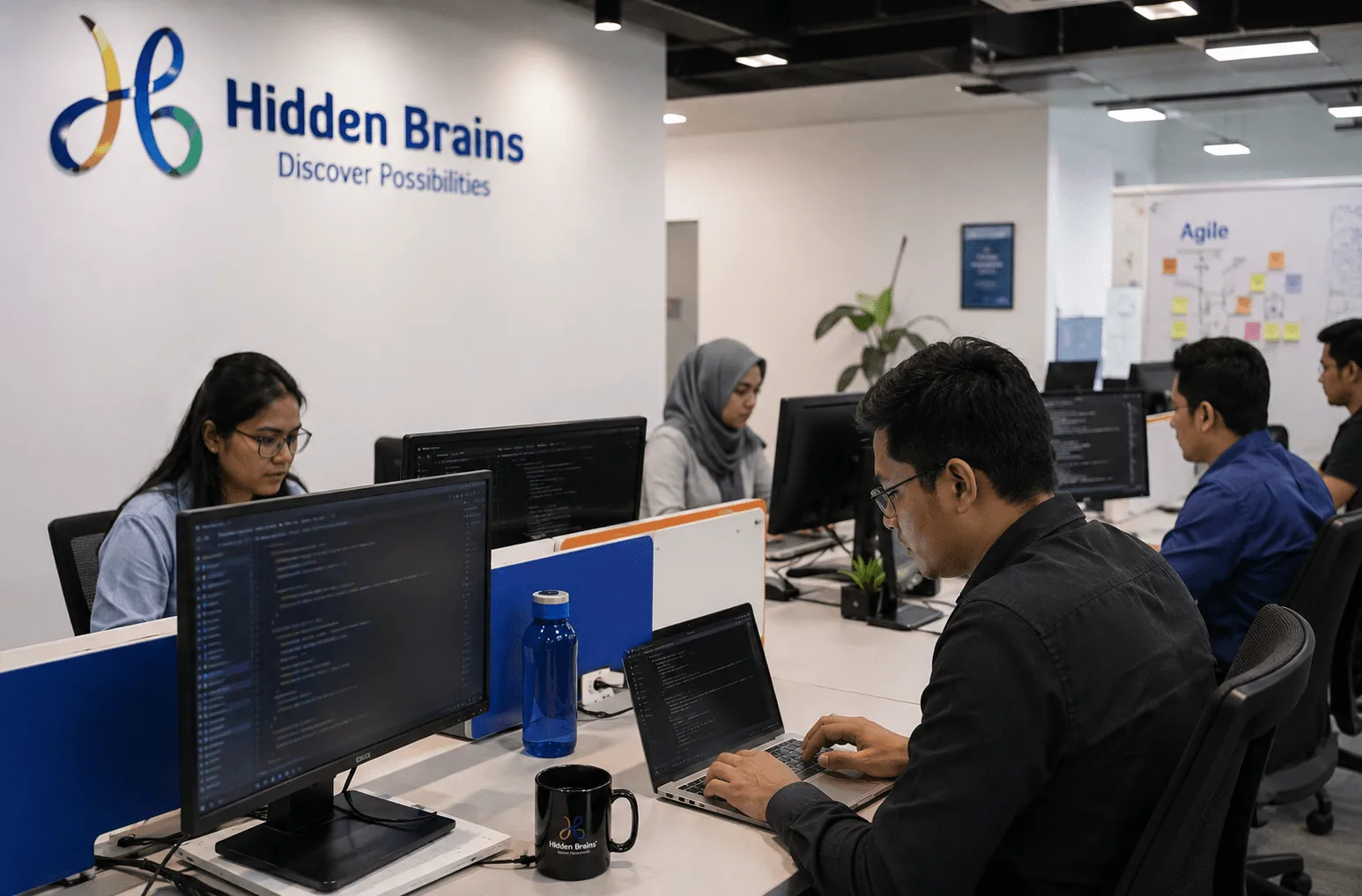
Hidden Brains has worked with Malaysia businesses for over two decades across fintech, logistics, retail, healthcare, and enterprise software. CMMI Level 3 certified and with a team spanning 700+ professionals globally, the company brings structured project governance alongside the technical range to cover complex builds from discovery through to post-launch support.

Related Reads
Explore more insights on software development, startup growth, and AI-driven product delivery: