Software Architecture Consulting: Why It Comes Before Any AI Rollout Software architecture consulting exists to fix the technical foundation a business is standing on before adding anything new to it, since most AI and automation projects fail not because of bad ideas but because they get built on top of systems never designed to support them in the first place.
That's the direct answer businesses usually need first.
Skipping this step doesn't save time. It just moves the cost later, usually in the form of a stalled rollout or a system that breaks under real production load once traffic and data volume grow past what the original architecture could handle without meaningful changes.
Q: What Does Software Architecture Consulting Actually Involve?
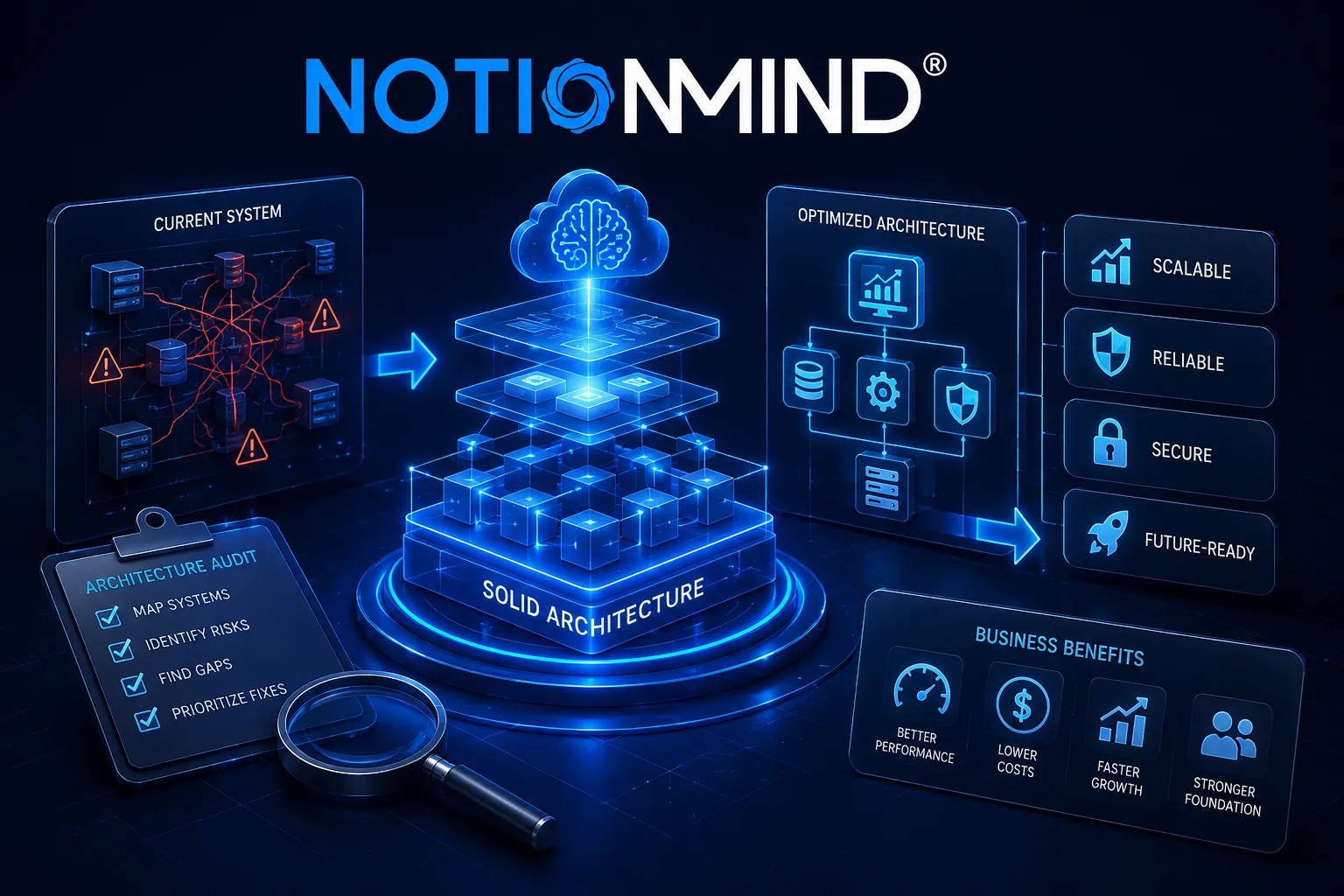
The short answer is a full technical audit followed by a redesign plan, not just a diagnosis handed over without next steps attached.
Consultants typically map existing systems, identify where data flows break down, and flag components that won't scale as usage grows across the business over the coming years. This mapping process often reveals dependencies nobody inside the company was fully aware of, since systems built years apart by different teams rarely get documented consistently along the way.
This phase usually produces a prioritized list of fixes, ranked by risk and impact, rather than a single sweeping recommendation to rebuild everything from scratch immediately.
Businesses often expect a quick verdict, but a proper audit of even a mid-sized system typically takes several weeks to complete thoroughly and accurately.
Q: Why Does This Matter Before Adopting AI Tools Specifically?
AI tools are only as reliable as the data and systems feeding them, which is exactly why software architecture consulting so often precedes any serious AI initiative within a business.
A model trained on inconsistent, poorly structured data produces unreliable outputs no matter how advanced the underlying AI technology actually is. Architecture problems upstream become AI accuracy problems downstream almost every time.
Businesses that skip this step frequently blame the AI tool itself when problems show up, when the real issue traces back to the data infrastructure feeding it from the very start.
Q: What Are the Most Common Architecture Problems Consultants Find?
Legacy systems built for a much smaller scale of operation top the list almost every single time an audit gets performed. These systems often worked fine for years, which is exactly why nobody prioritized replacing them until growth exposed their actual limits.
Data silos across departments, where the same customer information exists in three different formats across three different systems, come in a close second on most audit findings.
Tightly coupled systems, where changing one component risks breaking several unrelated others, round out the most frequent findings consultants report. This kind of fragility often only becomes visible once a change is attempted and something unexpected breaks elsewhere in the system.
Each of these problems compounds the others, which is why fixing just one in isolation rarely produces the improvement a business initially expects to see.
Q: How Long Does a Typical Architecture Consulting Engagement Take?
Timelines vary by system complexity, but most engagements follow a similar shape across different businesses and industries.
Discovery and audit work usually takes two to four weeks depending on how many systems are involved and how well-documented the existing infrastructure already is.
Redesign and implementation planning follows, often running several additional weeks before any actual changes get made to production systems currently handling live business traffic.
Businesses expecting immediate changes are often surprised by this pace, but rushing architecture decisions tends to create new problems faster than it solves the original ones.
Q: What Happens If a Business Skips This Step Entirely?
The direct answer is a higher likelihood of expensive rework once problems surface during a later, more visible project phase.
AI implementations built on flawed architecture often work fine in testing, then fail once real production data and traffic volume hit the system at actual business scale. This gap between testing and production is one of the most common and costly surprises businesses encounter.
Fixing architecture after a failed rollout typically costs more than addressing it upfront, both in direct cost and in the lost time from a stalled or reversed project.
Q: How Should a Business Evaluate a Software Architecture Consulting Partner?
A short set of questions separates consultants with real technical depth from those offering generic recommendations without specifics attached.
Ask for examples of systems they've redesigned, how they handle legacy systems that can't be fully replaced, and what a realistic project timeline looks like given the specific complexity involved.
Businesses across India, the US, and Spain that have gotten strong value from architecture consulting typically treated it as a required first phase, not an optional add-on considered only after other problems had already surfaced.