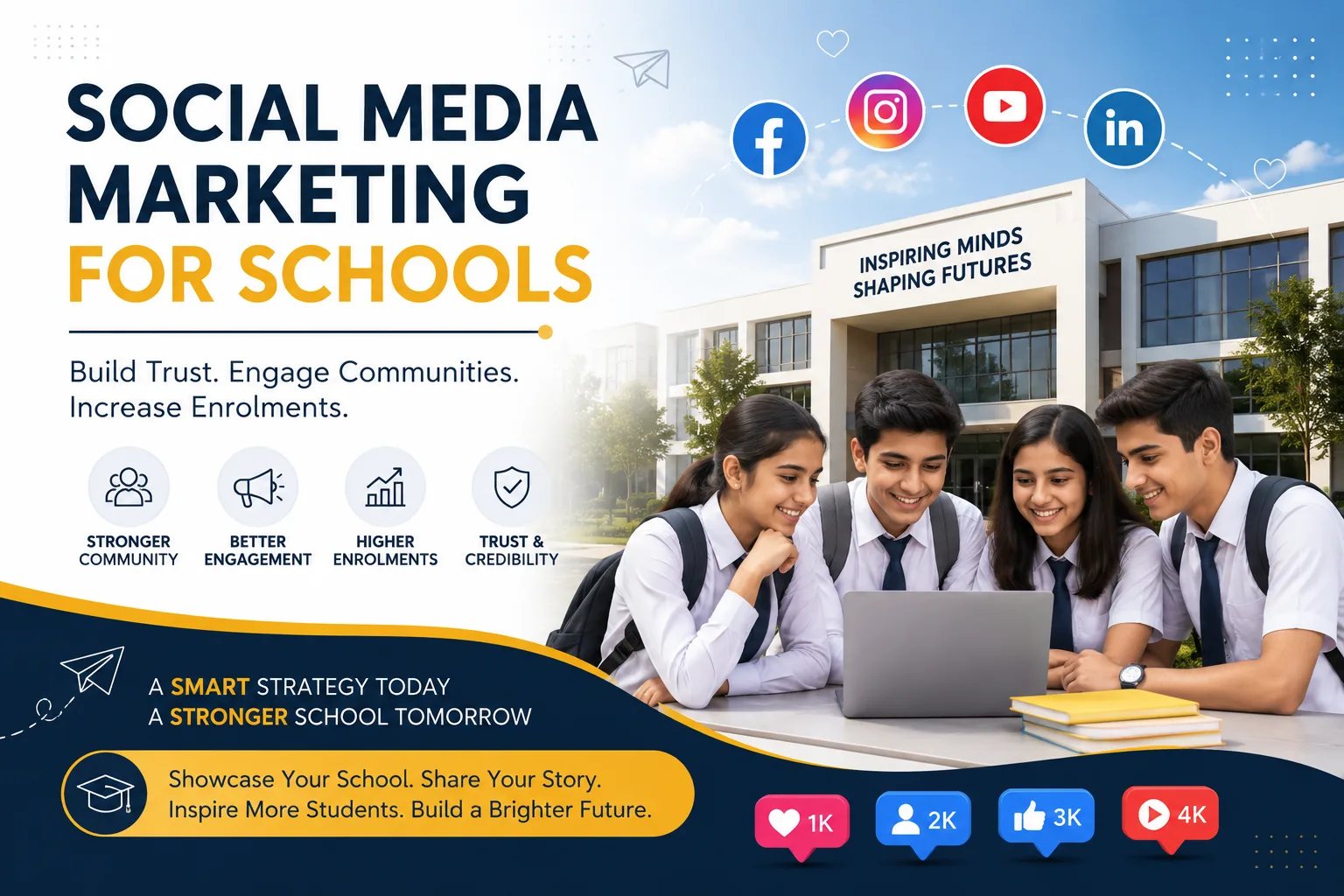
A family's decision to choose a school rarely begins with a campus visit anymore. It often starts with a search, followed by a visit to the institution's website and social media profiles. This shift has made Social Media Marketing for Schools an essential part of building trust and connecting with prospective parents and students. Families want to understand the learning environment, experience campus culture, and evaluate an institution's credibility before making one of the most important educational decisions.
For schools, colleges, universities, and coaching institutes, social platforms have evolved beyond promotional channels. They have become spaces where institutions demonstrate their culture, celebrate achievements, answer questions, and build long-term relationships with their communities.
An effective digital presence isn't about publishing daily admission posters. It's about creating meaningful conversations, sharing genuine experiences, and helping prospective families feel confident about their choices. Institutions that embrace this mindset often develop stronger reputations, better engagement, and more qualified admission enquiries over time.
This guide explores how educational institutions can create a sustainable social media strategy that supports both branding and student recruitment while remaining authentic and audience-focused.
The Digital Journey Begins Before the First Visit
Today's parents research extensively before contacting a school. They compare facilities, academic performance, extracurricular opportunities, safety standards, and student experiences. Much of this information is discovered through digital channels rather than brochures.
Social media helps answer questions that traditional marketing often cannot.
Parents typically look for:
- Classroom environment
- Teacher interaction
- Student achievements
- Campus safety
- Events and celebrations
- Communication style
- School values
- Community involvement
When these aspects are consistently showcased, families develop confidence even before speaking with the admissions team.
Why Authenticity Matters More Than Perfect Design
Many institutions invest heavily in polished graphics but overlook authentic storytelling.
A professionally designed admission poster may attract attention for a moment, but a video showing students presenting science projects or participating in cultural events creates a stronger emotional connection.
People trust experiences more than advertisements.
Authentic content can include:
- Morning assembly moments
- Classroom activities
- Sports competitions
- Art exhibitions
- Faculty interactions
- Student interviews
- Community service initiatives
- Alumni success stories
These everyday moments reflect the institution's personality and values far better than promotional messages alone.
Every Platform Has a Different Purpose
A common mistake is publishing identical content across every platform. Each network attracts different audiences and supports different communication styles.
Visual storytelling performs exceptionally well here.
Schools can share:
- Student achievements
- Campus photography
- Short educational videos
- Behind-the-scenes moments
- Cultural celebrations
- Interactive Stories
- Reels highlighting school life
The goal is to create an engaging visual narrative rather than simply broadcasting announcements.
Although younger audiences may spend less time on Facebook, many parents remain active users.
It is particularly effective for:
- Event updates
- Parent communication
- Admission announcements
- Community discussions
- Live broadcasts
- Success stories
- Photo albums
Facebook Groups can also strengthen communication between schools and parent communities.
Often overlooked by educational institutions, LinkedIn is valuable for professional credibility.
Colleges and universities can share:
- Faculty achievements
- Research publications
- Industry collaborations
- Placement success
- Academic conferences
- Institutional partnerships
This strengthens institutional reputation among educators, recruiters, and industry professionals.
YouTube
Long-form videos help answer questions that static content cannot.
Examples include:
- Campus tours
- Principal's message
- Faculty introductions
- Student testimonials
- Laboratory demonstrations
- Educational webinars
- Career guidance sessions
These videos often remain valuable for months or even years, continuing to attract prospective students through search.
Content That Builds Relationships Instead of Chasing Reach
Many institutions measure success only by views and follower counts.
However, meaningful engagement usually matters far more than viral content.
Instead of asking,
"How can we reach more people?"
Ask,
"How can we become more helpful to the people already following us?"
Valuable content often includes:
Academic Tips
Help students prepare for examinations, improve study habits, or choose suitable career paths.
Parent Resources
Offer guidance on learning environments, digital safety, emotional well-being, and educational planning.
Faculty Expertise
Teachers possess valuable knowledge that deserves visibility beyond the classroom.
Sharing expert insights establishes authority while strengthening institutional credibility.
Student Stories
Achievement isn't limited to examination results.
Celebrate creativity, innovation, leadership, sports, volunteering, entrepreneurship, and personal growth.
These stories resonate because they feel genuine.
Building Trust Through Consistency
Trust develops gradually.
An institution that shares meaningful updates throughout the year appears active, transparent, and approachable.
Consistency doesn't require publishing every day.
A realistic schedule might include:
- Two educational posts each week
- One student story
- One campus update
- One short-form video
- Daily Stories during major events
Maintaining quality is more important than maintaining volume.
The Importance of Two-Way Communication
Social media should never become a one-way advertising channel.
Parents appreciate institutions that respond quickly to questions.
Students value interaction.
Simple actions make a significant difference:
- Reply to comments
- Answer direct messages
- Thank community members
- Encourage conversations
- Conduct polls
- Host question-and-answer sessions
- Share user-generated content
Strong engagement demonstrates that the institution listens rather than simply broadcasts information.
Beyond Organic Reach
While regular posting helps build awareness, there are situations where additional visibility becomes important.
During admission seasons, many institutions complement their organic efforts with Social Media Promotion Services for Educational Institutes to reach families in specific cities, age groups, or interest categories. When campaigns are carefully targeted, promotional budgets can support awareness without overwhelming audiences with repetitive advertising.
The key is maintaining relevance. Promotional campaigns work best when they lead people toward genuinely useful content rather than directing every click to an admission form.
Measuring What Really Matters
Success should not be defined by follower counts alone.
More meaningful indicators include:
- Website visits from social platforms
- Enquiry form submissions
- Campus visit requests
- Event registrations
- Video completion rates
- Parent interactions
- Content shares
- Saved posts
- Community participation
- Admission conversions
These metrics provide a clearer picture of whether digital efforts are contributing to institutional goals.
Looking Ahead
As digital habits continue to evolve, educational institutions that communicate with authenticity, consistency, and empathy will be better positioned to earn the trust of prospective families.
Technology will continue to influence how schools connect with audiences, but meaningful relationships will remain the foundation of successful communication.
Whether an institution is just beginning its online journey or refining an existing strategy, the objective should remain the same: create valuable experiences that reflect the institution's purpose and help families make informed decisions.
Frequently Asked Questions
How often should an educational institution post on social media?
A consistent schedule of three to five quality posts per week is generally more effective than publishing daily content without a clear purpose.
Which platform delivers the best results?
The answer depends on the audience. Instagram and Facebook are useful for engaging parents and students, while LinkedIn is better suited for professional networking and institutional credibility. YouTube is ideal for educational videos and virtual campus experiences.
Is organic content enough?
Organic communication builds trust over time. During key admission periods, many institutions complement it with Social Media Marketing for Educational Institutes initiatives to increase visibility among carefully selected audiences.
What type of content receives the highest engagement?
Authentic stories, student achievements, campus activities, educational tips, faculty insights, and short-form videos consistently perform well because they provide value rather than simply promoting admissions.
Conclusion
A strong digital presence is built on authenticity, consistency, and meaningful communication. Educational institutions that focus on helping, informing, and engaging their communities naturally develop stronger relationships with prospective families.
Rather than treating social platforms as advertising spaces, schools should view them as opportunities to showcase their values, celebrate achievements, and create conversations that strengthen trust over time.
Institutions looking to strengthen their digital outreach can benefit from a well-planned Social Media Marketing for Schools strategy that aligns content, community engagement, and long-term brand building. With the right approach, social media becomes more than a promotional channel—it becomes an extension of the educational experience itself.