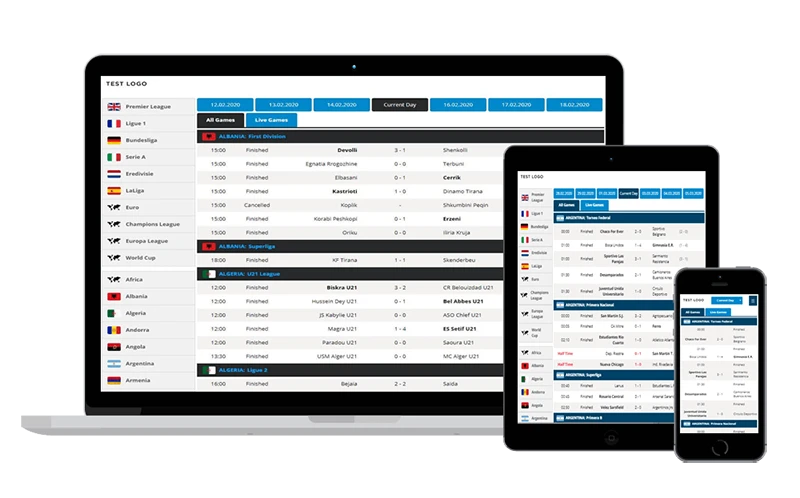
The following post contains information about the leading online provider that brings creative and affordable sports APIs.
Football, with many names worldwide, stands out as the premier sporting activity, followed by millions of fans. Rising technology strongly affects the collection, processing, and, most importantly, sharing of soccer data. Soccer APIs connect programs, websites, betting corridors, fantasy football leagues, and sports analysis tools to real-time and historical football data.
With many modern applications hungering after current statistics, match results, player performance indicators, and team insight, the need has arisen to drum up business and potentially productive developers as resource fronts for soccer net data providers, who serve the football addendum to their platforms.
This post delves into the various aspects of Soccer APIs, including features, pros, use cases, and factors one should consider when choosing a provider.
What is a Soccer API?
It is a web service through which programmers can fetch football data in a structured format by making HTTP requests. These Live Football Data are collected through various exceptional sources, such as live match coverage, official league websites, team databases, and historical archives, to produce every possible information about football.
An API mainly works by sending requests to a particular server and getting responses formatted in JSON or XML, making it easy for the programmer to add football data to the application. The available data on soccer APIs ranges from:
· Live scores with match updates
· Team and player stats
· Historical match records
· League standings and fixtures
· Transfers and injuries of players
· Betting odds and predictions
· Fantasy Football insights
· Video highlights and commentary
The Unique Features of Soccer APIs
1. Match Updates in Realtime
One crucial feature of Soccer API - Football Data is the real-time comments regarding competition events. This entails live scores with all updates, goals, substitutions, yellow and red cards, and other in-game happenings.
2. Historical Data & Statistics
Many APIs offer massive amounts of historical data, including past match results, team statistics over the seasons, player statistics, and head-to-head comparisons.
3. Coverage of Leagues and Tournaments
They usually cover various leagues and tournaments worldwide, including elite, domestic, international, and lower-division leagues.
4. Player and Team Profiles
Comprehensive data about players, such as age, game history, and more, is available. Similarly, they provide team data, such as squad information, formations, and tactical analysis.
5. Schedules
The upcoming match schedule, tournament fixtures, and venue details are significant components. They are useful for fans and fantasy sports applications.
6. Data on Fantasy Football World
Fantasy football platforms rely on APIs to get player ratings, projected points, injury reports, and other information to help users make informed choices.
7. Insights on Odds & Betting
Several Soccer APIs even include betting odds from different bookmakers, allowing developers to build odds comparison and prediction features into their platforms.
8. Multilingual Capability
Some APIs provide data in various languages to meet a global audience.
9. Flexible Data Retrieval Options
Developers can request customized datasets to optimize API calls and minimize unnecessary bandwidth consumption.
Use Cases of Soccer APIs
Soccer APIs have different use cases, which may benefit companies, developers, and avid sports fans. The following are some of the everyday use cases:
1. Sports Websites and Mobile Apps
Numerous sports platforms integrate them to provide live scores, match reports, and league standings. Mobile apps that utilize these APIs also provide notifications on match events.
2. Fantasy Football Platforms
Fantasy leagues heavily depend on Soccer APIs for player statistics, performance forecasts, and injury updates, thus equipping users for better team drafting.
3. Betting Platforms and Odds Comparison
Soccer APIs become beneficial for online sportsbooks and betting platforms to incorporate live betting odds, betting tendencies, and match-winning predictions.
4. Sports Analytics and AI Predictions
Soccer APIs are used in data analytics and artificial intelligence models to analyze team performance, player efficiency, and match outcomes.
5. Broadcasting and Media Platforms
News agencies and sports correspondents integrate Soccer APIs to exhibit match statistics, player insights, and live-event coverage.
6. Gaming and Virtual Sports
Using Soccer APIs, developers build games and virtual sports simulations in which actual gameplay is based on accurate data.
7. Social Media and Chatbots
Countless chatbots and social media platforms are based on Soccer APIs to engage users with real-time football updates and trivia.
Selecting the Ideal Soccer API Provider
The most suitable Soccer API provider depends on your needs because many exist. Here are essential points to consider:
1. Data Integrity Contoured and Reasonable
The API must provide accurate and reliable data with the least mismatches.
2. Coverage and League
Check if the API matches all the leagues, tournaments, and competitions needed.
3. Response Time and Speed
All live applications focus on response time. Go for APIs that have low latency for real-time updates.
4. Ease of Integration and Documentation
Developer-friendly with complete documentation and sample codes would make integration easy.
5. Pricing and Subscription Plans
Explore price models like comparing free, pay-per-request, and subscription within a budget to find your option.
6. Support & Customer Support
A great API provider with excellent customer support and an active developer community.
7. Data Format & API Endpoints
Be sure the API supports standard formats, such as JSON or XML, and supports multiple endpoints for different data types.
8. Customization & Flexibility
A well-made API gives developers freedom by applying filters to data so that the API will not handle useless data, thus cutting bandwidth use.
Conclusion
Top Sports Scores APIs are the backbone of today's football ecosystem, providing products ranging from live score updates to fantasy leagues and betting sites to sports analytics. By using trusted data, organizations and developers can enhance fans' digital experience.
Crucial factors to consider when choosing a provider include data accuracy, response speed, coverage, pricing, and ease of integration. The proper API will enhance your platform's capabilities and user engagement if you own a sports website, develop fantasy football, or analyze AI sports.
Learning how Soccer APIs work and signing a contract with the correct API provider opens avenues for leveraging football data to create fan-gathering and data-rich soccer experiences worldwide.