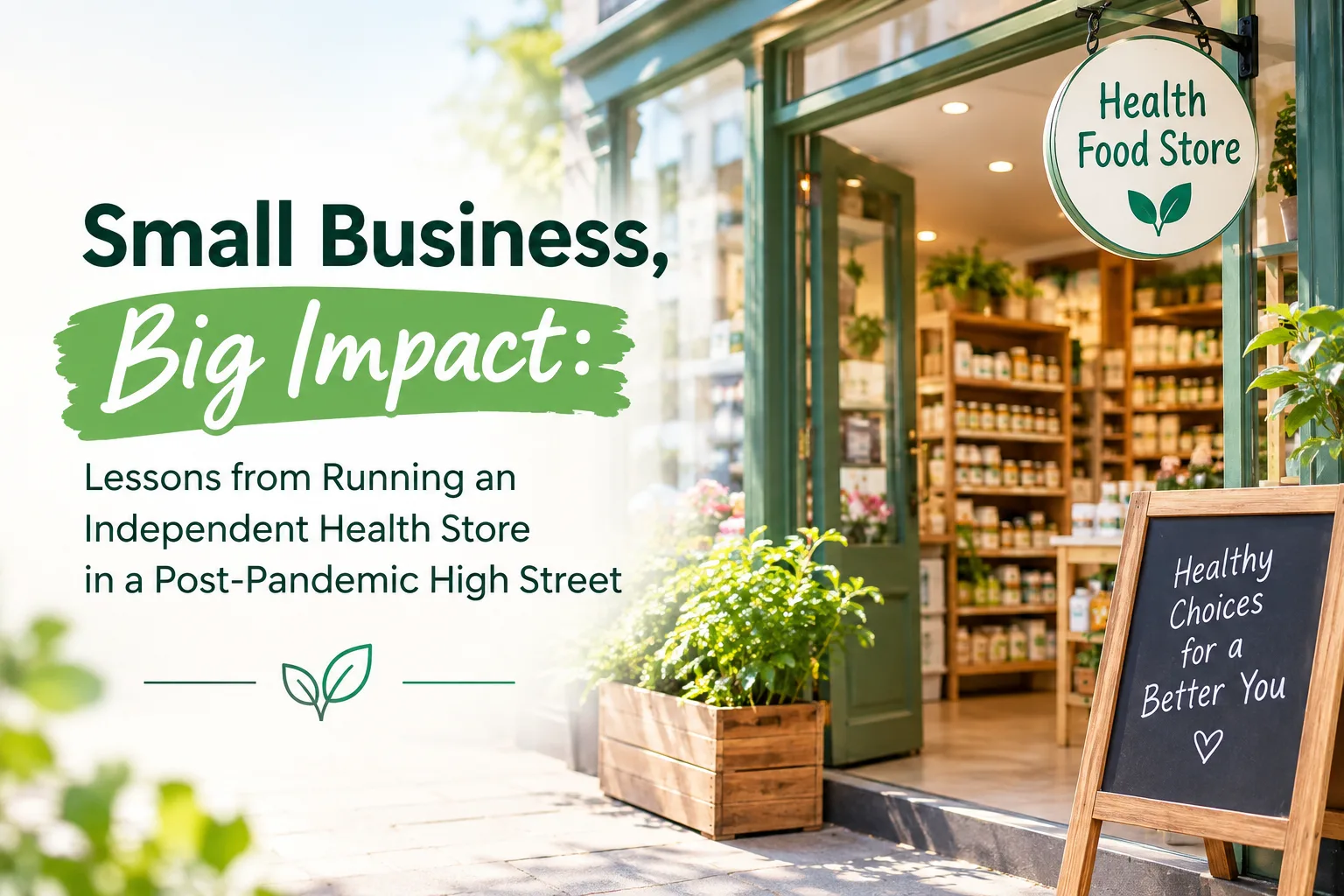
The UK high street has been through a genuinely difficult few years — shifting shopping habits, rising costs, and a wave of well-publicised closures among both chains and independents alike. Running a small, independent health food shop through this period has taught us a few things that don't often make it into the more general conversation about high street decline, and it felt worth sharing them honestly.
These are lessons drawn from direct, ongoing experience rather than general commentary from the outside, and they're offered in that spirit — practical, occasionally uncomfortable, and hopefully useful to anyone thinking about what actually keeps a small business viable right now.
Loyalty was earned in the hardest years, not the easiest ones
Some of the customers who now shop most regularly with us first walked in during periods when it would have been far easier to order online from a large retailer instead. What brought them in, and kept them coming back, wasn't a promotional discount — it was a genuine need for advice or a specific product, met properly, at a moment that mattered to them. That kind of loyalty is slower to build than a marketing campaign, but far more durable.
Flexibility became a genuine competitive advantage
Larger retailers, understandably, need consistent processes across many locations, which makes them slower to adapt to a sudden shift in customer demand or a supply chain disruption. As a small, independent operation, we've been able to change suppliers, adjust stock, or accommodate an unusual request far faster than a business several times our size — this agility, more than anything else, is what got us through some genuinely difficult stretches.
The relationship with customers changed, not just the transaction
Many customers who first came in during a difficult period weren't just looking for a product — they wanted to talk to someone who'd actually take the time to understand their situation, at a moment when a lot of normal routines and support networks had been disrupted. That shift, toward a shop being a genuine point of connection rather than just a transaction point, has stayed with us well beyond the period that originally caused it.
Diversifying without losing focus
We've had to think carefully about which new product categories and services genuinely fit what we do well, rather than chasing every available trend simply because margins were tight. Saying no to some opportunities, in order to stay genuinely good at a narrower core offering, has mattered more to our long-term reputation than trying to be everything to everyone.
The value of being part of a local network, not an isolated shop
Relationships with other local independents — a nearby cafe, a local producer, another small retailer — have provided a level of mutual support, referral, and shared local knowledge that's been genuinely valuable, in a way that's harder to access as an isolated branch of a large national chain. A resilient high street, in our experience, is built through these local relationships as much as through any single shop's individual effort.
What we'd tell another small retailer starting out now
Build genuine expertise before trying to compete on price or convenience, since neither is realistically winnable against larger retailers. Say yes to the harder, more personal requests, since that's precisely where an independent shop's real advantage lies. And be patient — the loyalty that actually sustains a small business through difficult periods takes years to build, not months, and there's no shortcut around that timeline.
Costs rose faster than most customers realised
Energy, rent, wages and supplier costs have all increased significantly in recent years, often faster than a small business can comfortably pass on to customers without risking the trust built up over years. Being transparent with regular customers about why a price has changed, rather than adjusting silently, has generally been better received than either absorbing the cost indefinitely or explaining nothing at all.
Why we've stayed cautious about rapid expansion
It's tempting, once a shop finds its footing, to expand quickly — more stock, more space, sometimes a second location. We've deliberately grown more slowly than we probably could have, prioritising the depth of knowledge and relationship that got us here in the first place over rapid scale, which we suspect would have been harder to maintain at the same quality across a larger, faster-growing operation.
Frequently Asked Questions
Is it still viable to run an independent health food shop in the UK?
It's genuinely challenging, and the sector has seen real pressure in recent years, but shops that build authentic expertise and strong local relationships continue to find a sustainable place alongside larger retailers, rather than trying to directly out-compete them.
What's the biggest advantage a small independent shop has over a chain?
Flexibility and depth of relationship — the ability to adapt quickly and to genuinely know your customers individually, rather than serving them as an anonymous, standardised audience.
How do independent shops compete with online retailers on price?
Most don't try to compete on price directly, and instead focus on advice, relationship, and product knowledge that a purely transactional online purchase can't offer.
What's one thing that surprised you most about running an independent shop through a difficult period?
How much the relationship with customers shifted from purely transactional to genuinely supportive — many people weren't just buying a product, they wanted a conversation with someone who'd take the time to understand their specific situation.
Why haven't you expanded faster, given the loyal customer base you've built?
We've prioritised maintaining the depth of knowledge and personal relationship that built our reputation in the first place, and we're genuinely unsure that could be preserved at the same quality through rapid expansion — so we've chosen to grow more slowly and deliberately instead.
The Bottom Line
Running a small, independent health store through a genuinely difficult period for the UK high street has reinforced one central lesson: trying to compete with larger retailers on their own terms is a losing strategy, but building genuine expertise, flexibility, and real relationships with customers and other local businesses is not. That's a harder path to build, but a far more resilient one.
Medical Disclaimer : This content is for general information only and is not a substitute for professional medical advice. Please consult your GP, pharmacist, or qualified healthcare professional before starting any new supplement, especially if you are pregnant, planning a pregnancy, breastfeeding, taking medication, managing a health condition, or considering supplements for children.