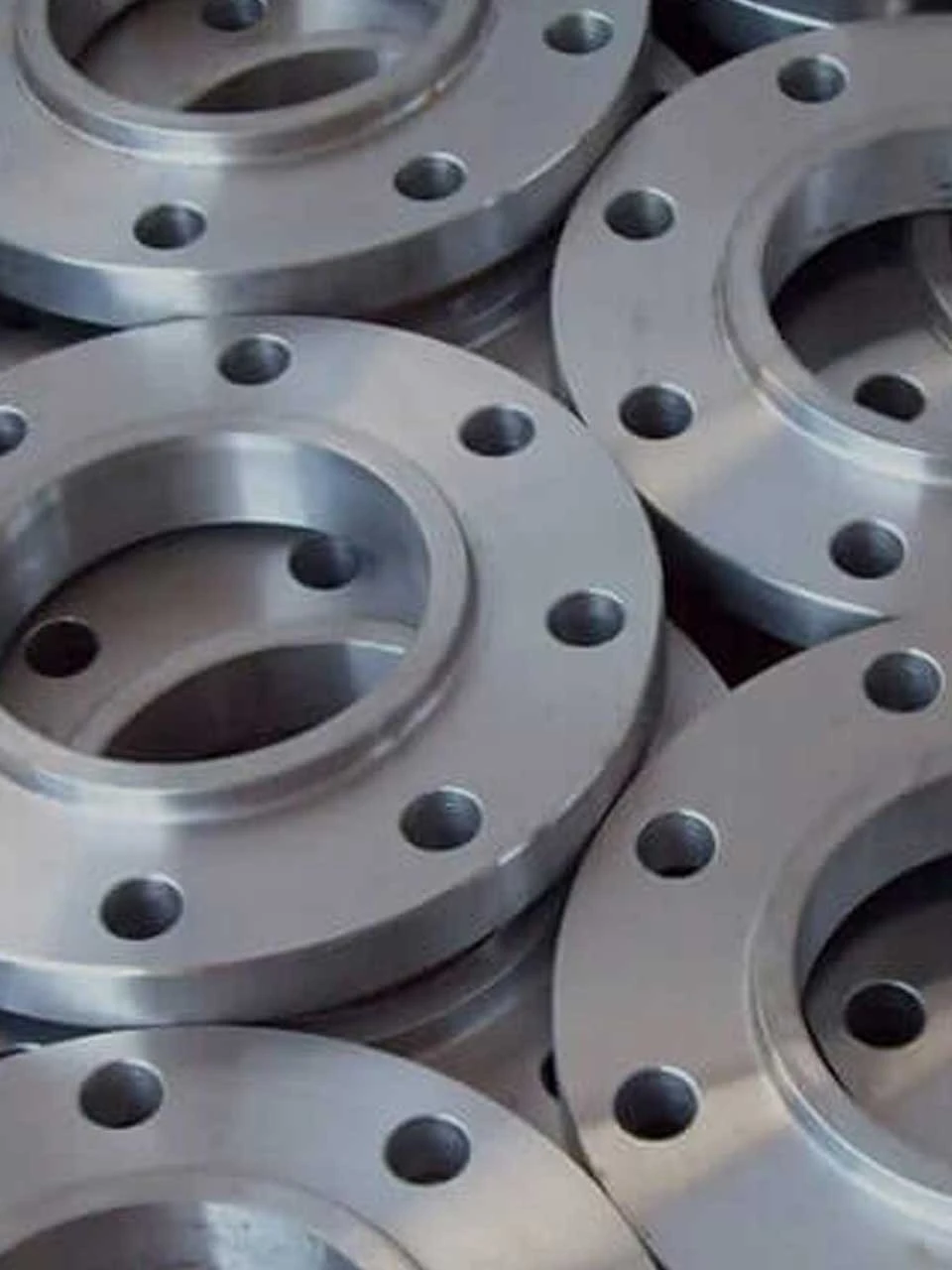
Slip On Flanges are among the most widely used pipe flanges in industrial piping systems due to their simplicity, cost-effectiveness, and ease of installation. These flanges are designed to slip over the end of a pipe and are then welded both inside and outside to provide strength and prevent leakage. Because of their practical design and versatility, Slip On Flanges are commonly used across industries such as oil and gas, petrochemicals, power generation, water treatment, and general engineering.
What Are Slip On Flanges?
Slip On Flanges are flat, circular components with a bore slightly larger than the pipe’s outer diameter. This allows the flange to easily slide onto the pipe before welding. Unlike weld neck flanges, Slip On Flanges do not require precise pipe cutting or alignment, which reduces installation time and labor costs. Once positioned, the flange is fillet welded on both sides to ensure a secure and leak-resistant joint.
Their straightforward design makes them ideal for low- to medium-pressure and temperature applications, though they can also be used in higher-pressure systems when manufactured and installed correctly.
Key Features of Slip On Flanges
One of the main advantages of Slip On Flanges is their ease of alignment. Since the pipe can be adjusted within the flange before welding, installers have greater flexibility during assembly. This feature is particularly useful in complex piping layouts or retrofit projects.
Slip On Flanges are also more economical compared to other flange types. They generally require less machining and are available at a lower cost, making them a popular choice for large-scale projects where budget efficiency is important.
Additionally, these flanges are available in a wide range of sizes, pressure ratings, and materials. This versatility allows engineers to select the appropriate flange based on specific application requirements.
Materials and Standards
Slip On Flanges are manufactured in various materials to suit different operating environments. Common materials include carbon steel, stainless steel, alloy steel, duplex steel, and special alloys such as Inconel or Monel for corrosive or high-temperature conditions.
Reputable Slip On Flanges manufacturer companies produce flanges in compliance with international standards such as ASME B16.5, ASME B16.47, EN 1092-1, DIN, BS, and JIS. Adhering to these standards ensures dimensional accuracy, pressure integrity, and compatibility with other piping components.
Applications of Slip On Flanges
Slip On Flanges are used in a wide range of industries due to their adaptability and cost benefits. In the oil and gas sector, they are often used in pipelines carrying low- to medium-pressure fluids. In chemical and petrochemical plants, Slip On Flanges are used for process lines where ease of maintenance and replacement is important.
Water treatment and distribution systems also rely heavily on Slip On Flanges because of their simple installation and reliability. Additionally, they are commonly found in HVAC systems, shipbuilding, food processing plants, and power stations.
Advantages and Limitations
The primary advantages of Slip On Flanges include lower cost, easy installation, and reduced need for skilled labor compared to more complex flange types. They also offer good performance in applications where frequent disassembly may be required.
However, Slip On Flanges do have some limitations. Their strength is generally lower than that of weld neck flanges due to the fillet weld design. As a result, they may not be suitable for extremely high-pressure or high-stress applications unless specifically engineered for such conditions. Choosing the right Slip On Flanges manufacturer is crucial to ensure the flange meets the required performance standards.
Manufacturing Process and Quality Control
A reliable Slip On Flanges manufacturer follows a well-defined manufacturing process that includes forging or casting, machining, heat treatment, and surface finishing. Precision machining ensures accurate dimensions and smooth surfaces for proper sealing.
Quality control is a critical aspect of flange manufacturing. Reputable manufacturers conduct inspections such as dimensional checks, visual inspections, chemical and mechanical testing, and non-destructive testing (NDT) methods like ultrasonic or magnetic particle testing. These measures ensure the flanges meet international standards and perform reliably in service.
Choosing the Right Slip On Flanges Manufacturer
Selecting the right Slip On Flanges manufacturer is essential for ensuring product quality, safety, and long-term performance. Buyers should look for manufacturers with proven industry experience, certifications such as ISO 9001, and a strong track record of supplying flanges to global markets.
A good manufacturer will also offer customization options, technical support, and clear documentation, including mill test certificates and compliance reports. Timely delivery, competitive pricing, and responsive customer service are additional factors that distinguish a dependable Slip On Flanges manufacturer from the rest.
Conclusion
Slip On Flanges play a vital role in modern piping systems by offering a balance of affordability, ease of installation, and reliable performance. Their widespread use across industries highlights their practicality and versatility. By understanding their features, applications, and limitations, engineers and procurement professionals can make informed decisions.
Most importantly, partnering with a trusted Slip On Flanges manufacturer ensures that the flanges meet stringent quality and safety standards, ultimately contributing to the efficiency and durability of the entire piping system.