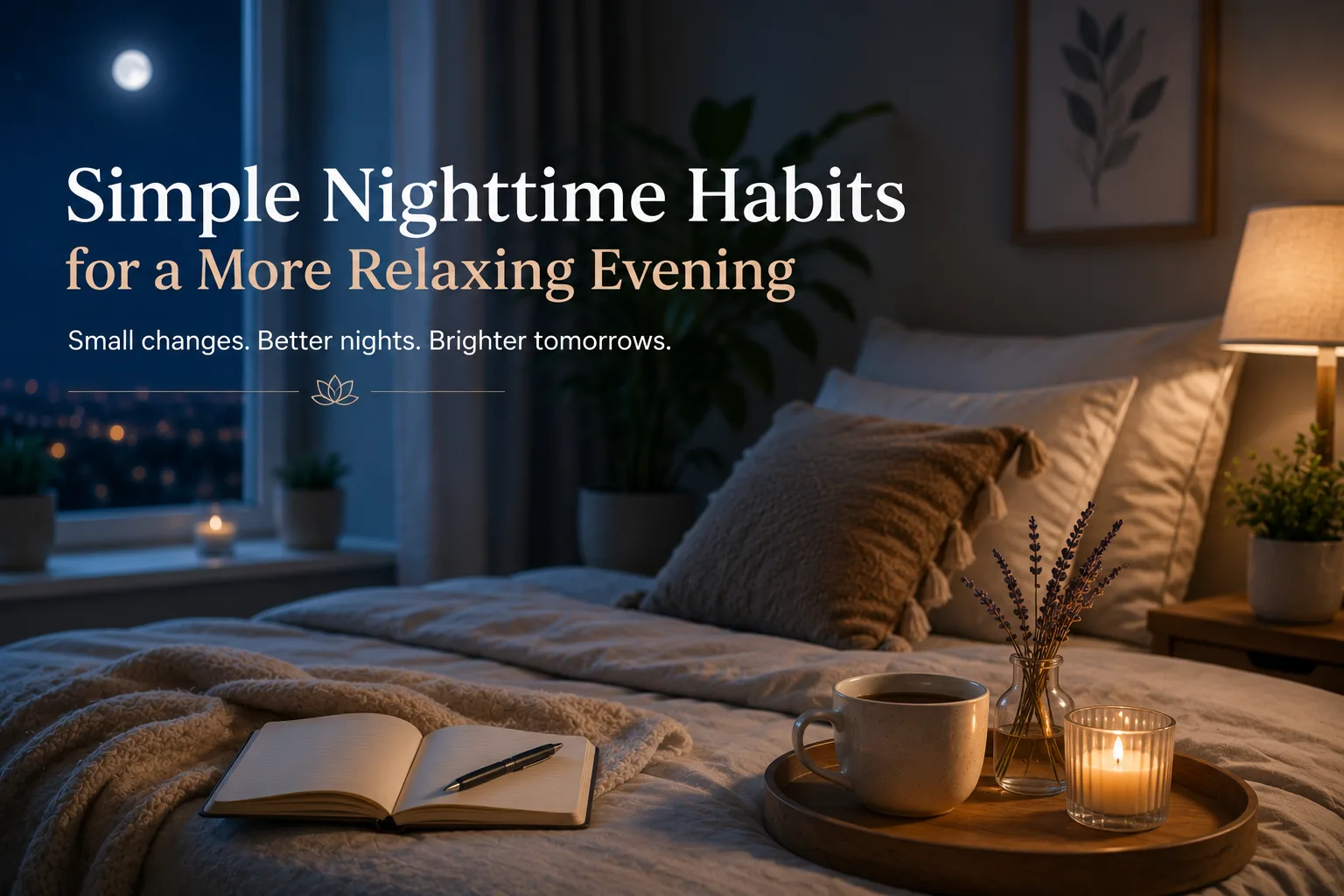
Modern routines can make it difficult to slow down at the end of the day. Work messages, social media, late-night entertainment, and busy schedules can keep the mind active when it's time to rest. That's why creating a relaxing evening routine has become an important part of modern wellness.
The good news is that improving your nighttime routine doesn't have to involve major lifestyle changes. A few consistent habits can make your evenings calmer and more intentional.
Why a Calming Evening Routine Is Important
The hours before bedtime provide an opportunity to transition away from daily responsibilities. Instead of moving directly from work or entertainment into bed, creating a short wind-down period can help establish a more consistent routine.
A relaxing evening may include:
- Dimming the lights
- Putting electronic devices away
- Taking a warm shower
- Reading
- Listening to calming music
- Practicing gentle breathing exercises
The best routine is one that feels realistic enough to follow regularly.
Start by Reducing Evening Stimulation
One of the simplest ways to create a calmer environment is to reduce stimulating activities before bedtime.
Constant notifications and social media can make it difficult to mentally disconnect. Try setting aside a specific period during the evening when your phone is no longer the center of attention.
Replacing scrolling with a book, conversation, music, or another offline activity can make the final part of the day feel more peaceful.
Choose Your Evening Food Carefully
Food can also become part of a mindful nighttime routine. Large or particularly heavy meals shortly before bedtime may not be comfortable for everyone, so paying attention to portion sizes and timing can be helpful.
For those who prefer a small evening treat, functional foods have become an increasingly interesting category.
For example, non melatonin chocolate can be incorporated into a nighttime ritual for people who enjoy chocolate but prefer an option that doesn't center around melatonin. The emphasis should be on enjoying it mindfully rather than treating it as a guaranteed solution for sleep.
Create a Comfortable Bedroom Environment
Your surroundings can influence how easily you settle down at night.
A sleep-friendly bedroom doesn't need to be expensive or elaborate. Consider:
Keep Lighting Soft
Bright lighting late at night can make the environment feel more stimulating. Softer lighting can create a more relaxed atmosphere.
Keep the Room Comfortable
Temperature, bedding, and noise levels can all affect your comfort. Find the conditions that work best for you.
Keep Work Outside the Bedroom
If possible, avoid using your bedroom as an office. Creating a clear distinction between work and rest can help make the space feel more relaxing.
Try a Simple Relaxation Activity
You don't need an extensive meditation routine to unwind.
Choose one activity that you genuinely enjoy and make it part of your evening.
Some options include:
- Reading a few pages of a book
- Stretching for five to ten minutes
- Writing in a journal
- Listening to slow music
- Practicing deep breathing
- Spending a few quiet minutes away from screens
The purpose isn't to force yourself to relax. It's simply to give your mind some uninterrupted downtime.
Consistency Can Make a Difference
A nighttime routine works best when it becomes predictable.
Going to bed at different times every night can make it harder to establish a consistent pattern. Instead, try maintaining a relatively regular bedtime and wake-up time.
You can also create a sequence of familiar activities—for example, putting your phone away, preparing for bed, reading, and then turning off the lights.
Over time, this sequence can become a natural signal that the day is coming to an end.
Think Beyond a Single Sleep Solution
Sleep wellness isn't about finding one food, supplement, or habit that solves everything.
Factors such as physical activity, nutrition, stress, daily schedules, and sleep environment all contribute to overall nighttime well-being.
This broader perspective is also why functional wellness products are becoming more popular. Consumers are increasingly interested in products that can fit into existing routines rather than requiring an entirely new lifestyle.
A product such as non melatonin chocolate may appeal to people who prefer an enjoyable food-based ritual as part of their evening routine.
Small Changes Are Easier to Maintain
If your current evenings feel chaotic, don't try to change everything at once.
Start with one or two adjustments. You could begin by:
- Setting a consistent bedtime
- Limiting phone use before bed
- Creating a quieter bedroom
- Adding a short relaxation activity
- Being more mindful about late-night snacks
Once these habits become comfortable, you can gradually build on them.
When to Look Beyond Lifestyle Changes
Lifestyle adjustments can support healthy sleep habits, but ongoing sleep difficulties may require professional attention.
If you regularly experience problems with falling asleep, staying asleep, or feeling rested despite maintaining healthy habits, speaking with a healthcare professional can help identify potential underlying causes.
Conclusion
A relaxing evening doesn't need to involve a complicated routine. Simple actions such as reducing screen time, creating a comfortable bedroom, choosing lighter evening foods, and making time for relaxation can help make nighttime more intentional.
For people interested in melatonin-free wellness options, non melatonin chocolate can be incorporated into an evening ritual as an enjoyable treat. Ultimately, sustainable sleep wellness comes from combining thoughtful nighttime habits with a healthy overall lifestyle.