If you have been dealing with heel pain, tennis elbow, or a tendon injury that just will not settle down, you may have come across shockwave therapy, also called Extracorporeal Shockwave Therapy, or ESWT, while looking for relief. Here is a clear, jargon-free guide to what it is, who it tends to help, and what treatment actually looks like at Port Credit Physio & Rehab.
What Is Shockwave Therapy?
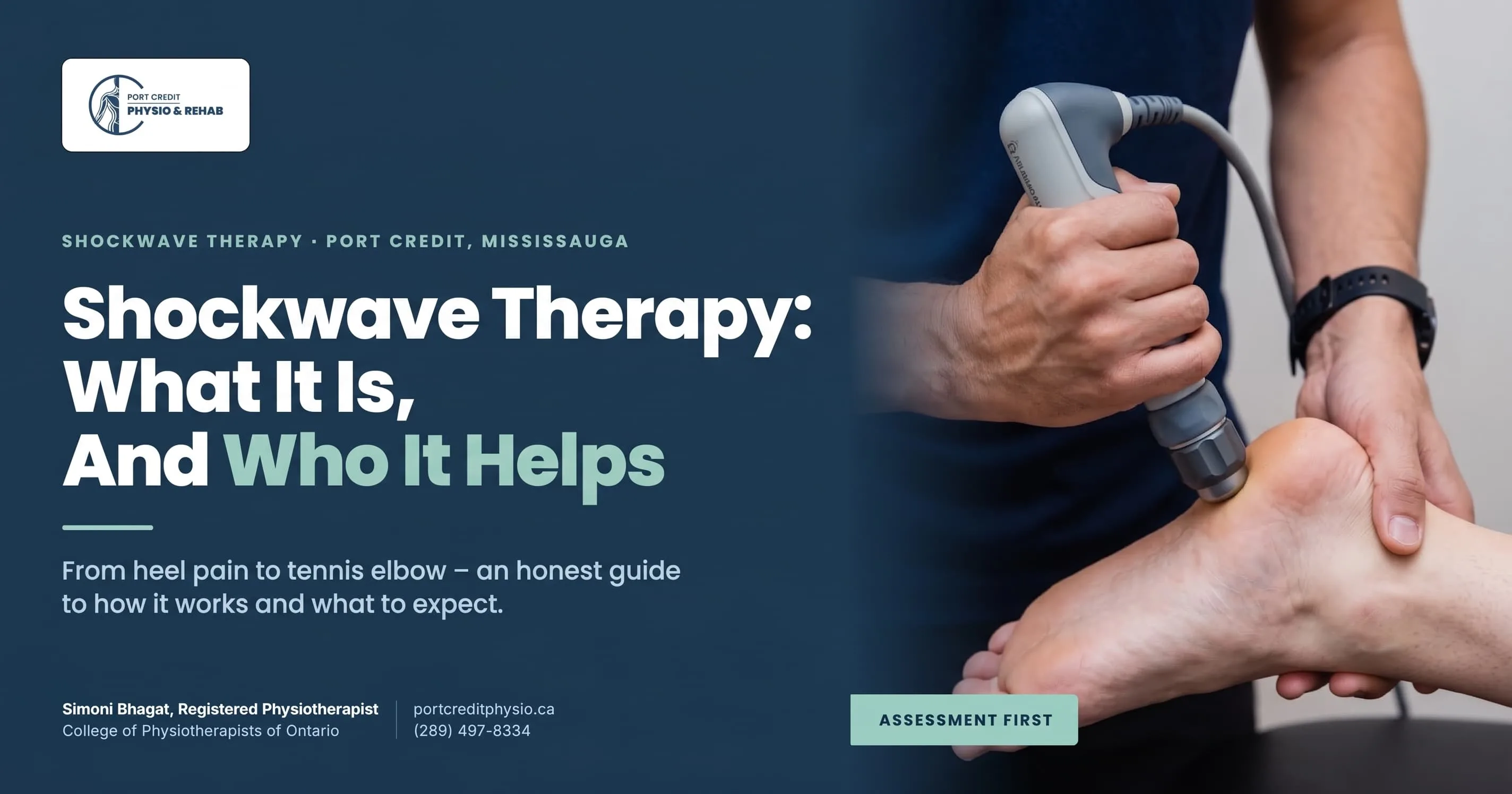
Shockwave therapy uses a handheld device to deliver quick pulses of sound energy into an injured area, despite the name, no electricity enters your body. These pulses create a controlled amount of mechanical stress in the tissue, which is thought to:
- Increase blood flow to the area, bringing more oxygen and nutrients to tissue that is healing slowly
- Reduce pain signals, in a way similar to how a TENS machine can dull pain by "distracting" the nervous system
There are two main types of devices, focused shockwave, which targets deeper tissue, and radial shockwave, which spreads energy over a broader, shallower area. Your physiotherapist chooses the type and settings based on your specific injury.
What Does It Actually Help With?
Shockwave is generally used for chronic injuries, ones that have been present for three months or longer, rather than something injured last week. Common conditions include:
- Plantar fasciitis (heel pain)
- Tennis elbow and golfer's elbow
- Achilles tendon pain
- Shoulder pain, especially from calcium buildup (calcific tendinopathy)
Does the Research Actually Support It?
This is worth being honest about, because a lot of marketing overstates it. The evidence is genuinely stronger for some conditions than others:
- Calcific tendinopathy of the shoulder and tennis elbow have some of the more consistent supporting research.
- Plantar fasciitis: the condition shockwave is most commonly advertised for, has mixed results in studies. Some research shows it outperforms a placebo treatment; other studies have not found a clear advantage over simpler options like stretching. It is often still worth trying after basic conservative treatment has not worked, but it is not a guaranteed fix.
Is It Right for You?
Shockwave may be worth considering if:
- Your pain has lasted for several months, not days
What Happens During Treatment?
- Assessment first: We examine your injury and confirm shockwave is genuinely a good fit before recommending it, not every injury needs it.
- A short session: A gel is applied, and the device delivers pulses to the sore area for a few minutes. It can feel like a deep ache, especially in the first session, but we adjust the intensity to keep it tolerable, we do not use numbing cream beforehand, since that can interfere with the treatment's effect.
Why Port Credit Physio & Rehab
We are on Lakeshore Road East in Port Credit, serving patients from across Mississauga, Clarkson, Lorne Park, Cooksville, Erindale and beyond.
- Registered and regulated: Treatment with physiotherapists registered with the College of Physiotherapists of Ontario
- No referral needed: Book directly
- Honest assessment first: We will tell you if shockwave is not the right fit rather than recommending it by default
Original source: https://www.portcreditphysio.ca/blog/shockwave-therapy-port-credit-mississauga