You need your car in another state. Maybe you're moving for a new job, buying a vehicle online, sending your daughter's car to college, or heading south for the winter.
Now comes the annoying part: how do you get the car there without turning it into a three-day road trip?
For many moves, you don't have to.
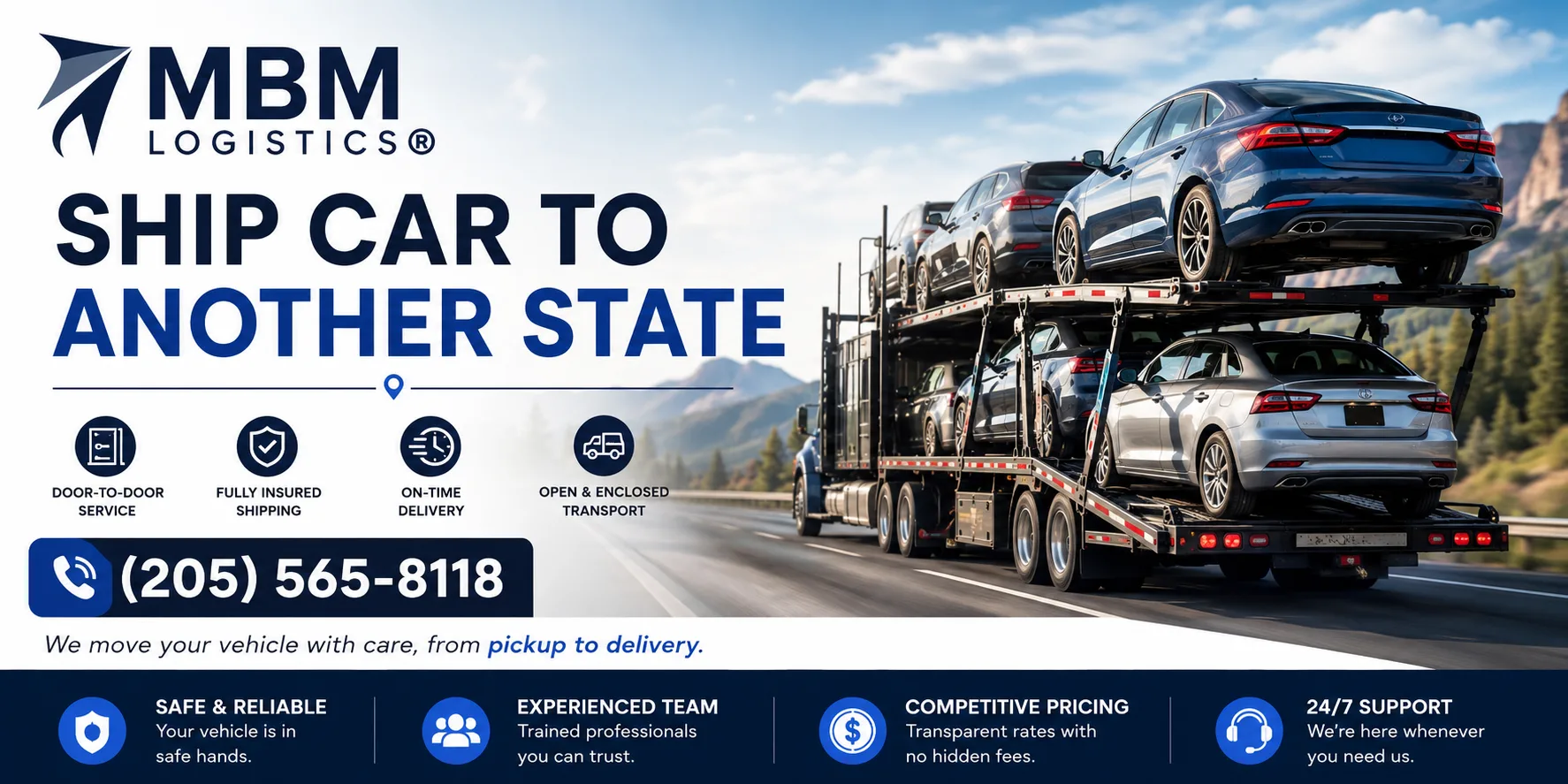
You can ship a car to another state on an auto transport truck and have it picked up near your current location and delivered near the destination.
The process isn't complicated. But there are a few things worth knowing before you hand over the keys.
First: How Does Shipping a Car Actually Work?
Here's a simple example.
Suppose you live in Chicago, Illinois, but you're moving to Tampa, Florida.
Instead of driving roughly 1,200 miles yourself, you arrange state-to-state car shipping.
You provide:
- Pickup ZIP code
- Delivery ZIP code
- Vehicle year, make, and model
- Whether the car runs
- Your preferred pickup date
- Open or enclosed transport preference
A carrier is then arranged for the route.
Before the car is loaded, you and the driver inspect it. Existing scratches, dents, and other visible damage are recorded on the Bill of Lading.
The car goes on the carrier.
The driver heads toward the destination.
You meet the driver at delivery, inspect the car again, and sign the final paperwork.
That's essentially car shipping without all the industry jargon.
So, How Much Does It Cost to Ship a Car to Another State?
This is probably what you came here to find out.
There isn't one honest answer such as "$599 to ship anywhere."
The price changes from one shipment to another.
A car moving from Los Angeles to Phoenix won't cost the same as one going from New York to Dallas. Even two vehicles travelling the same route can have different prices.
Why?
Because auto transport rates are affected by:
Distance. Longer routes generally cost more overall.
Vehicle size. A Ford F-150 takes up more carrier space than a Honda Civic.
Your exact ZIP codes. Picking up near Atlanta can be easier than collecting a vehicle 100 miles outside a major carrier route.
Season. Demand moves throughout the year. Florida routes, for example, can become especially active during snowbird season.
How soon you need pickup. Flexible dates give you more options. Urgent transportation may require a higher rate.
Open vs. enclosed carrier. Enclosed trailers provide additional protection but generally cost more.
This is why ZIP codes matter so much when requesting a car shipping quote.
Two city names tell only part of the story.
Open Carrier or Enclosed? Don't Overthink It
Most cars you see being transported on American highways are traveling on open carriers.
And for a regular vehicle, that's usually all you need.
Choose open car transport if you're shipping:
A daily driver, family SUV, pickup truck, dealership vehicle or normal used car.
It's widely available and generally the more affordable choice.
Consider enclosed car transport if you're shipping:
A Ferrari, restored Corvette, collector vehicle, exotic car, rare classic or another vehicle where additional protection matters.
You don't need to pay for enclosed transportation just because someone makes it sound "safer."
Choose it when the vehicle actually justifies the additional protection and cost.
One Thing People Get Wrong About Door-to-Door Shipping
Door-to-door car shipping sounds like a giant transport truck will stop directly outside your house.
Sometimes it can.
Sometimes it can't.
A multi-car carrier is huge. Your street might have low branches, tight corners, parked cars, weight restrictions or simply not enough room for the truck to maneuver safely.
If that happens, the driver may say:
"Can we meet at the Walmart parking lot five minutes away?"
That's normal.
Door-to-door transportation generally means getting the vehicle as close to your requested pickup and delivery locations as safely and legally possible.
How Long Will Your Car Take to Arrive?
Here's where expectations matter.
Your car isn't being shipped like a FedEx package.
An auto transport carrier may be picking up and delivering several vehicles along its route. Drivers also have federally regulated driving hours and can encounter traffic, storms, construction or mechanical issues.
A relatively short interstate route may take only a few days.
A cross-country car shipping move from California to New York will naturally take longer.
So don't schedule your life around an assumed delivery hour.
If you absolutely need the vehicle before a certain date, say that before booking.
And if you need unusually fast pickup, ask whether expedited car shipping is appropriate for your route.
Don't Hand Over Your Car Without Doing These 5 Things
This part can save you trouble later.
1. Take photos.
Walk around the car and photograph every side before pickup. Get clear shots of the bumpers, doors, wheels and windshield.
2. Remove valuables.
Don't leave your laptop, jewelry, important paperwork, electronics or other valuables inside.
3. Tell them if the car doesn't run.
A non-running vehicle may require a winch or other loading arrangements. Don't wait until the truck arrives to mention it.
4. Check the Bill of Lading.
Make sure the vehicle's condition is accurately recorded before signing.
5. Inspect again at delivery.
Don't just grab the keys because you're excited to see the car.
Walk around it.
Compare its condition with your pickup photos and the original inspection.
Can You Save Money on Car Shipping?
Sometimes, yes.
The biggest advantage you can give yourself is flexibility.
Imagine Carrier A is already traveling from Dallas to Orlando and has one empty spot.
Your car fits the route perfectly.
That's much easier than trying to find a truck that must make a large detour specifically for your vehicle.
If possible:
- Book ahead
- Give yourself a reasonable pickup window
- Avoid unnecessary last-minute shipping
- Use open transport for ordinary vehicles
- Provide accurate pickup and delivery ZIP codes
You should also be careful with a quote that looks suspiciously cheap.
If five car shipping companies are giving you similar estimates and one company is hundreds of dollars below everyone else, don't automatically assume you've found a bargain.
Ask what's included.
Driving vs. Shipping: Which Is Actually Cheaper?
Let's say you're moving from Boston to Austin.
Driving might initially look cheaper.
But calculate the entire trip:
Gas.
Hotels.
Food.
Tolls.
Parking.
Possibly taking time off work.
And roughly 2,000 additional miles on your vehicle.
Suddenly, the comparison changes.
For a 300-mile move, driving the car yourself might make perfect sense.
For a 1,500- or 2,500-mile relocation, vehicle shipping may save considerable time and avoid unnecessary mileage.
The cheapest option on paper isn't always the cheapest option for your situation.
What If You Bought the Car in Another State?
This is becoming increasingly common.
Maybe you found the exact Jeep you wanted at a dealership in Texas while living in North Carolina.
Or you purchased a used vehicle online from a seller several states away.
You don't necessarily need to fly there just to drive it home.
With interstate auto transport, the pickup can often be coordinated with the dealership, auction, seller or another authorized person.
Make sure someone is available to release the vehicle and that the transport company has accurate contact information for both ends of the shipment.
The Question Isn't Just "Who Is Cheapest?"
When comparing car transport companies, ask yourself something more useful:
Do I understand exactly what happens after I book?
You should know:
Who coordinates the pickup?
What type of carrier will transport the car?
How will the driver contact you?
What's the expected pickup window?
What happens if the truck is delayed?
What insurance documentation is available?
Who do you contact when something changes?
A slightly cheaper quote isn't much of a deal if nobody answers when your pickup date arrives.
Minute by Minute Logistics works with customers shipping vehicles between states throughout the USA, but regardless of which provider you choose, these are the questions worth asking before booking.
Make Your Next State-to-State Move Easier
Shipping a vehicle shouldn't require learning the entire transportation industry.
Know your route.
Choose open or enclosed transport based on the actual vehicle.
Give accurate information.
Take photos before pickup.
Keep your schedule reasonably flexible when possible.
And don't choose a car shipping service based on price alone.
Those few decisions can make state-to-state auto transport considerably easier.
Frequently Asked Questions
What is the cheapest way to ship a car to another state?
For most everyday vehicles, open car transport is usually the most economical option. Flexible pickup dates can also help because carriers have more opportunity to fit your vehicle into an existing route.
How much does it cost to ship a car 1,000 miles?
There isn't a fixed price for a 1,000-mile shipment. Your rate depends on the vehicle, pickup and delivery ZIP codes, season, carrier availability, vehicle condition and whether you choose open or enclosed transport. An exact route-based auto transport quote is more useful than a nationwide mileage average.
How long does it take to ship a car from one state to another?
Shorter interstate routes may take only a few days, while cross-country car shipping can take considerably longer. Weather, traffic, driver hours, pickup schedules and other deliveries can affect transit time.
Is it better to drive or ship a car across the country?
For shorter distances, driving may be cheaper. For long-distance moves, compare shipping against fuel, hotels, meals, tolls, time and vehicle mileage. Shipping a car across the country can make more sense when saving time or avoiding additional mileage is important.
Can someone else meet the driver when my car is delivered?
Generally, an authorized adult can meet the carrier if you can't be there yourself, but arrangements should be confirmed in advance. Make sure the person receiving the vehicle understands that they should inspect its condition and review the Bill of Lading before signing.