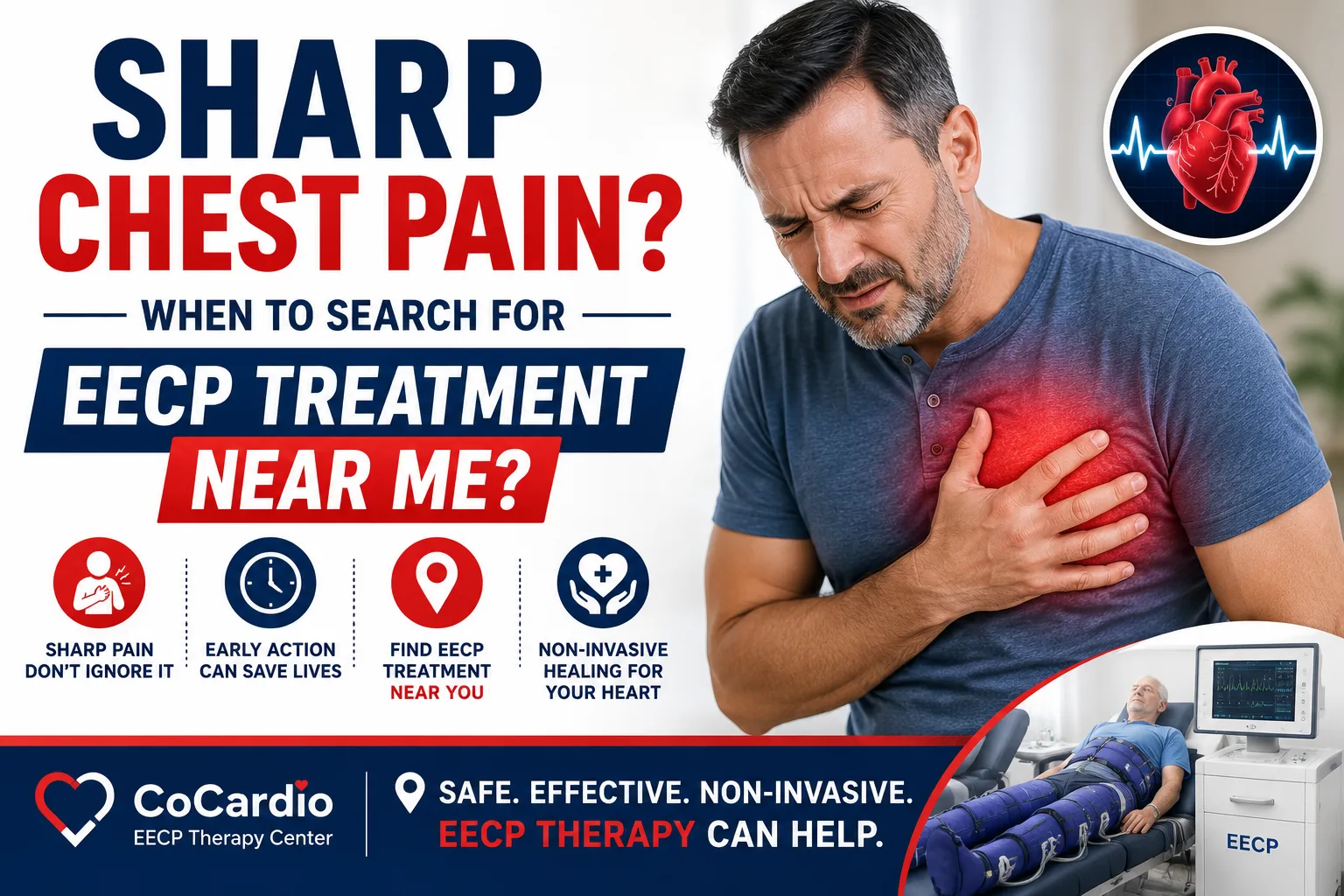
Sharp chest pain can feel alarming, especially when it begins suddenly or has no obvious cause. Although some chest discomfort comes from muscles, digestion or anxiety, it can also signal a serious heart or lung condition. Searching for EECP treatment near me should never be the first response to new, severe or unexplained chest pain. EECP is a planned outpatient therapy for certain patients with chronic stable angina, not emergency care for an active heart attack. Understanding the difference can help you take the safest action when symptoms appear.
When Sharp Chest Pain Is a Medical Emergency
Call 911 if chest pain is severe, persistent, worsening or accompanied by other concerning symptoms. Warning signs may include shortness of breath, cold sweats, nausea, dizziness, weakness or fainting. Pain or pressure may also spread into the arm, shoulder, neck, jaw, back or upper abdomen. Some heart attacks begin with mild discomfort that gradually intensifies rather than dramatic pain. The American Heart Association recommends seeking emergency help immediately when heart attack symptoms are present.
Never Drive Yourself During a Possible Heart Attack
Calling 911 allows emergency medical professionals to begin assessment and treatment while transporting you to the hospital. Driving yourself can be dangerous because your condition may deteriorate without warning. Emergency teams can monitor your heart rhythm and respond if cardiac arrest or another complication occurs. Do not delay care while searching online, contacting a clinic or waiting for symptoms to disappear. Fast emergency treatment may reduce heart muscle damage and improve the likelihood of recovery.
What Can Cause Sharp Chest Pain
Chest pain can develop from the heart, lungs, digestive system, muscles, ribs or nervous system. Possible causes include angina, heart attack, pulmonary embolism, pneumonia, acid reflux, costochondritis and panic attacks. The location and sharpness of the pain cannot reliably identify whether the cause is dangerous. Even discomfort that changes with breathing or movement may require professional assessment when it is severe or unfamiliar. A healthcare provider may use an electrocardiogram, blood tests, imaging or other examinations to reach a diagnosis.
How Angina May Feel
Angina occurs when the heart muscle does not receive enough oxygen-rich blood. It often feels like pressure, tightness, squeezing, heaviness or burning rather than a brief pinpoint sensation. Stable angina commonly appears during activity or emotional stress and improves with rest or prescribed medication. However, symptoms can differ between individuals, and some people mainly experience fatigue, nausea or shortness of breath. Any new or changing pattern should be evaluated because unstable angina can precede a heart attack.
Stable Angina Versus Unstable Angina
Stable angina generally follows a recognizable pattern involving similar triggers, duration and relief. Unstable angina may occur unexpectedly, develop at rest or feel more severe than previous episodes. It may also last longer or stop responding to medication that previously controlled symptoms. Unstable angina is an emergency because it can indicate that blood flow to the heart has suddenly worsened. People with these symptoms should call 911 rather than schedule routine outpatient care.
Why the Difference Matters Before EECP
EECP is intended for selected patients with chronic, medically evaluated symptoms rather than undiagnosed chest pain. A clinician must first determine what is causing the discomfort and whether the patient is medically stable. Someone experiencing a possible heart attack may need medication, coronary angiography, stenting or bypass surgery instead. Beginning outpatient therapy without an appropriate diagnosis could delay necessary treatment. This is why an emergency assessment always takes priority over finding an EECP therapy near me.
What Is EECP Treatment
Enhanced external counterpulsation is a noninvasive outpatient treatment used primarily for chronic stable angina that continues despite appropriate care. Inflatable cuffs are placed around the calves, thighs and lower body while the patient rests on a treatment bed. The cuffs inflate and deflate in synchronization with the heartbeat to support circulation. A standard treatment course usually involves several supervised sessions delivered over a period of weeks. EECP does not involve an incision, catheter or surgical recovery period.
How EECP May Support People With Chronic Angina
The coordinated cuff movements are designed to help increase blood flow toward the heart during its resting phase. They may also reduce the resistance the heart works against during each contraction. Some eligible patients experience fewer angina episodes, improved walking tolerance and a better ability to complete everyday activities. Outcomes vary, and the therapy cannot guarantee that every patient will experience the same improvement. EECP also does not physically remove plaque or open a critically blocked coronary artery.
When to Consider EECP Treatment Near Me
Searching for EECP treatment near me may be appropriate after a cardiologist has diagnosed chronic stable or refractory angina. It may be considered when symptoms continue despite medication and lifestyle changes. Some patients explore EECP when additional stenting or bypass surgery is not recommended or has not fully controlled their symptoms. A medical screening is still necessary because heart rhythm, blood pressure, vascular health and other conditions can affect eligibility. The decision should be made with qualified healthcare professionals who understand your complete cardiac history.
Who May Not Be Suitable for EECP
EECP is not appropriate for everyone with coronary artery disease or chest discomfort. Patients with unstable symptoms, certain irregular heart rhythms or uncontrolled high blood pressure may not be suitable. Significant vascular disease, active blood-clotting problems and some forms of heart valve disease may also influence eligibility. Individual circumstances require careful review rather than a decision based only on symptoms. A properly supervised provider should complete a detailed assessment before beginning treatment.
What to Look for in a Local EECP Provider
A trustworthy provider should explain what EECP can and cannot reasonably achieve. The clinic should review your medical records, symptoms, medications and relevant cardiac test results. Treatment must be supervised by trained professionals who monitor your response and communicate with your broader healthcare team when necessary. Be cautious of claims suggesting that EECP can cure coronary disease, replace all cardiac procedures or guarantee protection from a heart attack. Asking these questions can make a search for EECP therapy near me safer and more productive.
Questions to Ask During Your Consultation
Ask whether your type of chest pain and current medical condition make you an appropriate EECP candidate. You should also discuss how many sessions may be recommended and what monitoring occurs during treatment. Find out whether EECP will be used alongside medication, cardiac rehabilitation or other physician-directed care. Insurance coverage and out-of-pocket costs should be confirmed before starting a full course. Most importantly, ask what symptoms should cause you to stop treatment and seek emergency assistance.
Exploring EECP Care With CoCardio
CoCardio provides noninvasive cardiovascular services for patients who may benefit from additional support for chronic stable angina. The clinical team can evaluate relevant medical history and help determine whether EECP is an appropriate option. Patients can learn more about EECP for angina and chest pain before arranging a consultation. Choosing a local provider can make it easier to complete a treatment course that requires multiple visits.
Make the Safest Choice for Chest Pain
The safest response to sudden or unexplained chest pain is prompt medical assessment, not an online search for outpatient therapy. Call 911 when symptoms are severe, persistent, worsening or accompanied by other heart attack warning signs. Once an emergency has been ruled out, your cardiologist can determine whether chronic angina is causing your discomfort. At that stage, searching for EECP treatment near me may help you explore a noninvasive option for physician-diagnosed stable symptoms. The correct order is emergency evaluation first, diagnosis second and planned treatment only after medical clearance.
Medical Disclaimer
This article provides general educational information and does not replace medical advice, diagnosis or treatment. EECP is not an emergency treatment for a heart attack, unstable angina or sudden unexplained chest pain. Call 911 immediately if you experience severe, persistent or worsening chest discomfort, shortness of breath, sweating, nausea, dizziness or pain spreading through the upper body. Do not delay emergency care while contacting an EECP clinic or searching for treatment online. Eligibility for EECP must be determined through an appropriate medical evaluation.