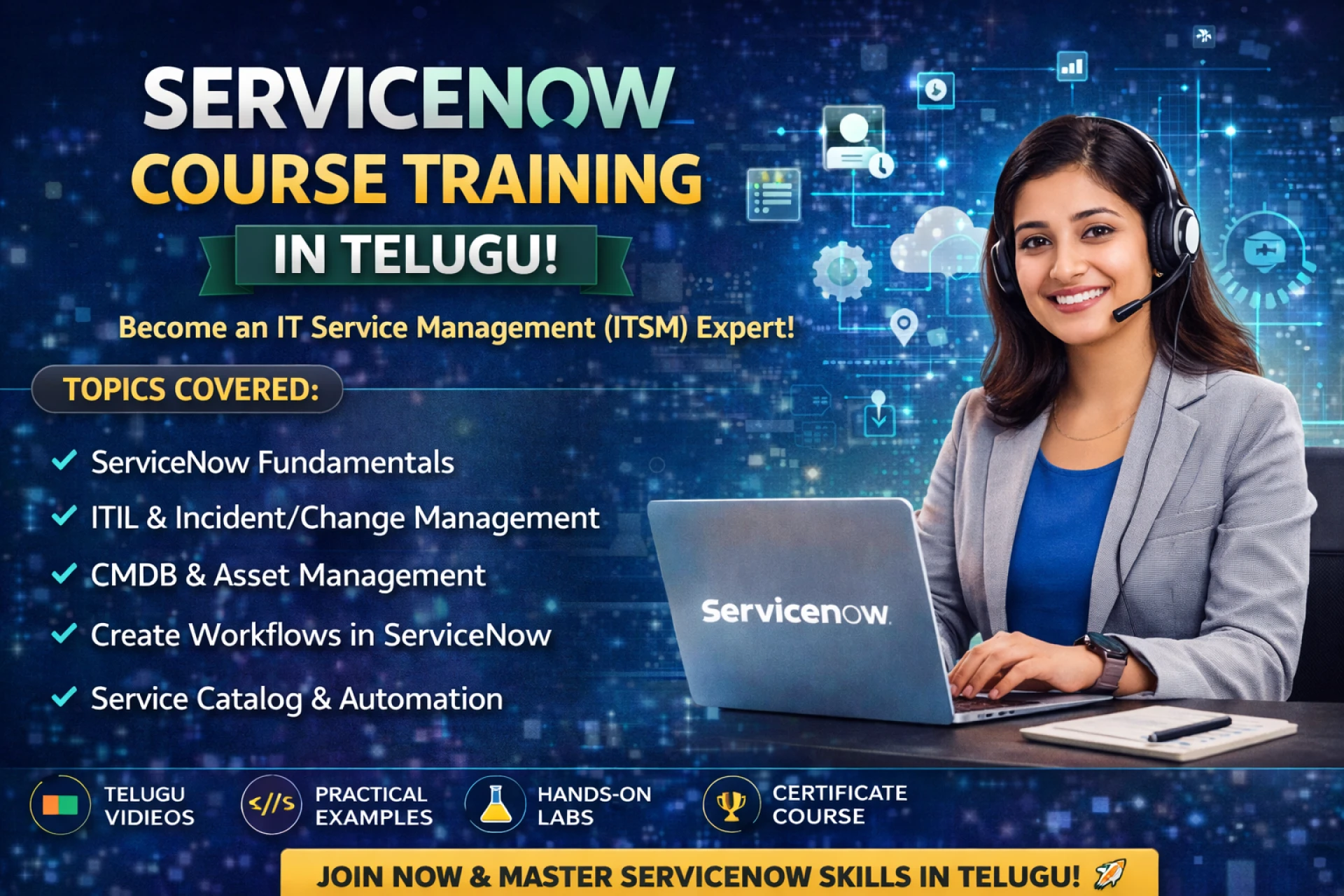
In today’s digital world, protecting data and ensuring secure access to systems is more important than ever. Organizations handle sensitive information such as employee records, financial data, and customer details. Without proper security, this data can be misused or exposed. This is where security features in platforms like ServiceNow become essential. One of the most important aspects of ServiceNow security is Access Control Lists (ACLs). For beginners, learning ACL and security concepts through a ServiceNow course in Telugu can make understanding easier and more practical.
What is Security in ServiceNow?
Security in ServiceNow ensures that only authorized users can access specific data and perform certain actions. It protects sensitive information and maintains system integrity.
Security controls include:
- User authentication
- Role-based access
- Data protection
- Activity monitoring
These measures help prevent unauthorized access and ensure safe system usage.
What is ACL (Access Control List)?
An Access Control List (ACL) is a rule that defines who can access what data and what actions they can perform in the system.
ACLs control:
- Read access (view data)
- Write access (edit data)
- Create access (add data)
- Delete access (remove data)
ACLs are applied to tables and fields to ensure proper security.
Why ACL is Important
ACLs play a crucial role in maintaining security within ServiceNow.
Key Benefits:
- Protects sensitive data
- Restricts unauthorized access
- Ensures role-based permissions
- Improves data security
- Maintains compliance
Without ACLs, anyone could access or modify data, which can lead to serious issues.
How ACL Works in ServiceNow
ACLs work based on conditions and roles. When a user tries to access data, ServiceNow checks the ACL rules.
The system verifies:
- User role
- Conditions defined in the ACL
- Script (if any)
If all conditions are satisfied, access is granted. Otherwise, access is denied.
Types of ACL in ServiceNow
Table-Level ACL
Controls access to an entire table.
Example:
- Allow only admins to access user table
Field-Level ACL
Controls access to specific fields within a table.
Example:
- Hide salary field from non-admin users
Record-Level ACL
Controls access to specific records based on conditions.
Example:
- Allow users to view only their own records
Role-Based Access Control
ServiceNow uses roles to manage permissions.
Examples of roles:
- Admin
- ITIL
- User
Roles are assigned to users, and ACLs use these roles to control access.
Key Security Features in ServiceNow
In addition to ACLs, ServiceNow provides several security features:
Authentication
Ensures that users log in securely using credentials.
Data Encryption
Protects sensitive data by converting it into a secure format.
Audit Logs
Tracks user activities and changes in the system.
Multi-Factor Authentication (MFA)
Adds an extra layer of security by requiring additional verification.
What You Will Learn in a Course
A ServiceNow course in Telugu covering ACL and security typically includes:
- Introduction to security concepts
- Understanding ACL rules
- Creating and managing ACLs
- Role-based access control
- Security best practices
- Monitoring and auditing
This structured approach helps build strong security knowledge.
Hands-On Practice
Practical experience is essential for mastering ACL and security.
You will practice:
- Creating ACL rules
- Assigning roles to users
- Restricting access to data
- Testing security settings
Hands-on learning helps you understand real-world scenarios.
Skills You Will Gain
By learning ServiceNow ACL and security, you will develop:
- Security management skills
- Access control knowledge
- Problem-solving abilities
- System configuration skills
- Analytical thinking
These skills are highly valuable in IT roles.
Real-World Applications
Security and ACLs are used across industries:
- IT: Protecting system data
- Banking: Securing financial records
- Healthcare: Safeguarding patient information
- Retail: Managing customer data
These applications highlight the importance of security.
Career Opportunities
After learning ACL and security, you can apply for roles such as:
- ServiceNow Administrator
- Security Analyst
- ServiceNow Developer
- IT Support Engineer
- System Administrator
These roles are in high demand.
Tips for Beginners
- Understand roles and permissions clearly
- Practice creating ACL rules
- Test access scenarios
- Follow security best practices
- Stay consistent
Consistency is key to mastering security concepts.
Challenges You May Face
- Understanding complex ACL rules
- Managing multiple roles
- Debugging access issues
These challenges are normal and can be overcome with practice.
Future Scope of ServiceNow Security
As data security becomes more important, the demand for professionals with security skills is increasing. Platforms like ServiceNow will continue to play a major role in protecting data and managing access.
Professionals with ACL and security expertise will have strong career opportunities in the future.
Conclusion
ServiceNow ACL and security are essential for protecting data and ensuring proper access control. They help organizations maintain system integrity and prevent unauthorized access.
By learning through a ServiceNow course in Telugu, you can easily understand these concepts and apply them in real-world scenarios. With hands-on practice and consistent learning, you can build strong security skills and advance your career.