In today's digital business environment, protecting confidential information is essential for every organization. Businesses store large volumes of sensitive information on computers, laptops, servers, hard drives, solid-state drives (SSDs), and other electronic storage devices. When these devices reach the end of their useful life, simply deleting files or formatting storage media may not be enough to prevent unauthorized data recovery.
Secure data destruction services in Dubai help businesses permanently eliminate sensitive information from electronic storage devices before reuse, recycling, or disposal. Proper data destruction protects confidential business records, customer information, financial documents, employee details, and other valuable digital assets.
As organizations across the UAE continue upgrading their IT infrastructure, secure data destruction has become an important part of information security and electronic waste management.
What Are Secure Data Destruction Services?
Secure data destruction refers to the controlled process of permanently removing information from electronic storage devices so that it cannot be recovered through ordinary data recovery methods.
Unlike basic file deletion, professional data destruction uses specialized techniques to make stored information inaccessible.
These services are particularly important when businesses:
- Replace outdated computers and laptops.
- Upgrade servers and data storage infrastructure.
- Dispose of damaged hard drives.
- Decommission office IT equipment.
- Replace networking and storage devices.
- Retire electronic equipment containing confidential information.
A structured data destruction process helps organizations reduce information security risks while ensuring that electronic waste is handled responsibly.
Why Is Secure Data Destruction Important for Businesses in Dubai?
Dubai is a major commercial and business centre, with organizations operating across finance, healthcare, retail, hospitality, logistics, education, and technology.
These businesses generate and store sensitive information that must be protected throughout its lifecycle, including when electronic equipment is retired.
Here are some important reasons to implement secure data destruction.
1. Protect Confidential Business Information
Computers and storage devices may contain business strategies, financial statements, internal communications, contracts, customer databases, and intellectual property.
If these devices are disposed of without proper data destruction, unauthorized individuals may potentially access confidential information.
Secure destruction reduces this risk by making the stored information inaccessible.
2. Prevent Identity Theft and Data Breaches
Electronic devices can contain personal information such as names, contact details, identification records, employee information, and customer data.
Improper disposal can expose this information to unauthorized access and misuse.
Professional data destruction helps businesses reduce the possibility of information exposure during IT equipment disposal.
3. Support Data Protection Requirements
Businesses operating in Dubai and across the UAE should understand the data protection and information security obligations applicable to their activities.
For example, the UAE Personal Data Protection Law establishes requirements concerning the processing and protection of personal data, subject to its scope and applicable exceptions.
Healthcare, financial, government-related, and other regulated organizations may also have additional sector-specific requirements.
Secure data destruction should therefore form part of an organization's broader data retention, information security, and disposal policies.
4. Reduce IT Asset Disposal Risks
Outdated IT equipment should not be transferred, resold, reused, or recycled without first considering the information stored on it.
A proper disposal procedure ensures that data-bearing equipment is assessed and that appropriate sanitization or physical destruction is completed before the next stage.
Types of Data Storage Devices That Require Secure Destruction
Different electronic devices use different storage technologies. Therefore, the appropriate destruction method depends on the type of device and its construction.
Hard Disk Drives (HDDs)
Traditional hard disk drives store information on magnetic platters.
Simply deleting files or formatting the drive may leave recoverable information behind.
Depending on the organization's requirements, HDDs can undergo approved data sanitization methods or physical destruction, such as controlled shredding or crushing.
Solid-State Drives (SSDs)
SSDs use flash memory rather than magnetic platters.
Their internal storage structure is different from conventional hard drives, meaning that traditional magnetic degaussing is not an effective sanitization method for them.
Appropriate SSD sanitization or physical destruction should be selected according to the device technology and required security level.
Servers and Data Storage Systems
Business servers and enterprise storage systems may contain large quantities of confidential information.
Before decommissioning these systems, organizations should identify all storage components, including internal drives and removable storage devices.
A documented data destruction process helps ensure that no overlooked storage media retains sensitive information.
Laptops and Desktop Computers
Computers used in offices, educational institutions, hospitals, and commercial facilities may store sensitive business and personal information.
Before equipment is recycled or transferred for reuse, its storage devices should undergo appropriate data sanitization or destruction.
USB Drives and Memory Cards
Portable storage devices are small but can contain important documents, customer records, passwords, and business information.
Their compact size makes proper inventory, collection, and secure disposal particularly important.
Common Methods of Secure Data Destruction
Different data destruction methods provide different levels of security. The correct method depends on the storage technology, data sensitivity, organizational policies, and applicable standards.
1. Data Wiping
Data wiping uses specialized software to overwrite stored information according to an appropriate sanitization method.
When properly performed and verified, sanitization can make previously stored information inaccessible while allowing some storage devices to remain suitable for reuse.
The effectiveness depends on the storage technology, device condition, and selected sanitization procedure.
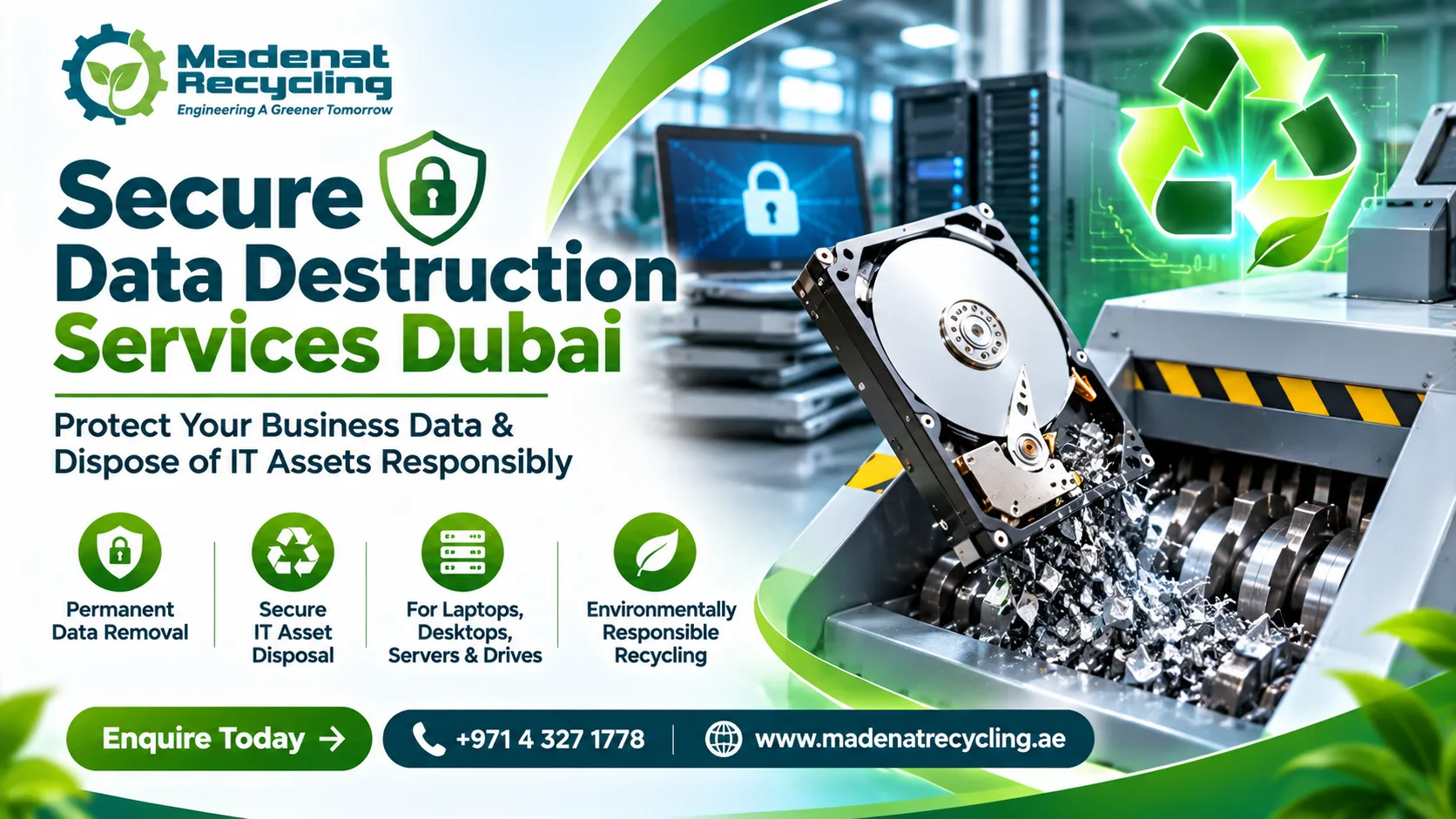
2. Physical Hard Drive Shredding
Physical shredding involves feeding storage devices into specialized industrial shredding equipment that reduces them into smaller fragments.
This process physically destroys the storage media, making conventional data recovery impractical.
It is particularly useful when organizations require physical destruction rather than device reuse.
3. Crushing and Disintegration
Specialized crushing and disintegration equipment can physically damage storage components.
The objective is to destroy the media in a manner appropriate to the organization's security requirements.
4. Degaussing
Degaussing uses a powerful magnetic field to disrupt magnetic information stored on suitable magnetic media.
It may be appropriate for certain magnetic hard drives and tapes but does not effectively sanitize SSDs or other flash-based storage.
5. Physical Destruction of Electronic Storage Media
For devices that cannot be reliably sanitized or are no longer suitable for reuse, physical destruction may be necessary.
The method should be selected based on the storage technology and the required level of data protection.
Secure Data Destruction Process: Step by Step
A structured data destruction procedure helps businesses maintain control over their electronic assets and sensitive information.
Step 1: Device Identification
Identify the electronic devices and storage media that require data destruction. Record device types, quantities, serial numbers, and relevant asset information.
Step 2: Secure Collection
Collect devices through controlled procedures that minimize unauthorized access, loss, or accidental transfer.
Step 3: Data Destruction Method Selection
Choose an appropriate method based on whether the device uses magnetic storage, flash memory, or another technology.
Step 4: Sanitization or Physical Destruction
Perform the selected data destruction procedure using appropriate equipment and established operational controls.
Step 5: Verification and Documentation
Where applicable, verify the sanitization results and maintain records identifying the processed devices and destruction methods.
Step 6: Responsible E-Waste Recycling
After data destruction, suitable electronic components can be directed towards appropriate recycling and material recovery processes.
This final stage supports responsible IT asset disposal while reducing unnecessary electronic waste.
Benefits of Combining Data Destruction with E-Waste Recycling
Secure data destruction and electronic waste recycling work together to support responsible business operations.
When outdated IT equipment is processed correctly, businesses can protect confidential information while recovering valuable materials.
Key benefits include:
- Improved information security: Reduces the risk of unauthorized data recovery.
- Responsible electronic waste management: Helps prevent inappropriate disposal of electronic equipment.
- Material recovery: Supports the recovery of metals, plastics, and other recyclable components.
- Better asset management: Creates a structured approach to retiring electronic equipment.
- Environmental protection: Reduces unnecessary disposal of reusable and recyclable materials.
- Improved documentation: Helps organizations maintain records of asset handling and destruction activities.
Why Choose Madenat Recycling for Responsible E-Waste Management?
Electronic equipment contains valuable materials that should be managed responsibly when devices reach the end of their operational life.
Madenat Recycling emphasizes responsible recycling, environmental protection, and sustainable waste management practices.
Businesses looking for electronic waste management solutions can explore the available services and understand how responsible recycling contributes to a cleaner environment.
For organizations handling confidential storage devices, it is important to confirm the provider's specific data destruction capabilities, security procedures, verification methods, and documentation before transferring equipment.
Learn more about Safe E-Waste Disposal and responsible electronic waste management.
Secure Data Destruction Services in Dubai: Protect Information and the Environment
Data protection should not end when a computer, server, or storage device is retired.
Organizations must ensure that sensitive information is appropriately sanitized or physically destroyed before electronic equipment enters the recycling or disposal process.
By implementing secure data destruction procedures, businesses can reduce information security risks, improve IT asset management, and support responsible electronic waste recycling.
Madenat Recycling encourages businesses to adopt environmentally responsible waste management practices and explore suitable recycling solutions.
Protect your information. Recycle responsibly. Build a greener tomorrow.
Contact Madenat Recycling
Website: https://madenatrecycling.ae/
Phone: +971 4 327 1778
Frequently Asked Questions (FAQs)
1. What are secure data destruction services in Dubai?
Secure data destruction services involve permanently removing information from electronic storage devices through approved sanitization or physical destruction methods to prevent unauthorized recovery.
2. Why is professional data destruction important for businesses?
Professional data destruction helps protect confidential information, reduce data breach risks, support information security policies, and ensure that retired electronic equipment is handled responsibly.
3. Is formatting a hard drive enough to destroy data permanently?
No. Standard formatting or deleting files may leave information recoverable. Appropriate data sanitization or physical destruction is necessary depending on the storage device and security requirements.
4. What electronic devices require data destruction?
Hard drives, SSDs, servers, laptops, desktop computers, USB drives, memory cards, and other data-bearing storage devices may require secure sanitization or physical destruction.
5. What is the difference between data wiping and physical destruction?
Data wiping uses specialized techniques to sanitize stored information, potentially allowing the device to be reused. Physical destruction damages the storage media so that normal data recovery is impractical.
6. Can SSDs be destroyed using traditional degaussing?
No. SSDs use flash memory rather than magnetic storage, so traditional degaussing is not an effective sanitization method. Appropriate SSD sanitization or physical destruction is required.
7. What happens to electronic equipment after data destruction?
After the data-bearing components have been appropriately sanitized or destroyed, suitable electronic materials can be separated and directed towards authorized recycling and material recovery processes.
8. Do businesses need documentation after data destruction?
Documentation is strongly recommended. Depending on the organization's requirements, records may include device identification, serial numbers, destruction methods, processing dates, verification results, and certificates of destruction.
9. How does secure data destruction support environmental sustainability?
It allows businesses to protect confidential information while ensuring that electronic equipment can enter appropriate recycling channels, supporting material recovery and reducing unnecessary electronic waste.
10. Where can businesses explore e-waste disposal solutions in Dubai?
Businesses can visit Madenat Recycling to explore electronic waste management and recycling information and enquire about suitable services.