
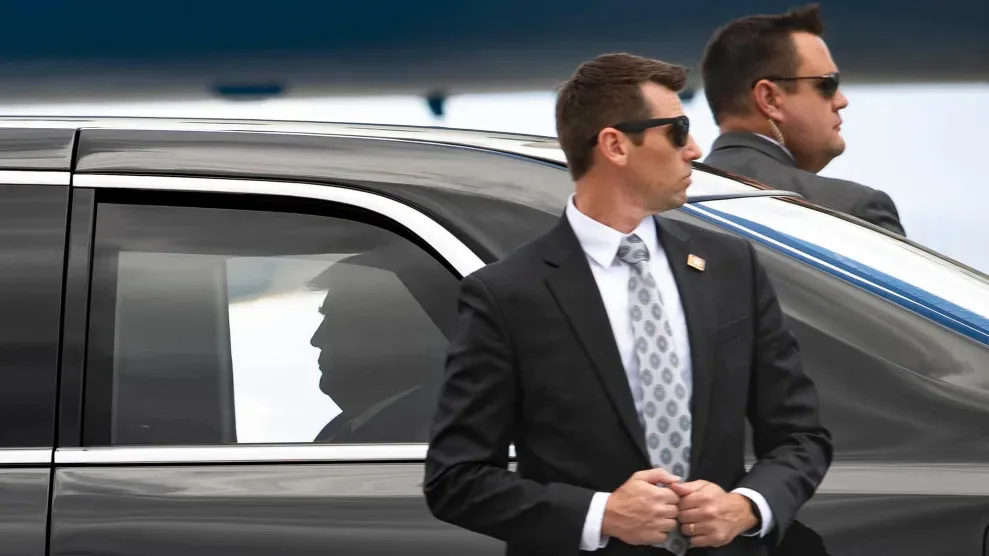
If you enjoy Hollywood action thrillers, you have undoubtedly seen them both on screen. In one movie, a stoic agent in dark sunglasses and an earpiece leaps in front of a hail of gunfire to protect the President. In another, a team of tactical agents in windbreakers kicks down a door to dismantle an international cyber-hacking ring.
These represent the two titans of federal law enforcement: the United States Secret Service (USSS) and the Federal Bureau of Investigation (FBI).
When people look at these elite agencies, a natural question arises: Who is actually stronger?
The answer is not as simple as comparing muscle mass or firepower. "Strength" in the federal government is measured by three things: legal authority (jurisdiction), manpower and resources, and real-world impact. Let's break down exactly how these two powerhouse agencies stack up against each other.
1. The Tale of the Tape: Size and Resources
If raw numbers equal strength, this category features a clear heavyweight.
- The FBI: Operating under the Department of Justice (DOJ), the FBI is a massive bureaucracy. It employs roughly 35,000 people, including about 14,000 Special Agents. They have 56 major field offices across the U.S., hundreds of smaller satellite offices, and "legal attachés" stationed in embassies worldwide. Their annual budget is close to $10 billion.
- The Secret Service: Operating under the Department of Homeland Security (DHS), the Secret Service is a much leaner, more specialized machine. It employs around 7,500 total personnel, with roughly 3,200 Special Agents and an additional 1,300 Uniformed Division officers. Their annual budget is roughly $3 billion.
The Verdict: The FBI dominates in size. They have nearly four times the manpower and triple the budget of the Secret Service.
2. Scope of Power: The Weapon of Jurisdiction
Jurisdiction is the legal boundary where an agency is authorized to investigate and enforce the law. This is where the true contrast between these two forces shows.
The FBI: The Ultimate Generalists
The FBI has the broadest jurisdiction of any federal law enforcement agency in the United States. They are responsible for investigating violations of more than 200 categories of federal law. If a major crime crosses state lines or threatens domestic security, the Bureau handles it. Their primary mandates include:
- Counterterrorism and counterintelligence (stopping foreign spies and terrorists)
- Cybercrime and major ransomware attacks
- Public corruption (investigating politicians and police departments)
- Organized crime, human trafficking, and civil rights violations
The Secret Service: The Elite Specialists
While the FBI handles hundreds of crimes, the Secret Service focuses strictly on two very specific mandates granted by Congress:
- Protection: Safeguarding the President, Vice President, their immediate families, former Presidents, and visiting foreign heads of state.
- Financial Infrastructure: Investigating crimes that threaten the U.S. economy, specifically counterfeiting, large-scale bank fraud, identity theft, and cybercrimes targeting financial systems.
Historically, the Secret Service was actually created in 1865 solely to fight counterfeiting, which was ruining the post-Civil War economy. Their protection assignment was only added after the assassination of President William McKinley in 1901.
The Verdict: The FBI wins on scope. The FBI can investigate almost any federal crime imaginable, whereas the Secret Service has a very tight legal lane.
3. Physical Security and Protection: The Ultimate Shield
When we look beyond paperwork and investigate authority to look at physical, boots-on-the-ground capability, the dynamic shifts dramatically.
If a foreign dictator or a radical group launches a physical attack inside the United States, the FBI relies on its Hostage Rescue Team (HRT) and local SWAT teams. These are highly trained tactical operators, but they are generally deployed after a crisis has developed or to serve high-risk warrants.
The Secret Service, however, dominates the arena of proactive, preventative physical security.
[Threat Assessment] ──> [Advanced Site Sweep] ──> [The Ring of Protection] ──> [Counter-Assault Team]
When the Secret Service plans a National Special Security Event (like a Presidential Inauguration or a State of the Union address), they are the lead agency. In those environments, even the FBI answers to them. The Secret Service utilizes a highly sophisticated layout to secure an area:
- The Counter-Assault Team (CAT): Elite tactical operators designed to lay down massive suppressive fire to give the protection detail time to evacuate a target.
- The Uniformed Division: A dedicated police force that controls access to the White House and foreign embassies.
- Technical Security Division: Experts who sweep for chemical, biological, radiological, and cyber threats before a protectee ever arrives.
The Verdict: The Secret Service wins on physical protection. When it comes to advance planning, threat mitigation, and absolute control of physical space, the Secret Service has no equal in the civilian world.
4. The Direct Comparison: Who Beats Whom?
What happens if these two agencies clash over a case? Who has the higher authority?
FeatureFederal Bureau of Investigation (FBI)U.S. Secret Service (USSS)Primary FocusBroad intelligence, domestic security, and federal crimeExecutive protection and safeguarding financial systemsParent AgencyDepartment of Justice (DOJ)Department of Homeland Security (DHS)Authority LevelHighest authority on general federal criminal investigationsAbsolute authority within presidential protection and designated security events
Consider a hypothetical scenario: Someone makes a credible threat to assassinate the President. Who takes charge?
By federal law, the Secret Service is the lead agency responsible for investigating threats against its protectees. However, if that threat turns into an active conspiracy involving international terror cells, the FBI steps in to lead the broader counterterrorism investigation.
The two agencies actually maintain an official "Agreement of Procedures" to hand off responsibilities smoothly. They do not fight for dominance; they operate like a lock and key. The Secret Service acts as the immediate shield around the target, while the FBI acts as the sword that tracks down the network behind the threat.
Final Thoughts: Who is Stronger?
If you define "strength" as mass, reach, and total investigative power, the FBI is undeniably the stronger agency. They can monitor foreign spies, infiltrate cyber-syndicates, and lock up corrupt officials all at the same time.
But if you define "strength" as unyielding specialization and absolute authority over life and death, the Secret Service takes the title. They have the unique authority to commandeer airspace, secure cities, and dictate the movements of the most powerful leaders on earth.
Ultimately, comparing them is like comparing a battleship to a stealth fighter. The FBI is built to police the nation and protect its systems, while the Secret Service is built to protect the humans who run it.