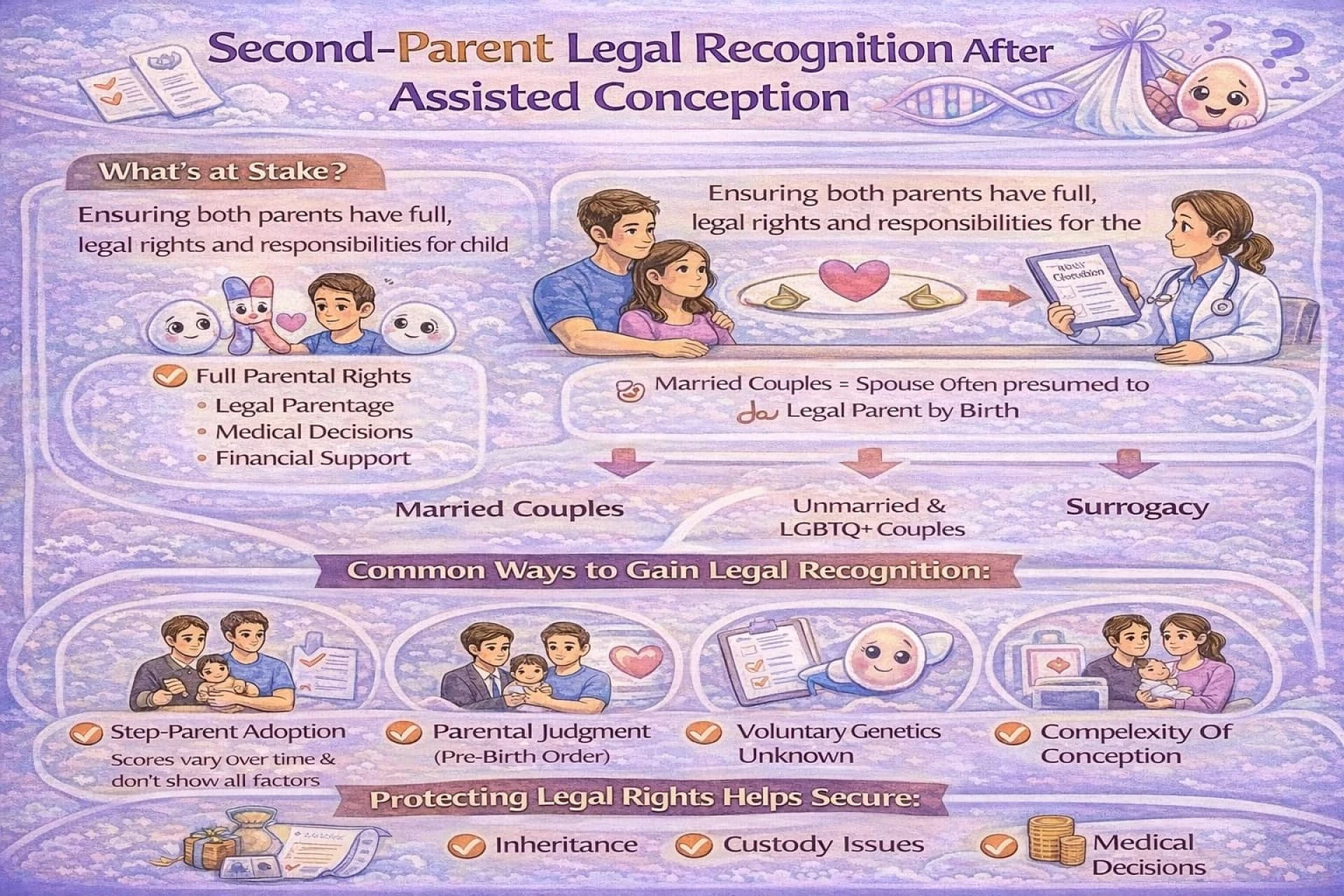
Assisted conception helps create families in many different forms—but legal recognition doesn’t always happen automatically for both parents. For many couples, especially those using IVF, donor assistance, or surrogacy, second-parent legal recognition becomes an important and sometimes confusing step after birth.
Understanding this process early can protect both the child’s rights and the family’s long-term security.
What Is Second-Parent Legal Recognition?
Second-parent recognition refers to the legal acknowledgment of a parent who did not give birth to the child but intends to share full parental responsibility.
This recognition ensures that both parents have:
- Equal legal rights and responsibilities
- Authority in medical and educational decisions
- Protection in case of separation, illness, or death
- A clear legal relationship with the child
Without formal recognition, one parent’s role may remain legally vulnerable.
Why It Matters After Assisted Conception
In assisted conception, biology and intention don’t always align neatly with legal assumptions.
Situations where second-parent recognition is especially important include:
- Use of donor sperm or donor eggs
- Same-sex couples
- Surrogacy arrangements
- Couples where only one partner is genetically related
Even in stable relationships, lack of legal clarity can create complications later.
Birth Certificate vs Legal Parenthood
Many people assume that being named on a birth certificate guarantees full parental rights. This is not always true.
Legal parenthood may still depend on:
- Marital status
- Consent documentation signed during treatment
- Applicable national or regional laws
In some cases, additional legal steps are required to secure second-parent status fully.
Role of Consent Forms Signed During Treatment
Consent documents signed at the fertility clinic often play a crucial role in establishing intent to parent.
These forms typically record:
- Agreement to assisted conception
- Acceptance of parental responsibility
- Understanding of donor or surrogacy involvement
However, consent alone may not replace formal legal recognition, depending on jurisdiction.
Common Legal Pathways for Recognition
Second-parent recognition may involve:
- Court declarations or parentage orders
- Adoption procedures (in some cases)
- Legal registration updates
- Documentation linking consent and parenthood
The process varies widely based on local laws and family structure.
Emotional Impact of Legal Uncertainty
Legal ambiguity can cause unexpected stress after birth—a time already filled with emotional and physical adjustment.
Parents may feel:
- Anxiety about decision-making authority
- Fear of being excluded legally
- Pressure to act quickly without clarity
This stress is avoidable with early guidance and planning.
Importance of Early Legal Awareness
Understanding legal parenthood before treatment or during pregnancy is ideal. It allows couples to:
- Ask the right questions early
- Align medical and legal documentation
- Avoid rushed decisions after birth
At a patient-focused Best fertility centre in Bangalore, clinics often guide patients toward appropriate legal counselling alongside medical care.
Planning Protects the Child First
Second-parent recognition is ultimately about safeguarding the child’s future—ensuring stability, protection, and continuity of care regardless of life changes.
Clear legal parenthood supports:
- Emotional security
- Financial protection
- Medical and educational continuity
Final Thoughts
Assisted conception builds families through intention, care, and commitment—but the law often requires additional steps to reflect that reality.
Second-parent legal recognition is not a formality. It is a protective measure that ensures both parents are fully acknowledged, now and in the years to come.
Taking time to understand this process early allows families to focus on what truly matters—raising a child in security and love.