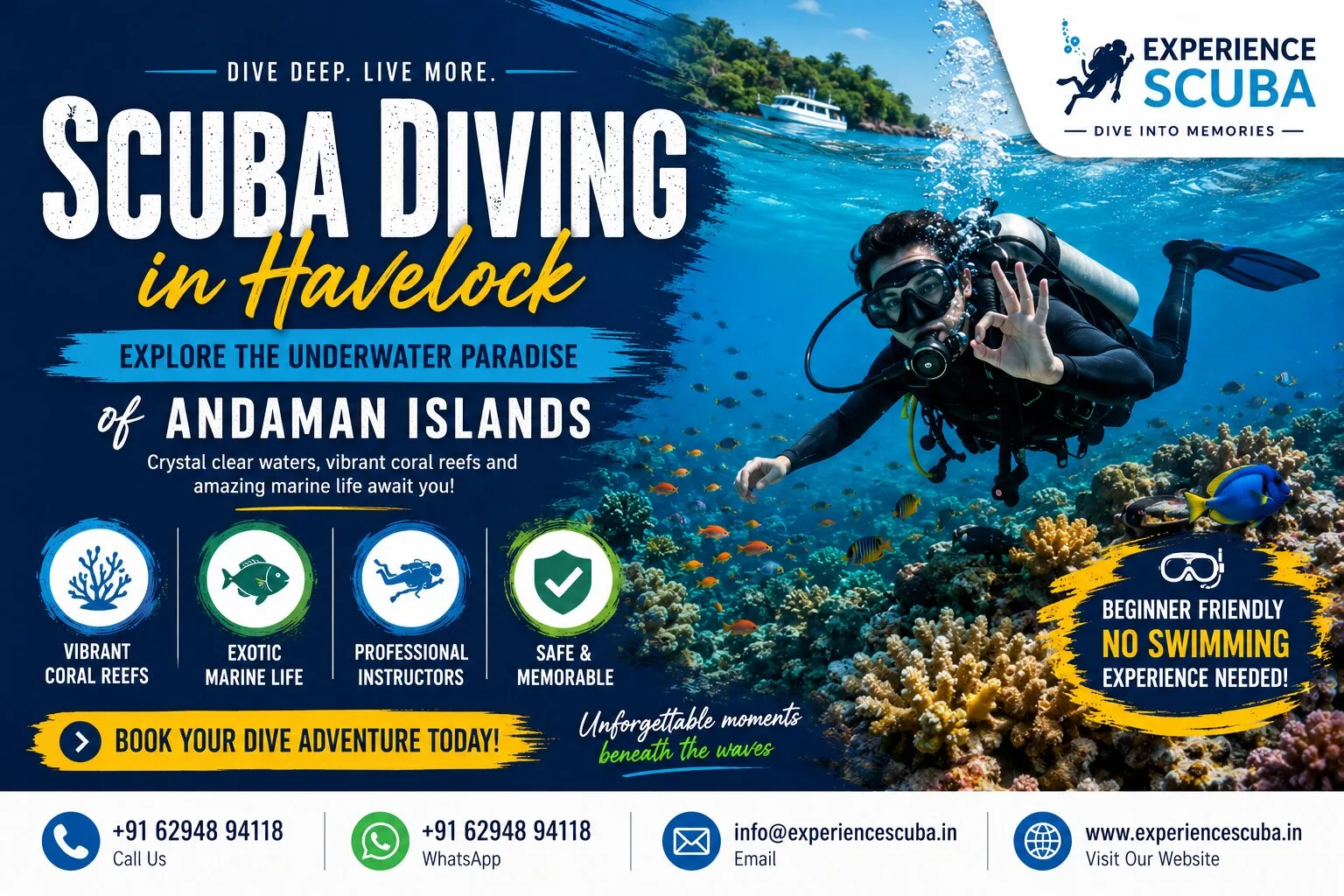
From your first underwater adventure to exploring coral reefs, here is a practical guide to choosing a scuba experience that matches your confidence, interests, and travel plans.
A beautiful beach can make you want to visit the Andaman Islands. But what lies beneath the surrounding sea can give you an entirely different reason to return.
Scuba diving introduces travellers to a world of coral formations, tropical fish, underwater landscapes, and experiences that cannot be enjoyed from the shoreline.
However, choosing the right diving experience is not always straightforward.
Should you begin from the shore or take a boat? Do you need swimming skills? Is a short introductory experience enough, or should you consider a certification course?
Understanding these differences can help you plan a more enjoyable underwater adventure.
Why Consider Scuba Diving in Andaman?
The Andaman Islands offer various underwater experiences for visitors with different skill levels.
Some travellers are simply curious about breathing underwater for the first time. Others already hold scuba certifications and want to explore different dive sites.
A first-time visitor can research Scuba diving in Andaman to understand the available experiences before choosing an activity.
One advantage of diving during an island holiday is flexibility.
You can dedicate part of your trip to an underwater adventure without giving up beaches, sightseeing, or island hopping.
The important thing is choosing an experience that matches your abilities rather than booking something simply because it looks exciting in photographs.
Why Havelock Island Attracts Diving Enthusiasts
Swaraj Dweep, commonly known as Havelock Island, is one of the recognised centres for recreational diving in Andaman.
Its appeal extends beyond underwater activities. Travellers can combine diving with tropical beaches, relaxed island stays, and other marine experiences.
For visitors interested in Scuba diving in Havelock, it is useful to understand the different diving formats available.
Beginners may prefer a gradual introduction, while certified divers may be interested in exploring locations suited to their qualifications.
For example, Experience Scuba lists Nemo Reef among its shore-diving locations and also offers introductory experiences around Tribe Gate.
These experiences differ in their entry methods and programme structures. Suitability depends on the participant and prevailing conditions.
What Does the Best Scuba Diving Experience Actually Mean?
When travellers search for Best scuba diving in Andaman, they often encounter different recommendations.
But a suitable diving experience cannot be identified by location alone.
For a beginner, good supervision and a comfortable introduction may matter most.
For an experienced diver, the important considerations might include underwater topography, marine life, visibility, and dive-site conditions.
Before booking, consider four questions:
- Does the experience match my current skill level?
- What training or briefing is included?
- How does the activity begin—from the shore or a boat?
- What happens if weather or sea conditions change?
These questions are more useful than choosing an activity purely because it promises greater depth.
Shore Diving or Boat Diving: Understanding the Difference
Both diving formats can offer memorable experiences, but they involve different arrangements.
Shore diving
A shore dive begins directly from the coastline.
Participants normally prepare near the beach before entering the water according to the dive operator's instructions.
For some beginners, gradually entering the water can feel more comfortable than entering from a boat.
Nemo Reef, around Havelock Island, is associated with introductory shore-diving experiences.
Boat diving
Boat diving involves travelling to a selected location before entering the water.
Depending on the programme, a boat dive may allow access to sites farther from shore.
However, boat access does not automatically make a dive more suitable or enjoyable.
The final choice should depend on experience, programme requirements, local conditions, and professional guidance.
Can You Try Scuba Diving Without Previous Experience?
Yes. Introductory scuba programmes are designed for people who have never tried scuba before.
These activities typically begin with equipment familiarisation and a briefing covering breathing, underwater communication, and safety procedures.
Participants learn basic hand signals and become familiar with breathing through a regulator.
A professional then supervises the practical experience.
PADI's Discover Scuba Diving guidance explains that introductory scuba is different from completing a full certification course.
Some beginner experiences may accommodate people who are not strong swimmers, depending on the programme and the participant's comfort in water.
Full Open Water certification has separate swimming and training requirements.
Always confirm individual eligibility before booking.
What Should You Expect Underwater?
Your first underwater experience may not begin with immediately watching fish or exploring coral.
Initially, you may focus on the sensation of breathing through scuba equipment.
That adjustment is important.
As you become comfortable, you can begin observing the underwater surroundings.
Depending on the location, marine environment, and conditions, divers may encounter reef fish, coral formations, and different underwater landscapes.
Wildlife sightings cannot be guaranteed.
Instead of expecting a particular animal, pay attention to the complete environment.
The movement of small fish, patterns in the reef, and changes in underwater light can be just as memorable as spotting larger marine life.
How to Find a Suitable Havelock Dive Experience
The phrase Best scuba diving in Havelock means different things to different travellers.
Someone booking a first dive may prioritise gradual instruction, while a certified diver may want a particular type of reef environment.
A practical comparison should consider:
- Instructor support: Understand the supervision provided during the activity.
- Experience level: Confirm whether certification or previous diving experience is required.
- Equipment: Ask what is included and how equipment fitting is handled.
- Activity duration: Separate total reporting time from actual underwater time.
- Marine conditions: Confirm whether the selected activity is operating on your preferred date.
Choosing based on these factors can help avoid unnecessary disappointment.
Safety Should Be Part of Every Booking Decision
Scuba diving requires attention to specific safety procedures.
A proper briefing should explain underwater communication, breathing, pressure equalisation, and what to do if something feels uncomfortable.
Participants should disclose relevant medical information accurately.
If you experience difficulty equalising your ears or feel uncomfortable during the activity, communicate immediately with the instructor.
Never continue simply because other participants appear confident.
Personal comfort and professional assessment should always determine whether an introductory experience can proceed.
Plan Your Diving Day Carefully
A scuba activity deserves adequate time in your itinerary.
Avoid arranging an underwater experience between several tightly scheduled transfers.
Weather and sea conditions can influence diving operations. Keeping some flexibility helps when activities need to be adjusted.
Flight arrangements also matter.
PADI's post-dive safety guidance explains that flying too soon after scuba diving can increase decompression-related risks.
Recommended minimum waiting intervals vary by dive profile. Many divers allow approximately 24 hours between their final dive and a flight as a conservative planning approach.
Confirm the appropriate interval with your dive professional rather than relying on your holiday schedule alone.
Protecting the Underwater Environment
Enjoying marine life responsibly is an essential part of diving.
Coral reefs are living ecosystems, not objects to collect or touch.
Avoid standing on coral, disturbing marine animals, or removing shells and other objects from protected underwater environments.
Photographs can preserve memories without interfering with the reef.
For beginners, staying attentive to the instructor and avoiding unnecessary contact with the surroundings are important habits.
A memorable dive should leave the underwater environment undisturbed.
Frequently Asked Questions
Is Andaman suitable for beginner scuba diving?
Yes. Introductory scuba programmes are available for first-time participants, subject to programme requirements, medical suitability, and local conditions.
Is Havelock Island suitable for a first dive?
Havelock offers beginner-oriented diving experiences, including shore-entry options. The appropriate programme depends on the participant's needs.
Do I need scuba certification for an introductory dive?
Not necessarily. Some supervised introductory experiences do not require previous scuba certification. Formal certification courses have additional requirements.
Is shore diving better than boat diving?
Neither format is automatically better. The choice depends on individual comfort, experience, programme structure, and sea conditions.
Can I see colourful fish and coral during my dive?
Different dive sites contain different marine habitats. Sightings depend on the location, underwater visibility, and natural conditions.
What should I check before booking?
Confirm the activity type, experience requirements, instructor supervision, equipment, reporting time, medical considerations, and cancellation arrangements.
Final Thoughts
An enjoyable scuba experience does not need to be the deepest, longest, or most expensive option.
It should match your confidence, experience, and interest in the underwater world.
For some travellers, a short introductory dive will be enough to create a lasting holiday memory.
Others may discover an interest in learning scuba through structured training.
Whichever path you choose, research the experience carefully, follow professional guidance, and respect the marine environment.
The Andaman Islands offer beautiful scenery above the water, but taking the time to understand the world beneath it can add an entirely different dimension to your holiday.