
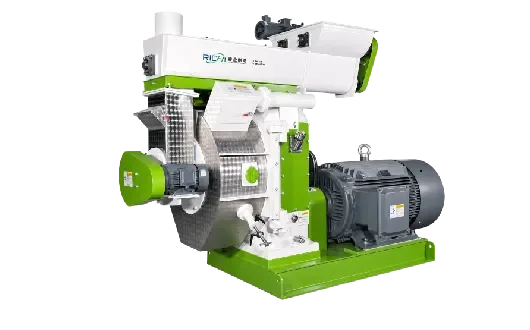
Sawdust is just one of the most usual byproducts of sawmills, furnishings manufacturing facilities, and various other wood-processing procedures. Although it is usually treated as a low-value deposit, its relatively consistent bit structure and natural lignin content make it appropriate for producing biomass fuel pellets. A sawdust pellet maker compresses ready wood fragments under high pressure, changing loosened sawdust right into denser pellets that are less complicated to keep, transportation, and make use of as fuel.
Why Is Sawdust Suitable for Pelletizing?
Compared to logs, branches, or huge timber chips, sawdust usually needs much less dimension reduction prior to pelletizing. However, its wetness content and fragment uniformity still have a significant impact on pellet development.
Wood has all-natural lignin, which can soften under the warmth and stress created throughout pelletizing and assist bind particles together. This means that appropriately prepared sawdust can often develop resilient pellets without depending heavily on extra binders. The exact conditions depend on the kind of wood and the characteristics of the raw material.
What Prep Work Does Sawdust Requirement?
The initial step is normally cleansing. Stones, metal pieces, bark, and other hard pollutants must be gotten rid of prior to the product goes into the main processing devices. This secures downstream equipment and helps keep an extra consistent feedstock.
If the sawdust has larger timber pieces or uneven particles, crushing may also be essential. Fine sawdust can occasionally go directly to the pelletizing stage, while mixed timber residues might require extra grinding to accomplish a more uniform bit dimension.
Dampness control is specifically important. Referral materials indicate that sawdust intended for pelletizing is usually adjusted to a fairly reduced dampness range, with some production systems targeting about 10-- 15%. Material that is as well wet may require drying, while excessively completely dry product can likewise make pellet formation more difficult.
How Does the Pelletizing Process Work?
After prep work, the sawdust is shared into the pellet mill at a controlled rate. Inside the pelletizing chamber, rollers press the material with small openings in a die. The combination of pressure and heat causes the wood particles to compact and form continuous hairs, which are after that cut right into pellets of the required size.
The compression ratio of the die ought to correspond to the features of the timber. Various types have different fiber structures and degrees of all-natural resin or lignin, so there is no single die setup that is suitable for each sort of sawdust.
This is why the pellet mill must be taken into consideration part of a complete process instead of a separated maker.
What Is a Total Sawdust Pellet Manufacturing Refine?
A normal assembly line might consist of raw-material cleansing, squashing or grinding, drying out, pelletizing, cooling, testing, and product packaging. Not every task calls for every one of these phases. For example, clean sawdust that already has a suitable particle size and dampness content may bypass some preprocessing tools.
In a bigger wood waste biomass pellet plant, conveying and dust-control systems likewise come to be vital. Screw conveyors, belt conveyors, bucket elevators, and various other transportation tools can relocate product between different processing areas, while dust-collection tools assists keep a cleaner manufacturing environment.
After pelletizing, the freshly generated pellets are warm and reasonably breakable. Cooling enables them to stabilize and harden. Testing then gets rid of fines and broken items, which can often be returned to the pelletizing process.
Why Are Drying and Air Conditioning Both Crucial?
Drying out and cooling offer totally various objectives. Drying prepares the raw material before compression by bringing its moisture material right into an appropriate operating range. Air conditioning happens after pelletizing and eliminates the warmth created during compression.
Fresh sawdust pellets can leave the pellet mill at approximately 80-- 90 ° C and might still have a reasonably loose framework. A counterflow colder can slowly reduce their temperature level and boost their dealing with toughness before testing and packaging.
From Timber Deposit to a Usable Fuel
Sawdust pellet manufacturing is essentially a densification procedure, however attaining secure production calls for coordination in between raw-material prep work, wetness control, pelletizing, air conditioning, and testing. When these phases are correctly matched, loosened wood deposits can be exchanged a much more small and manageable biomass gas.
Pellet plant concentrates on biomass pellet-processing tools and full production-line arrangements. The appropriate arrangement eventually depends on the raw materials offered, the desired ability, and the intended use the finished pellets.