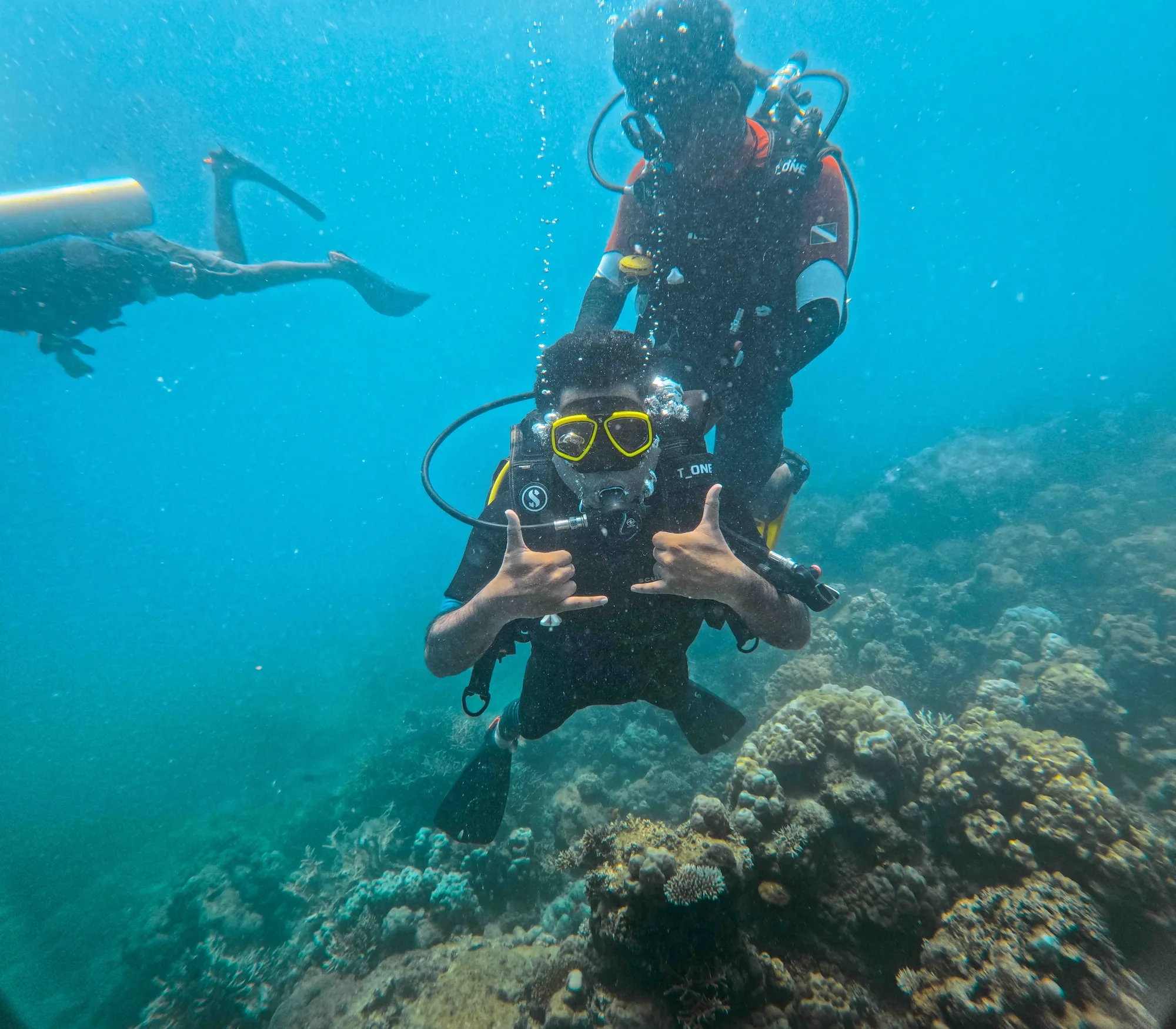
A beach holiday gives you a beautiful view of the ocean. Scuba diving gives you a completely different perspective.
In Havelock Island, the most interesting part of a diving experience is not necessarily how deep you go. It is the chance to observe reef fish, coral formations, and marine habitats that remain hidden beneath the surface.
For first-time visitors to the Andaman Islands, the biggest challenge is often deciding which experience to book. Should you try shore diving, choose an offshore boat dive, or enrol in a scuba certification course?
Understanding the differences can help you plan an enjoyable underwater adventure.
Why Havelock Island Is Popular for Scuba Diving
Havelock Island, officially known as Swaraj Dweep, offers a combination of accessible shore-entry locations and offshore diving sites.
These underwater environments support tropical marine ecosystems, making the island attractive to both beginner and experienced divers.
Visitors can discover coral habitats, observe colourful reef fish, and learn basic underwater skills through professionally supervised programs.
Another advantage is the availability of different diving formats. Some activities are designed for complete beginners, while others require recognised diving qualifications.
This flexibility is one reason travellers consider scuba diving in Havelock when planning an Andaman adventure holiday.
Start by Choosing the Right Diving Experience
Not every scuba diving package provides the same experience. Before booking, consider your experience level, comfort in water, and available time.
Shore Diving at Nemo Reef
Nemo Reef is one of Havelock's popular introductory diving locations.
Instead of travelling offshore by boat, participants enter the water directly from the beach.
The experience begins with equipment preparation, safety instructions, and basic underwater training.
Shore diving is worth considering if you prefer a gradual introduction or want to avoid an additional boat journey.
Boat Diving at Tribe Gate
For travellers interested in an offshore experience, Tribe Gate offers another option.
Participants travel by boat to the designated dive location before beginning their underwater activity.
Experience Scuba offers a PADI Discover Scuba Diving program at Tribe Gate for eligible beginners.
The activity includes professional supervision, introductory training, and equipment.
However, actual diving arrangements depend on sea conditions and the participant's comfort level.
Exploring Juvis
Juvis is another underwater location around Havelock.
Its coral formations and reef environments provide opportunities to observe different tropical marine organisms.
Visitors may encounter clownfish, butterflyfish, angelfish, and other marine species, depending on conditions.
This experience may appeal to travellers who want to explore a different offshore environment.
What Happens Before Your First Underwater Dive?
Many beginners imagine that scuba diving begins immediately after putting on the equipment.
In reality, preparation is an essential part of the experience.
A typical introductory program includes:
- Medical screening: Participants complete the required health questionnaire.
- Equipment explanation: The instructor introduces the regulator, mask, fins, and buoyancy equipment.
- Safety briefing: Participants learn underwater signals and important procedures.
- Shallow-water practice: Basic skills are introduced before the guided dive.
- Underwater exploration: The dive begins only when the participant is ready and conditions are suitable.
The experience should proceed at a comfortable pace under professional supervision.
A successful first dive is about learning, observation, and appropriate preparation rather than reaching maximum depth.
Do You Need Swimming Skills or Scuba Certification?
These are two different questions.
Some introductory scuba programs allow non-swimmers to participate under direct supervision. However, water comfort, medical eligibility, and the ability to follow instructions are essential.
Previous certification is also not required for a suitable introductory program.
Certification courses, such as the PADI Open Water Diver course, involve additional training and assessments, including swimming requirements.
Travellers should identify whether they want a one-time introductory experience or a qualification that enables future recreational diving within their training limits.
How Should You Plan Diving Around Your Island Holiday?
Practical scheduling can make a significant difference.
Havelock visitors usually arrive by ferry, so it is sensible to organise diving around confirmed island transfers and accommodation arrangements.
Allow sufficient time for medical paperwork, briefings, equipment preparation, and any boat transfers.
October to May is generally considered a favourable period for diving, but local conditions can change from day to day.
Your operator may adjust the dive site or postpone the activity if the sea is unsuitable.
Another important consideration is air travel. Appropriate intervals must be maintained between scuba diving and flying to reduce decompression-related risks.
Avoid arranging diving too close to your departure flight, and follow the relevant guidance for your dive profile.
How to Choose a Responsible Diving Operator
A diving package should be evaluated on more than its advertised price.
Before booking, ask about:
- Instructor qualifications and supervision.
- Medical screening and safety procedures.
- Equipment and training arrangements.
- Dive duration and underwater time.
- Boat transfers and transport, where applicable.
- Photography, video, and other inclusions.
- Rescheduling arrangements during unsuitable weather.
Experience Scuba is a dive centre based in Havelock Island offering introductory experiences and PADI training programs.
Visitors researching scuba diving in Andaman can compare available experiences and choose options that suit their holiday schedule and abilities.
Why Responsible Diving Is Important
Coral reefs are living ecosystems that support tropical marine biodiversity.
Touching corals, collecting marine organisms, or feeding fish can disturb these environments.
Divers should follow instructor guidance, maintain appropriate distance from wildlife, and avoid unnecessary contact with reef structures.
Learning to observe the ocean respectfully is an important part of the diving experience.
Frequently Asked Questions
Which diving location is suitable for first-time visitors?
Nemo Reef is a popular shore-entry location for introductory diving around Havelock Island.
Can non-swimmers try scuba diving?
Certain supervised introductory programs accommodate non-swimmers, provided they meet medical and water-comfort requirements.
Is shore diving better than boat diving?
Neither is universally better. Shore diving offers direct beach access, while boat diving provides access to offshore sites. Choose according to comfort, program requirements, and conditions.
Do beginners need their own scuba equipment?
Introductory packages generally provide the necessary scuba equipment. Confirm the included items before booking.
When should I book my diving experience?
Advance planning is useful, especially during busy travel periods. Actual diving remains dependent on suitable weather and sea conditions.
Final Thoughts
Choosing your first scuba diving experience does not need to be complicated.
The most important decisions involve selecting an appropriate program, understanding the training process, and choosing a responsible operator.
Havelock Island offers different ways to explore tropical marine environments, from introductory shore diving to offshore experiences and formal training.
Plan thoughtfully, follow professional guidance, and approach the ocean with curiosity and respect. The experience can add an entirely new dimension to your Andaman holiday.