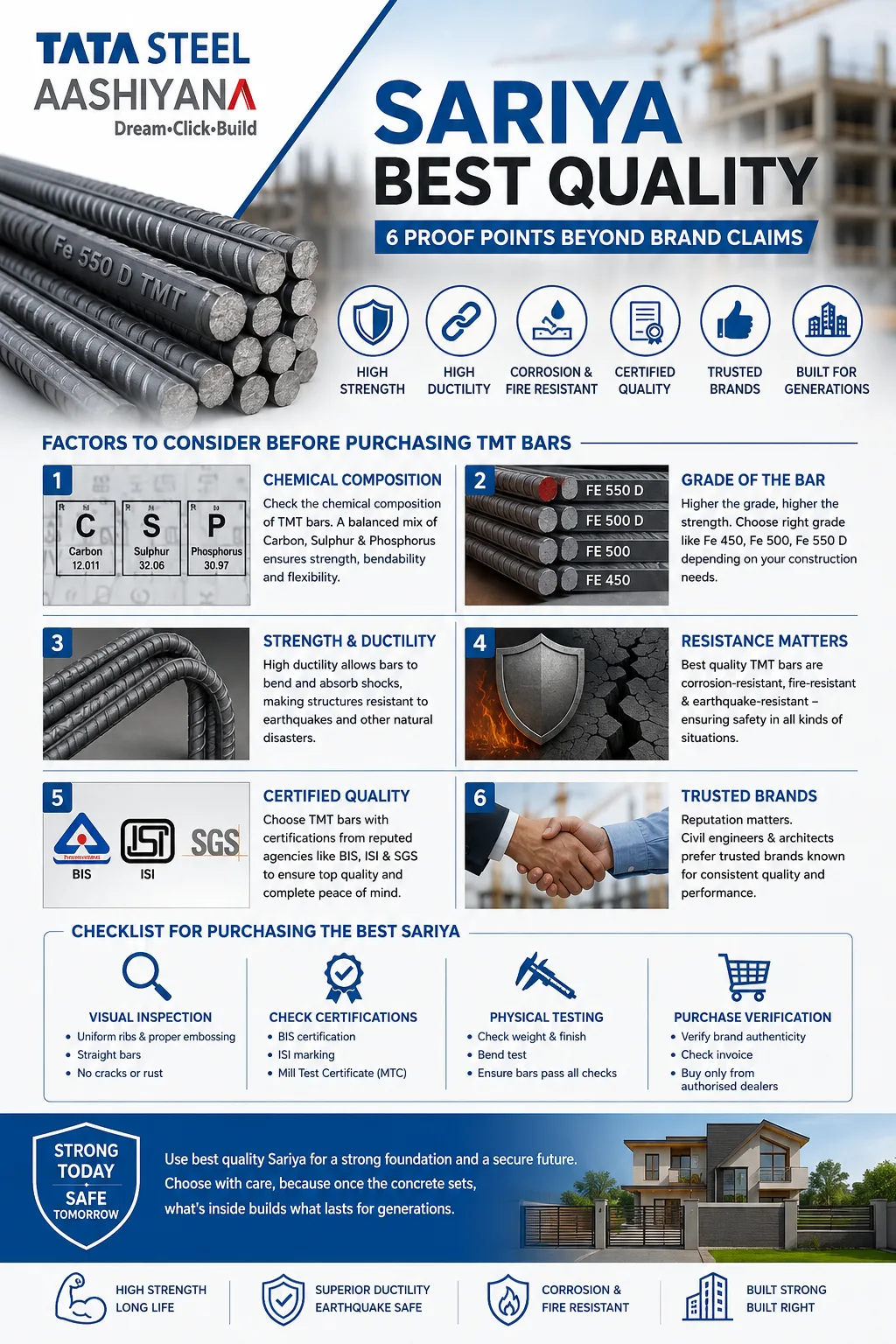
The good-quality TMT bars you source from a reliable supplier can end up rusting if you do not store them properly after delivery. When steel is exposed to moisture and oxygen, it begins to corrode. This process can begin even before the steel bars are installed due to poor storage.
This can be prevented by the site team with a bit of planning and discipline. Iron and steel corrode naturally when they are exposed to moisture and oxygen, but you should understand that this process can start even before the TMT bars/Sariya are used for construction, right at the storage site.
If the surface rust is not addressed, then it can eventually compromise the TMT bar’s bonding with concrete and its load-carrying capacity. It is a structural issue, not just an appearance.
How to store TMT bars?
- Start with the basics: TMT bars should be stored in dry, shaded and well-ventilated areas. If the bars are placed directly on the soil, then they can pick up ground moisture. The bars should not be stored near areas prone to water-logging or standing water. If a covered shed is not available, then cover the stack with a tarpaulin or waterproof sheet.
- One of the most effective steps is to store the bars on an elevated platform. If bars are placed on the ground, they pick up ground moisture, which accelerates the rusting process. Elevating the bar a few inches off the ground using concrete blocks, wooden pallets, or racks can create an air gap which keeps the moisture away from the bars.
- The way the bars are staked can affect the corrosion and physical damage.
Store horizontally on a stable and level base to prevent the bars from bending and deforming. The thinner bars are more flexible and can bend easily if not stored properly.
Match the diameter of the bars while storing. The 6 - 12mm bars should be bundled and tied, the 16 - 20mm bars need stable stacking to avoid twisting, and the larger bars 25mm and above need a solid support underneath. Do not stack heavy loads on top of the bars.
While loading and unloading the bars, do not handle them roughly. Dragging or dropping the bars can damage their surface and cause bends, which can compromise the straightness.
- Bars that are stored the longest are most exposed to moisture and oxygen. The bars should be stocked in a way to use the older deliveries before the new ones arrive. Follow a first-in-first-out approach. It will also help to keep your site organised and make it easier for the workers to find the right bars. The workers need not dig through an unorganised pile.
- Even if you follow good storage practices, you should inspect the bars before they go into construction. Light surface rust can be cleaned off using a wire brush without affecting the Sariya quality. If the bars have deep rust or pitting, then they should not be used for structural work, as the compromised surface can affect the strength and bonding.