Dental X-ray machines are essential diagnostic tools that help dentists detect cavities, bone loss, infections, impacted teeth, and other oral health issues that may not be visible during routine examinations. In small clinics, where space, staff, and resources may be limited, using X-ray equipment safely becomes even more important.
While modern dental X-ray systems emit very low radiation, improper handling, poor maintenance, or lack of safety awareness can increase unnecessary exposure risks for both patients and staff. At Oral Health Cart, we believe that patient safety and professional responsibility go hand in hand. This article highlights the most important safety tips for using dental X-ray machines in small clinics to help you maintain high standards of care.
1. Understand Radiation Safety Principles
The foundation of X-ray safety lies in following the ALARA principle — As Low As Reasonably Achievable. This means keeping radiation exposure to the minimum level required to obtain accurate diagnostic images.
Key practices include:
- Taking X-rays only when clinically necessary
- Avoiding repeated scans
- Using the lowest effective exposure setting
Dentists and staff should be trained to balance diagnostic benefits with radiation safety.
2. Choose Certified and Low-Radiation Equipment
Safety begins with selecting the right machine. Always invest in certified and approved dental X-ray systems.
When purchasing equipment, ensure:
- ISO and CE certification
- Compliance with Indian radiation safety regulations
- Built-in dose control features
- Digital imaging capability
Digital X-ray systems emit significantly less radiation than traditional film-based machines, making them ideal for small clinics.
At Oral Health Cart, we provide certified dental X-ray machines designed for safe and efficient diagnostics.
3. Install Equipment in a Properly Shielded Area
Proper installation plays a major role in radiation protection.
Your X-ray room should include:
- Lead-lined walls or protective barriers
- Radiation shielding doors
- Designated operator area
- Warning signs outside the room
If a separate room is not possible, portable lead screens can be used to create a safe zone.
Consult qualified technicians during installation to ensure compliance with safety standards.
4. Use Protective Gear for Patients and Staff
Protective equipment reduces unnecessary radiation exposure to sensitive body parts.
Always provide:
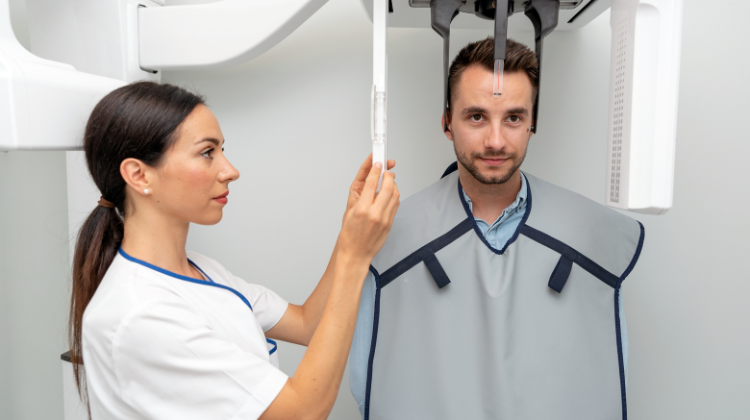
- Lead aprons for patients
- Thyroid collars
- Protective gloves when needed
- Lead barriers for operators
Special care must be taken with children, pregnant patients, and elderly individuals, as they are more sensitive to radiation.
Never compromise on protective accessories, even for short exposures.
5. Ensure Proper Staff Training and Certification
Only trained professionals should operate dental X-ray machines.
Staff should receive training on:
- Correct positioning techniques
- Exposure settings
- Safety protocols
- Emergency procedures
- Equipment handling
Periodic refresher courses help maintain awareness and prevent careless mistakes.
Well-trained staff not only improve safety but also reduce retake rates.
6. Maintain Correct Patient Positioning
Improper positioning often leads to unclear images and repeated exposures.
To avoid this:
- Use bite blocks and positioning devices
- Align the tube head accurately
- Ensure patient comfort and stability
- Give clear instructions before exposure
Good positioning improves image quality and minimizes radiation dose.
Taking time to position patients properly saves time in the long run.
7. Perform Regular Equipment Maintenance
Routine maintenance ensures consistent performance and radiation control.
- Maintenance checklist includes:
- Inspecting cables and connectors
- Checking exposure timers
- Calibrating sensors
- Cleaning digital receptors
- Testing output levels
Malfunctioning equipment may emit unnecessary radiation or produce distorted images.
Schedule professional servicing at regular intervals to maintain safety standards.
8. Limit Access to the X-Ray Area
Controlling access prevents unauthorized exposure.
Important steps:
- Restrict entry during exposure
- Display warning lights or signs
- Keep doors closed
- Allow only essential personnel
Children, visitors, and non-essential staff should not remain in the X-ray area during operation.
Clear protocols reduce accidental exposure.
9. Keep Proper Records and Documentation
Documentation is essential for legal compliance and quality control.
Maintain records of:
- Equipment installation certificates
- Radiation safety approvals
- Maintenance logs
- Staff training records
- Exposure history
Proper documentation helps clinics meet regulatory requirements and demonstrates professional accountability.
10. Use Digital Imaging and Software Tools
Modern digital systems enhance both safety and efficiency.
Benefits include:
- Lower radiation doses
- Instant image viewing
- Reduced retakes
- Easy storage and sharing
- Enhanced diagnostic accuracy
Investing in digital technology improves patient trust and clinic productivity.
Small clinics can benefit greatly from affordable digital solutions available at Oral Health Cart.
11. Follow Special Safety Measures for Pregnant Patients
Pregnant patients require extra caution.
Best practices include:
- Avoiding X-rays unless absolutely necessary
- Using double lead protection
- Consulting medical history
- Documenting consent
Clear communication builds patient confidence and ensures ethical practice.
12. Stay Updated with Regulations and Guidelines
Radiation safety standards evolve over time. Dentists must stay informed about updated guidelines.
Follow recommendations from:
- Atomic Energy Regulatory Board (AERB)
- Dental Council of India
- International safety organizations
Regular updates help clinics remain compliant and safe.
Why Choose Oral Health Cart for Dental X-Ray Solutions
At Oral Health Cart, we prioritize safety, quality, and reliability. Our offerings include:
- Certified low-radiation X-ray machines
- Digital imaging systems
- Protective accessories
- Installation support
- After-sales service
We help small clinics build safe and compliant diagnostic environments.
Following proper safety protocols is essential for protecting patients, staff, and your professional reputation. By implementing these safety tips for using dental X-ray machines in small clinics, you can minimize risks while maximizing diagnostic efficiency.
From choosing certified equipment and using protective gear to maintaining records and training staff, every step contributes to safer dental practice. With responsible usage and reliable equipment from Oral Health Cart, small clinics can deliver high-quality care with confidence and integrity.