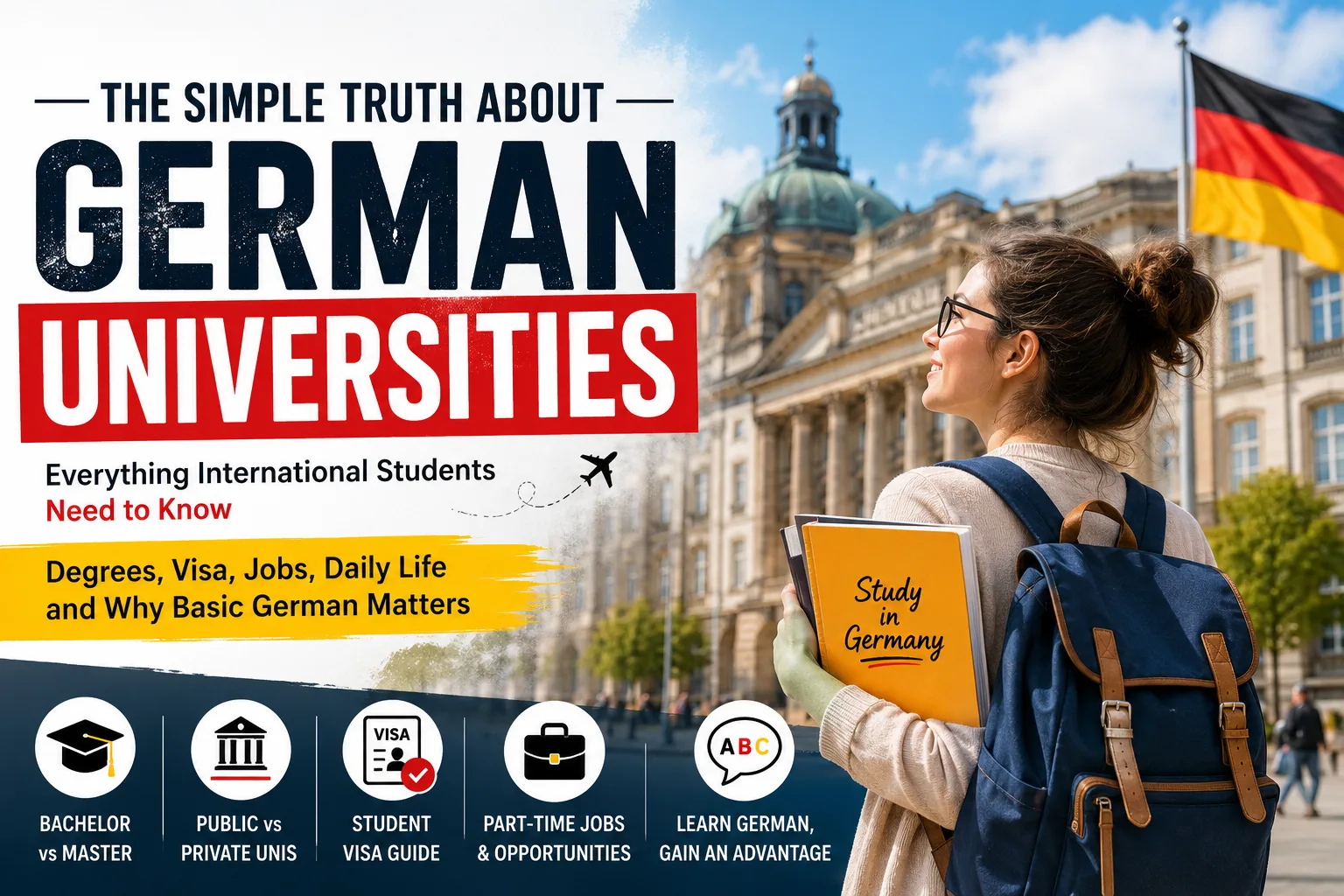
The Simple Truth About German Universities
You do not strictly need to learn German to study in Germany. The country offers hundreds of English-taught degree programs. However the rules change based on your degree level. They also change based on the type of university you choose.
Bachelor's Degrees vs Master's Degrees
Finding an English-taught Bachelor's program is difficult. Most undergraduate courses at public universities are taught in German. You usually need a high-level certificate to apply.
Master's programs are very different. You will find over 1000 English-taught master's degrees [1]. Universities want international talent. They make postgraduate studies very accessible for English speakers. Students who are also exploring ausbildung courses in Germany should note that vocational training programs generally require German language proficiency.
"Students who target English-taught Master's programs save a year of language preparation time, but they miss out on deep cultural immersion."
Public Universities and Private Universities
Germany is famous for its tuition-free public universities. These public schools mostly operate in German. They have strict language requirements for most undergraduate courses.
Private universities are different. They charge tuition fees but offer many more English programs. They cater directly to international students.
What About the Student Visa?
You might wonder if the German embassy requires language skills. The visa rules depend on your university admission letter.
If your university course is in English, you do not need German for the visa [2]. The embassy only asks for proof of English proficiency, such as IELTS or TOEFL. If your course is in German, you must prove your German skills.
"Visa rejection rates drop significantly when students have clear and unconditional admission to an English-taught program."
Daily Life Outside the Classroom
Your university might operate in English. The supermarket and the train station do not.
Living in Germany without local language skills is challenging. Most official letters are in German. Rental contracts are in German.
Finding a Part-Time Job
International students often work to pay for living costs. English-only jobs exist in big cities like Berlin and Munich. You can work in tech startups or international restaurants.
But speaking basic German opens up many more jobs [3]. Retail shops and local cafes require you to speak with locals. You will struggle to find a standard student job without basic A2 or B1 skills.
"Learning just 500 words of German makes daily life much easier for new international students."
Benefits of Learning Basic German
You should still try to learn the language. It shows respect for the local culture. It helps you make local friends.
German employers value the language highly. You will have a huge advantage after graduation [4]. Many international companies in Germany still prefer candidates who speak both English and German.
Free Ways to Learn
You do not need to spend money on expensive classes. You can use free apps like Duolingo or Deutsche Welle [5]. Many universities also offer free language courses for their international students.