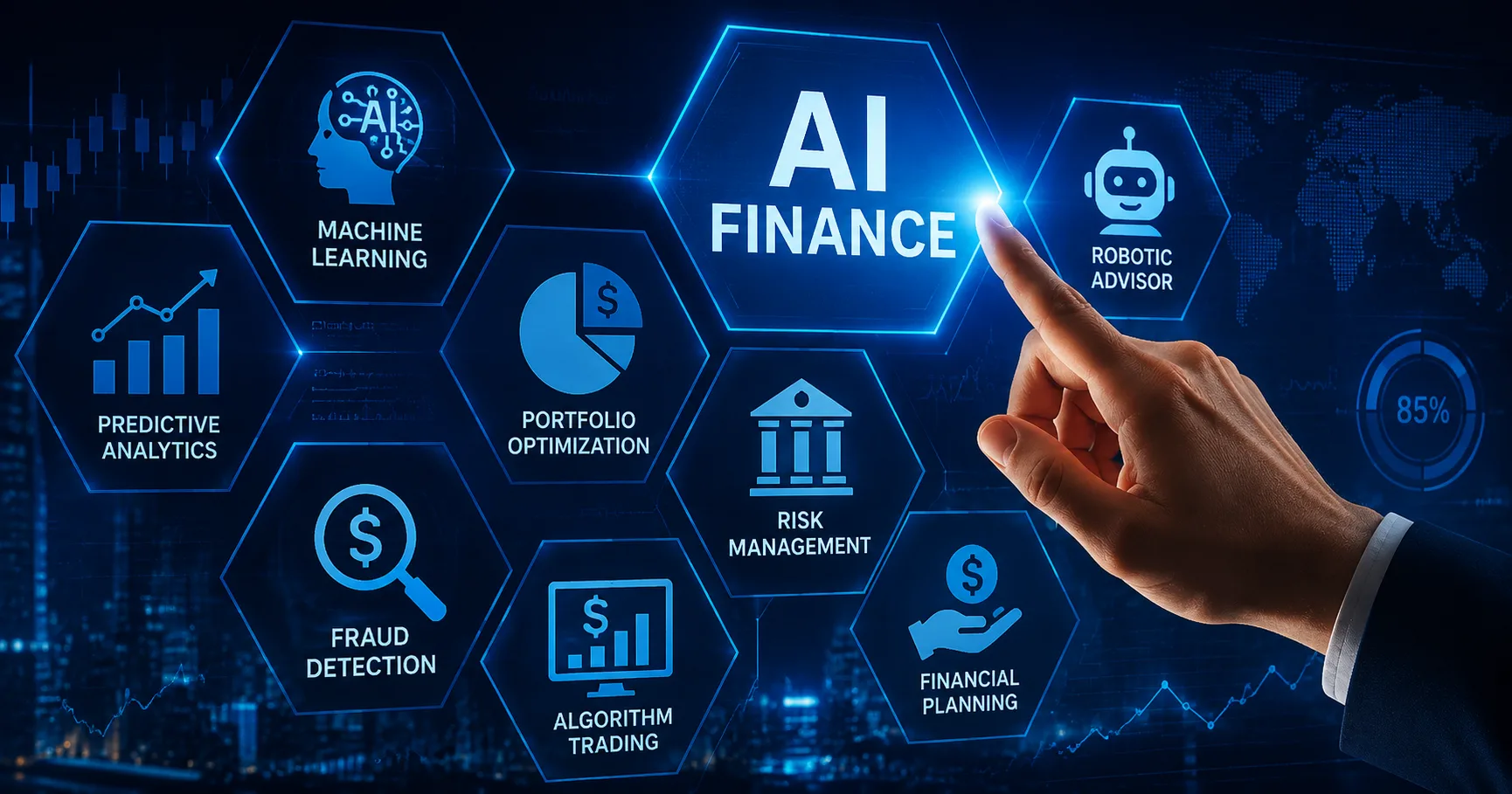
Artificial intelligence is no longer a futuristic concept in banking, insurance, and investment management — it is already embedded in the daily workflows of analysts, advisors, risk managers, and compliance teams. From automating repetitive back-office tasks to powering real-time fraud detection, AI is fundamentally changing how financial professionals spend their working hours. This shift is not just about efficiency; it's about redefining the skills, roles, and career paths that define the industry.
The Everyday Reality: AI in Action
Walk into any modern financial institution today and you'll find AI quietly running in the background of nearly every function.
Customer service and support have been transformed by AI-powered chatbots and virtual assistants that handle routine inquiries, account questions, and transaction disputes — freeing human agents to focus on complex, high-value conversations that require empathy and judgment.
Fraud detection and risk management now rely heavily on machine learning models that analyze transaction patterns in milliseconds, flagging anomalies far faster and more accurately than manual review ever could. Banks that once took days to detect suspicious activity can now respond in real time.
Underwriting and credit decisioning have become faster and more data-driven, with algorithms assessing creditworthiness using far broader datasets than traditional credit scores alone, helping lenders make more informed decisions while reducing processing time from days to minutes.
Wealth management and financial advisory services increasingly use robo-advisors and AI-driven portfolio analysis tools to offer personalized investment recommendations at scale, a capability once reserved for high-net-worth clients with dedicated human advisors.
Compliance and regulatory reporting, historically one of the most labor-intensive functions in finance, now benefit from natural language processing tools that scan contracts, communications, and transactions to flag potential regulatory violations before they become costly problems.
Why This Matters for the Financial Workforce
The rise of AI in financial services doesn't simply mean fewer jobs — it means different jobs. Roles that were once purely manual or transactional are evolving into hybrid positions that require both financial acumen and technical fluency. A loan officer today needs to understand how an underwriting algorithm reaches its conclusions. A compliance officer needs to interpret outputs from a machine learning model. An investment analyst needs to know when to trust an AI-generated forecast and when to question it.
This evolution has created a genuine skills gap. Professionals who understand only traditional finance, or only technology, are finding themselves at a disadvantage compared to those who can bridge both worlds. As a result, many finance professionals are turning to structured upskilling paths, and AI finance courses have become one of the fastest-growing categories of professional education, helping bankers, analysts, and advisors build practical, job-ready skills in machine learning, predictive analytics, and AI-driven decision-making without needing a computer science degree.
Key Areas Where AI Is Creating New Career Opportunities
- AI-driven risk analytics: Specialists who can build, validate, and interpret risk models are in high demand across banks and insurers.
- Algorithmic trading and quantitative research: Firms need professionals who understand both market dynamics and machine learning techniques.
- RegTech and compliance automation: A growing niche combining regulatory knowledge with AI tool implementation.
- AI governance and ethics: As regulators scrutinize algorithmic decision-making, professionals who can ensure fairness, transparency, and accountability in AI systems are increasingly valuable.
- Data-driven financial advisory: Advisors who can combine AI-generated insights with human relationship-building are outperforming those who rely on either alone.
The Human Element Still Matters
Despite the rapid adoption of AI, financial services remain a trust-based industry. Clients still want to talk to a person when making major financial decisions, and regulators still require human accountability for automated outcomes. The most successful financial professionals of the next decade won't be the ones who resist AI, nor the ones who blindly defer to it — they'll be the ones who know how to work alongside it, using AI to handle scale and speed while applying human judgment to nuance, ethics, and relationships.
How to Prepare for an AI-Driven Financial Career
For professionals looking to stay competitive, a few practical steps can make a real difference:
- Build foundational AI literacy — understand core concepts like machine learning, natural language processing, and predictive modeling, even without becoming a technical expert.
- Invest in targeted upskilling — enrolling in AI finance courses tailored to banking, investment, or risk management gives professionals hands-on experience with the tools actually used in the industry.
- Learn to evaluate AI outputs critically — knowing how to question, validate, and interpret AI-generated recommendations is as important as understanding how the models work.
- Stay current on regulation — as governments introduce AI-specific financial regulations, staying informed protects both careers and institutions.
- AI is not replacing financial services professionals — it's reshaping what their jobs look like day to day. The institutions and individuals who adapt fastest, by building real AI fluency rather than avoiding it, will be the ones who thrive in this new landscape.
Whether through on-the-job exposure or structured learning, investing in AI knowledge today is quickly becoming as essential to a finance career as understanding markets themselves.
For individuals seeking structured learning and career advancement, DataMites Institute stands out as a reliable training provider. With a robust presence across major Indian cities including Bangalore, Hyderabad, Mumbai, Pune, Ahmedabad, Jaipur, Coimbatore, Delhi, and Kolkata, DataMites offers both modes of learning for data analytics training. The institute focuses on industry-oriented curriculum, practical exposure, and skill development, helping learners align with current market requirements and succeed in the evolving AI and finance landscape.