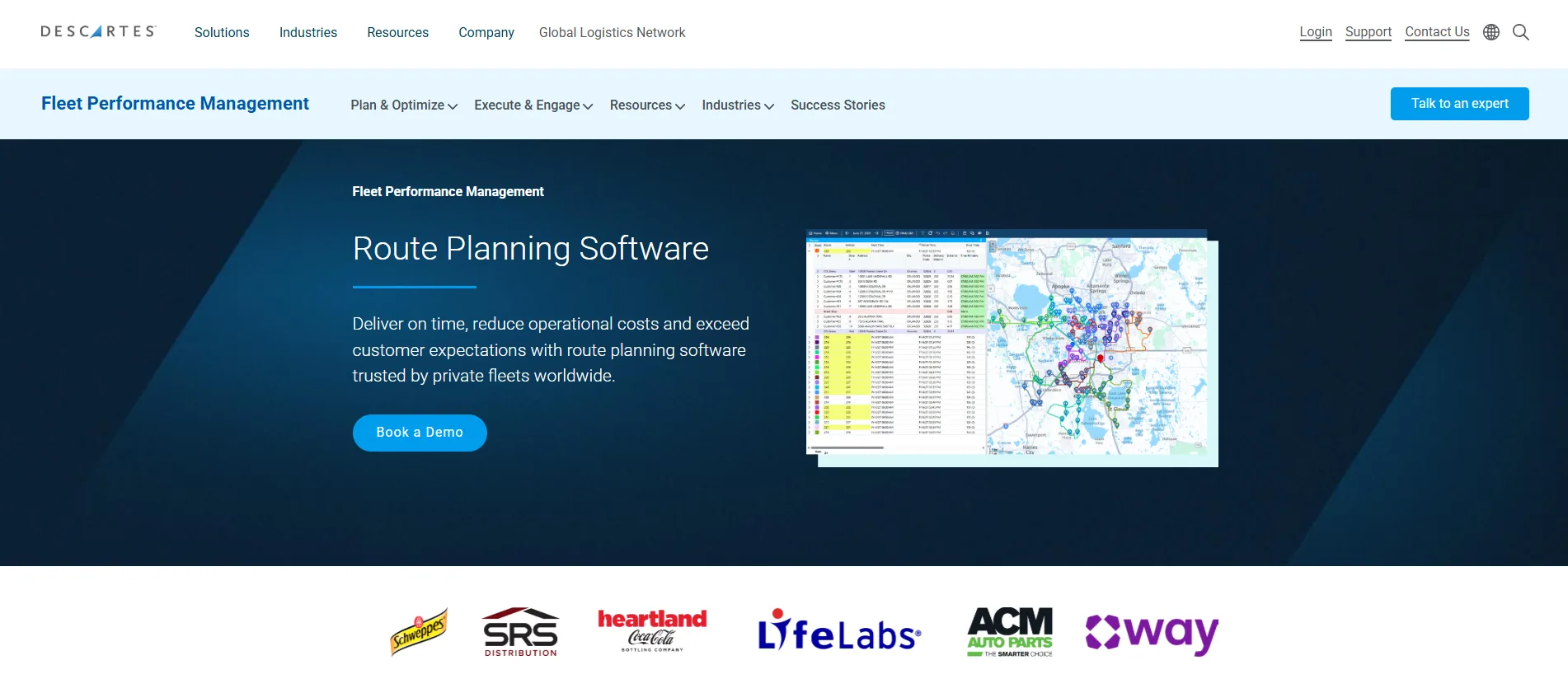
Route planning has evolved far beyond simple map-reading and spreadsheet management. For logistics-intensive businesses, modern route planning software is a strategic asset that directly impacts profitability, customer satisfaction, and operational efficiency. This guide explores how specialist solutions like those from Descartes address the complexities of modern fleet management.
The Evolution of Route Planning
Traditional route planning involved manual processes, static schedules, and a heavy reliance on planner experience. Drivers followed fixed routes regardless of daily demand fluctuations, leading to inefficiency . Today's route planning software automates the complex process of sequencing multiple stops while respecting operational constraints.
Modern solutions function as sophisticated optimization engines that weigh multiple factors simultaneously: distance, time windows, vehicle capacity, driver hours, traffic patterns, and business priorities . They transform what was once a time-consuming manual task into an automated, data-driven process.
Key Capabilities of Specialist Route Planning Software
Continuous Optimization
A defining feature of advanced route planning with software from specialists like Descartes is continuous rather than batch optimization. While batch solutions run periodically, continuous optimization works constantly in the background . As new orders arrive, cancellations occur, or traffic conditions change, the system automatically re-optimizes routes.
This capability enables businesses to extend order cutoff times and offer same-day delivery options. One logistics manager noted that with Descartes' dynamic planning, their on-time deliveries reached 99.5% consistently .
Multi-Constraint Optimization
Real-world logistics involves competing objectives. Organizations need to minimize costs while maximizing service levels, respecting driver hours while maintaining route density. Advanced route planning software balances these goals simultaneously .
The software can account for:
- Vehicle capacity (weight, volume, pallet positions)
- Customer time windows and priority levels
- Driver hours of service and mandated breaks
- Real-time and historical traffic data
- Skills and certifications required for specific deliveries
Strategic and Daily Planning Integration
Specialist solutions bridge the gap between long-term strategic planning and daily execution. Strategic planning establishes territory structures, depot locations, and fleet composition . Daily planning then optimizes routes within these parameters, adapting to real-world conditions.
This integration ensures consistency between planned and actual operations. Planners can identify routes at risk based on capacity constraints or expected arrival times and make informed adjustments .
Dynamic Route Planning
Dynamic route planning creates unique routes based on each day's actual order mix and demand, unlike static routes that assume routine patterns . This approach is particularly valuable for businesses with variable order volumes and same-day delivery expectations.
When a new order comes in, the system can insert it into the optimal route while honoring existing commitments. When delays occur, routes can be re-sequenced to protect time windows .
Technology Innovations Driving Performance
Artificial Intelligence and Machine Learning
AI and machine learning are enhancing route optimization performance. AI generates optimal configurations that uniquely meet planning requirements, while machine learning increases parameter accuracy and tunes performance down to the driver, customer, and road network level .
Recent innovations include AI-enabled in-vehicle safety cameras that monitor driving behavior and analyze safety events to pinpoint improvement areas. Machine learning capabilities for route execution enable continual route quality improvement even while vehicles are on the road, incorporating real-time traffic, delivery windows, and weather conditions .
Route Optimization Benchmarking
New capabilities offer data-driven insights into how well route optimization algorithms perform compared to human planners and actual on-road performance . By analyzing variances, companies identify inefficiencies and refine route optimization settings, parameters, and constraints. This leads to more effective route planning, greater operational trust in automation, and measurable cost savings.
Robotic Process Automation
Route planning involves multiple steps to create optimal plans. Robotic process automation captures these multi-step processes to consistently deliver optimal results, minimize planner inconsistency, and automatically generate and execute plans . Plans are "ready to go" by the time they need review, reducing last-minute fixes and freeing planners to focus on exception handling .
Integration: The Key to Seamless Operations
Specialist route planning software integrates with existing business systems to create a unified operational platform. Connections to ERP, WMS, TMS, and order management systems automatically import orders and export routes, driver manifests, and performance data .
This integration extends to mobile driver applications, telematics, and customer engagement platforms. Data from the field feeds back into planning and dispatch, enabling real-time adjustments and refining future routes . Driver safety training can also integrate directly into driver workflows on mobile applications .
Delivering Tangible Business Results
Cost Reduction
Route optimization delivers measurable cost savings. Planned miles can be reduced by 10%, fuel costs by 15%, and planning time by 75% . By optimizing routes, reducing unnecessary routes, and improving vehicle utilization, businesses lower fuel costs, control labor hours, and reduce vehicle wear and tear.
Improved Customer Experience
Dynamic routing enables faster delivery models and extended order cutoff times. Customers receive more reliable ETAs and fewer missed or rescheduled visits . Real-time tracking and proactive notifications enhance transparency and build customer confidence.
Increased Driver Productivity
Optimized routes enable drivers to complete more stops in less time. Planners spend fewer hours manually tuning routes and can focus on higher-value work . This increased productivity helps address driver shortage challenges by getting more from existing drivers.
Choosing the Right Solution
When evaluating route planning software, organizations should consider several factors:
Scalability: The solution must handle growing vehicle counts, expanded delivery areas, and new business lines . Cloud-based solutions offer elastic scaling for large order volumes and real-time performance .
Real-time Adaptability: Look for continuous optimization that responds to traffic, new orders, and cancellations. Static batch optimization cannot deliver the same responsiveness .
Integration Capabilities: Seamless connections with existing systems are essential for data flow and operational efficiency . API connectivity and pre-built connectors reduce manual work and integration costs.
Usability: Intuitive interfaces and straightforward workflows reduce training needs and speed adoption . Planners and dispatchers need visibility into constraints and the ability to make manual adjustments when necessary.
Enterprise Capabilities: For larger operations, the solution must support complex organizational structures with role-based access control, multi-depot operations, and multi-party delivery processes .
Conclusion
Route planning software from specialists like Descartes represents a fundamental shift in how logistics-intensive businesses operate. By combining continuous optimization, AI and machine learning, and seamless integration across the planning and execution cycle, these solutions transform complex delivery puzzles into efficient, profitable operations.
The result is a closed loop between planned routes, real-world execution, and performance metrics that drives continuous improvement. As customer expectations for faster, more reliable delivery continue to rise, investment in advanced route planning is becoming not just a competitive advantage but a business necessity.