Ever wondered how the components of the automobile are so strong? They can take a lot of pressure, stress, and sometimes even collide, but the parts remain in good condition. The quenching furnace is the secret behind the sturdy metal surface of the vehicles. Quenching is a kind of heat treatment which are designed to heat the metal components to a high temperature and then to rapidly cool them with liquid and gas to enhance it’s mechanical properties. This heating treatment ensures the longevity and performance of the vehicle. It has become an important part of the automobile manufacturing process. How? Well, we will understand that in this post.
What is a Quenching Furnace?
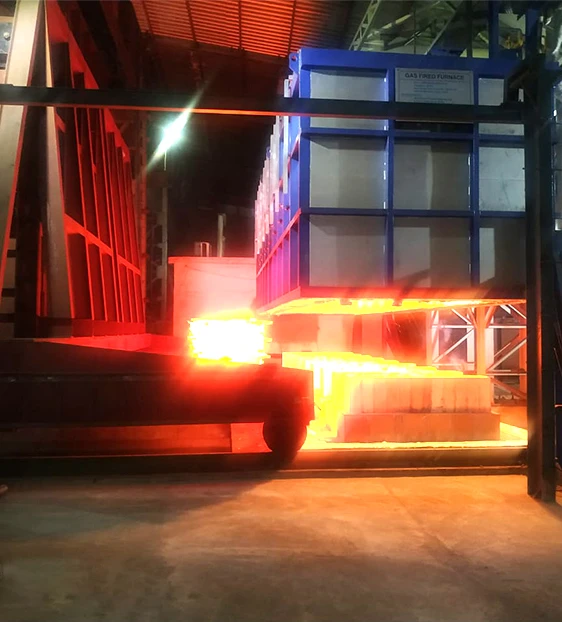
It is a specialized furnace designed for heating the metal components to a desired temperature. The rapid controlled cooling ensures that the properties of the metal components are upgraded. The furnace ensures that the components are evenly heated for precise output. Some of the key components of the Quenching furnace are:
- Heating Chamber: These components are heated to the transformation temperatures.
- Quenching Tank: It consists of a quenching medium like water, oil, or polymer.
- Temperature Control Systems: They allow precise and regulated heating.
- Loading Mechanism: Allows easy loading of heavy components.
Role of Quenching Furnace in the Automobile Industry
- Enhancing the Safety-Critical Components:
The modern automobile industry heavily relies on metal components to endure extra stress, wear, and tear. The braking system, suspension parts, transmission gears, and engine components are all subjected to harsh operating conditions. The quenching furnace:
- Increases the hardness and strength of the body of the vehicle, reducing the stress of the mechanical failure.
- Maintains the dimensional stability, which is required for high tolerance, when the vehicle is in harsh conditions.
- The treatment is uniform, which ensures consistent performance across all batches.
The gear and crankshaft are such components of the machine that are exposed to constant loading and stress. High strength is needed for that which a metal can achieve through quenching.
- Reducing Emissions:
The industry is moving towards eco-friendly solutions. Light and fuel-efficient vehicles are in demand at the time. The process of quenching treats the metal to make it a perfect combination of robust and lightweight. A quenching furnace can easily and uniformly treat even complex metals like alloys by carefully managing the heat. It not only reduces the vehicle's weight but also enhances the fuel efficiency. It leads to carbon emissions; thus, it is an essential process that automobile manufacturers cannot miss.
- Production Efficiency:
Manufacturing of an automobile is a complex process, but consistency is the key. The demands of the market should be met, and with the precise quenching furnace operations, this is possible.
- Fast and precise output throughout the day
- Consistent treatment cycle
- Reduced downtime and manual intervention
An advanced control system is integrated with the modern furnace, which also reduces the risk of human error. It is much needed for quality assurance of the vehicle.
- Tailoring Properties:
The different automobile parts need different mechanical properties. It varies according to the models. While some of the parts of the machine, like the camshafts, need to have a robust surface, gears may need a hard core. Quenching, along with carburizing, nitriding, or induction hardening, allows customized heat treatment.
Types of Quenching Furnace
- Batch Furnace:
As the name suggests, this furnace processes a large number of parts in one go. How? Well, the heating process is conducted in batches. Different components of different shapes and sizes can be uniformly given heat treatment at once. They are apt for small workshops, especially if parts need to be customized.
- Continuous Furnace:
If the production demand is high, then this furnace is best. It allows the production of components in large numbers in one go. This is a high-grade automated machine that allows the components to move through the various stages of the heat treatment automatically.
- Vacuum Furnace:
If accuracy is the key for you, then you should select this heating treatment. It is used for manufacturing high-performance engine parts or customized components.
- Salt Bath Furnace:
It provides a uniform heat distribution. In this process, the metal components are submerged in the bath of the molten salts for uniform heat processing.
Future Outlook of Quenching Furnace
The future of the quenching furnace in the automobile industry is bright.
- Eco-friendly quenching media are being developed
- Apt for an electrical vehicle, which requires more precise treatment
- Additive Manufacturing, like 3D printed parts, will have specific customized heat treatment.
As the manufacturing process continues to evolve in the automobile industry, the quenching process will continue to remain a prominent part of the process. The efficiency and precision that is essential for high performance is essential is possible through the quenching treatment.
Here is the Takeaway…
Many people are not aware of this fact, but quenching the furnace is one of the most essential parts of the vehicle manufacturing process. It is the perfect merge of metallurgy, mechanical engineering, and industrial automation. This heating treatment ensures that the vehicle components are of good quality and can withstand the extreme demands of the roads. ‘Vibrant Thermal Engineering ’ has designed a top-notch and energy-efficient furnace which are in accordance with the demands of the automobile industry. They are the one-stop solution for all heating solutions. Their engineers have designed an innovative and energy-efficient furnace at an affordable price.
Frequently Asked Questions…
--What are the Different Quenching Media Used in these furnaces?
- Water: It is used for fast cooling, but can lead to cracks or a distorted surface.
- Oil: It is apt for slow and more precise cooling
- Polymer Solutions: It offers customizable cooling and is eco-friendly
--What are the Benefits of the Quenching Furnace?
- Oxidation-free heating, which leads to precise output
- No discoloration or distortion on the surface
- Ensures uniform heat treatment
--What are the Tips to Maintain the Quenching Furnace?
- Regularly cleaning and replacing the quenching media
- Calibrating temperature control and sensors
- Inspect for leaks and corrosion
- Monitoring the system logs in the automated furnace