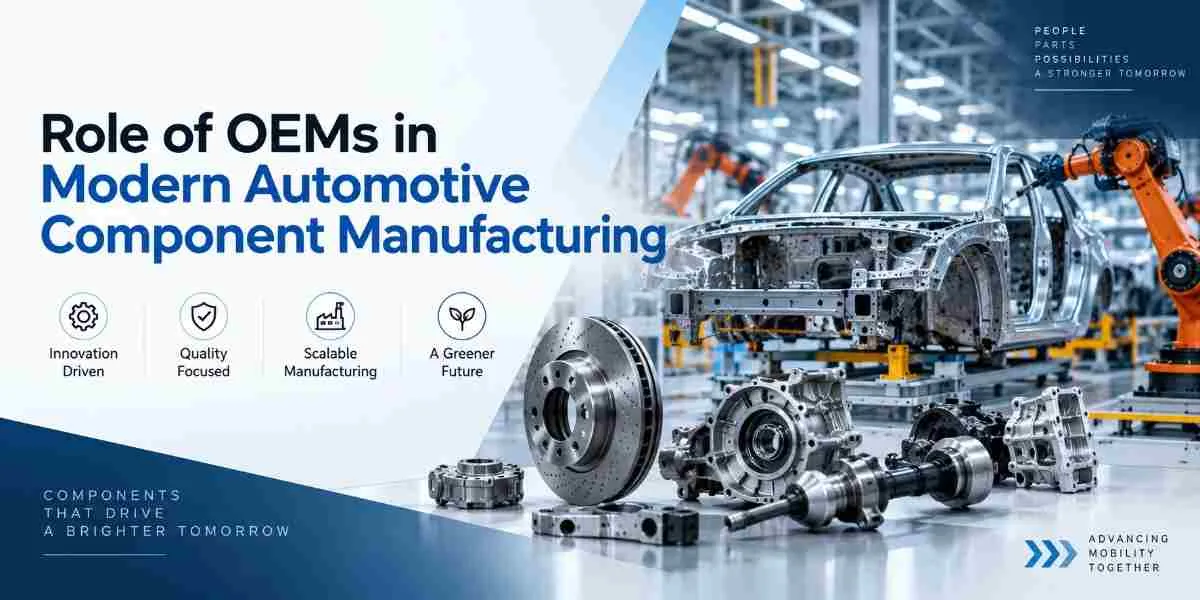
The automotive industry has changed significantly with the growing demand for better vehicle performance, safety, efficiency, and design. Behind these developments is a large network of suppliers and manufacturers that produce the components used in modern vehicles. OEM automotive manufacturers play an important role in this supply chain by producing components according to specific designs, technical requirements, and quality standards set by automotive companies.
From metal brackets and structural parts to precision-formed components and assemblies, OEMs help automotive manufacturers source the right components at the required quality and production volume. Their role extends beyond manufacturing, as many OEM partners also support product development, process improvement, quality control, and production planning.
What Is the Role of an OEM in Automotive Manufacturing?
An Original Equipment Manufacturer (OEM) produces components or products that are supplied to another company for use in its final product. In the automotive industry, OEMs can manufacture components based on engineering drawings, material specifications, dimensions, tolerances, and other customer requirements.
Instead of manufacturing every component in-house, automotive companies can work with specialised OEM suppliers. This allows them to use the manufacturing expertise and production capabilities of established component manufacturers.
An OEM may be involved in different stages of production, from material processing and fabrication to forming, welding, finishing, inspection, and final component supply.
Why OEMs Are Important for Modern Automotive Component Manufacturing
Modern vehicles consist of a large number of individual components. Producing these parts requires specialised machinery, skilled workers, quality systems, and a clear understanding of automotive production requirements.
OEMs help manage this complexity by focusing on specific manufacturing requirements and producing components consistently at the required scale.
Some of the key areas where OEMs support automotive manufacturing include:
- Custom component manufacturing
- Precision fabrication
- Sheet metal processing
- Forming and stamping
- Welding and joining
- Surface finishing
- Quality inspection
- Production scaling
- Supply chain support
By outsourcing selected components to specialised manufacturers, automotive companies can focus their resources on vehicle design, engineering, assembly, and other core operations.
1. Supporting Custom Component Manufacturing
Automotive manufacturers often require components that are designed specifically for a particular vehicle, system, or application. Standard parts may not always meet these requirements.
OEM manufacturers can produce components based on customer drawings and specifications. This makes it possible to manufacture parts with specific dimensions, shapes, materials, and finishes.
For example, sheet metal components can be cut, formed, welded, and finished according to the required design. This flexibility is particularly useful when developing new automotive products or modifying existing components.
2. Maintaining Consistent Quality
Consistency is essential in automotive component manufacturing. Components need to meet defined specifications across multiple production batches.
OEM manufacturers use established production and inspection processes to maintain consistency. Depending on the component, quality checks may cover dimensions, material specifications, weld quality, surface finish, and other critical parameters.
Consistent manufacturing helps automotive companies reduce variations in their production process and maintain the required standards for their final products.
3. Improving Production Efficiency
Manufacturing automotive components requires the right combination of machinery, processes, and technical expertise. Setting up these capabilities internally can require considerable investment.
An experienced OEM already has manufacturing infrastructure and trained personnel in place. Automotive companies can therefore use these capabilities without having to establish every process themselves.
Processes such as laser cutting, precision forming, sheet metal fabrication, welding, and surface finishing can be carried out by specialised OEM manufacturers based on the component requirements.
4. Helping Automotive Companies Scale Production
Production requirements can vary throughout the lifecycle of an automotive product. A new component may initially require smaller quantities during development, followed by larger volumes once production begins.
An OEM partner can help support these changing requirements through established manufacturing processes and production infrastructure.
The ability to scale production is particularly important for automotive businesses that need consistent component supply as vehicle production increases.
5. Supporting New Product Development
OEMs can also contribute to the product development process. Their manufacturing experience can help identify practical production considerations at an early stage.
For example, an OEM can review whether a component can be efficiently fabricated, formed, welded, or finished based on the proposed design. Identifying manufacturing issues early can help reduce unnecessary changes during production.
This makes communication between the automotive company and OEM important from the early stages of product development.
6. Providing Access to Different Manufacturing Processes
Modern automotive components may require several manufacturing processes before they are ready for use.
A capable OEM manufacturer may provide multiple processes under one manufacturing setup. These can include:
- Laser cutting
- Sheet metal fabrication
- Precision forming
- Welding
- Surface finishing
- Component assembly
Having access to multiple processes through one supplier can simplify production coordination and reduce the need to manage several separate vendors for the same component.
7. Strengthening the Automotive Supply Chain
A reliable supply chain is important for maintaining continuous vehicle production. Component shortages or delays can affect production schedules and delivery commitments.
OEMs form an important part of the automotive supply chain by producing components according to planned specifications and schedules. Long-term relationships between automotive companies and OEM suppliers can also improve communication around production volumes, quality requirements, and delivery timelines.
A supplier that understands the customer's requirements can better plan manufacturing activities and respond to changes in demand.
8. Supporting Cost Management
Manufacturing components in-house involves expenses related to machinery, tooling, labour, maintenance, quality systems, and production facilities.
Working with an OEM can allow automotive companies to use established manufacturing infrastructure instead of investing in every production capability internally.
Cost management is not simply about choosing the lowest supplier price. Businesses also need to consider quality, production consistency, rejection rates, delivery performance, and the overall cost of managing the supply chain.
An experienced OEM partner can support these areas through established manufacturing and quality processes.
What Should Automotive Companies Look for in an OEM?
Choosing an OEM manufacturing partner requires careful evaluation. Automotive businesses should consider the supplier's manufacturing capabilities, technical expertise, quality processes, production capacity, material knowledge, and ability to meet delivery requirements.
It is also important to understand whether the OEM can manufacture the complete component or provide only selected processes.
Before starting production, both parties should have a clear understanding of:
- Engineering drawings and specifications
- Material requirements
- Dimensional tolerances
- Production volumes
- Quality inspection requirements
- Surface finishing requirements
- Delivery schedules
Clear communication at these stages can help reduce production issues and improve the overall supplier relationship.
Jindal Lifestyle's Role in Automotive OEM Manufacturing
Jindal Lifestyle supports businesses with OEM manufacturing solutions for automotive components. Its manufacturing capabilities include sheet metal fabrication, laser cutting, precision forming, welding, and surface finishing.
These capabilities allow automotive businesses to source custom components based on their specific design and production requirements.
As automotive manufacturing continues to demand greater precision, consistency, and production flexibility, OEMs remain an important part of the component supply chain. The right OEM manufacturing partner can help businesses manage component production while supporting quality, scalability, and reliable supply.
For automotive companies, building a strong relationship with capable OEM manufacturers can therefore be an important part of managing modern component manufacturing requirements.