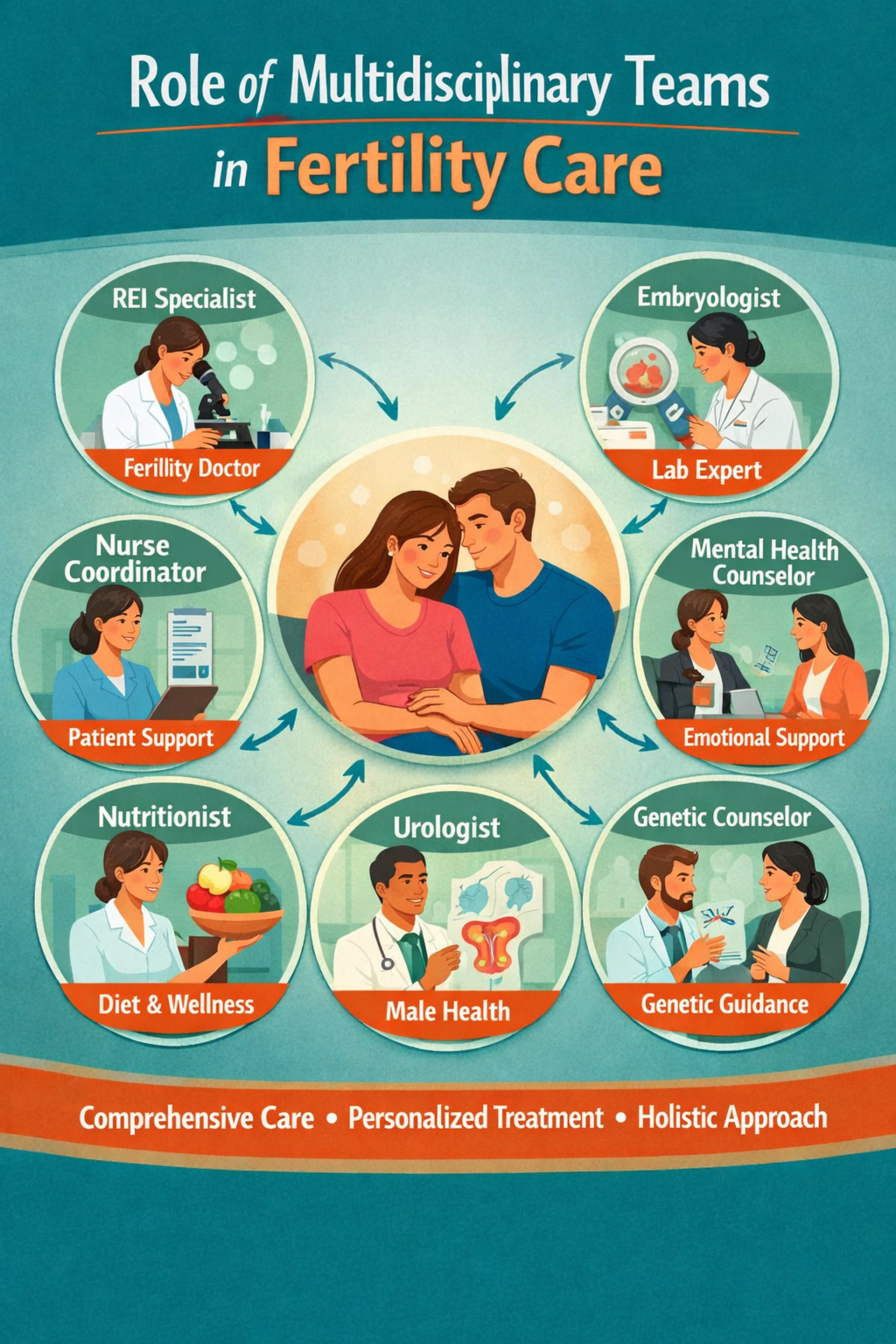
Fertility care is often imagined as a straight medical process — tests, hormones, procedures, results. In reality, fertility is influenced by far more than ovaries, sperm, or lab techniques. Hormones, mental health, lifestyle, metabolism, immune balance, and emotional well-being are all deeply interconnected.
This is where multidisciplinary teams play a critical role in fertility care. When different specialists work together, treatment becomes more accurate, humane, and sustainable.
What Is a Multidisciplinary Approach in Fertility Care?
A multidisciplinary fertility team brings together professionals from different fields to address fertility as a whole-body and whole-person experience.
Such teams may include:
- Fertility specialists and reproductive endocrinologists
- Embryologists
- Gynecologists and andrologists
- Counselors or mental health professionals
- Nutritionists
- Endocrinologists
- Nursing and care coordinators
Instead of working in isolation, these professionals collaborate to create individualized care plans.
Why Fertility Needs More Than One Perspective
Infertility is rarely caused by a single factor. Even when a primary diagnosis exists, other subtle contributors often influence outcomes.
For example:
- Hormonal treatment may fail if stress hormones remain high
- Good-quality embryos may fail to implant if uterine or immune factors are overlooked
- Ovulation may be regular, but nutrition or metabolic health may affect egg quality
- Treatment adherence may suffer if emotional burnout is ignored
A single-specialty approach may miss these connections.
Medical Precision Improves With Teamwork
When specialists collaborate:
- Test results are interpreted more accurately
- Treatment plans are adjusted proactively
- Risks are identified earlier
- Repeated failures are reviewed from multiple angles
This reduces unnecessary repetition of the same protocols and helps avoid both over-treatment and under-treatment.
At a Best IVF centre in Bangalore, multidisciplinary discussions often guide decisions rather than relying on one viewpoint alone.
Emotional Support Is Not Optional
Fertility treatment places enormous emotional strain on individuals and couples. Anxiety, grief, decision fatigue, and relationship stress are common — yet often unspoken.
Mental health professionals within fertility teams help:
- Normalize emotional responses
- Reduce treatment-related anxiety
- Improve coping during waiting periods
- Support decision-making clarity
- Prevent burnout and treatment fatigue
Emotional care does not replace medical treatment — it strengthens its effectiveness.
Nutrition and Lifestyle: Often Overlooked, Highly Influential
Nutrition and lifestyle directly affect:
- Hormonal balance
- Insulin sensitivity
- Inflammation levels
- Egg and sperm quality
Dietitians and lifestyle specialists help identify issues that routine blood tests may not reveal. Small changes in nutrition, sleep, and movement can significantly improve treatment response.
Without this input, treatment may focus only on symptoms rather than underlying contributors.
Male Fertility Benefits From Multidisciplinary Care
Male fertility is often reduced to a single semen analysis. In reality, sperm health is influenced by:
- Hormones
- Metabolic health
- Stress
- Lifestyle and occupational exposure
Andrologists, endocrinologists, and counselors working together can identify reversible factors and improve outcomes — sometimes avoiding unnecessary escalation of treatment.
Coordinated Care Reduces Patient Burden
One of the most practical benefits of multidisciplinary teams is care coordination.
Patients benefit from:
- Fewer repeated explanations
- Aligned treatment plans
- Consistent communication
- Reduced confusion from conflicting advice
This coordination builds trust and reduces emotional exhaustion.
Better Handling of Complex or Repeated Failures
When treatments don’t succeed, patients often feel blamed or dismissed. Multidisciplinary review allows teams to ask:
- What has already been tried?
- What patterns are emerging?
- What has not been explored yet?
This approach shifts the narrative from “failure” to “re-evaluation,” preserving patient confidence and dignity.
Personalization Over Protocols
Fertility protocols are guidelines — not rules. Multidisciplinary teams are better equipped to personalize care based on:
- Age and ovarian reserve
- Emotional tolerance
- Physical health
- Life circumstances
- Financial considerations
This leads to care that feels collaborative rather than imposed.
Long-Term Well-Being Matters Too
Fertility care does not end with pregnancy. Long-term physical and emotional health matters beyond treatment cycles.
Teams that include diverse expertise are more likely to:
- Support recovery after treatment
- Address long-term hormonal effects
- Prepare patients for pregnancy or alternative paths
- Provide closure when journeys change direction
This continuity of care makes the experience more humane.
Final Thoughts
Fertility is not just a medical condition — it is a life experience that touches the body, mind, relationships, and identity. No single specialist can address all of these dimensions alone.
Multidisciplinary fertility teams bring depth, balance, and compassion to care. They reduce blind spots, improve outcomes, and remind patients that they are not just cases — they are people.
When fertility care is shared across expertise, the journey becomes not only more effective, but more respectful, supportive, and complete.